
📋 Table of Contents
Key Takeaways for Peninsula Homeowners:
- Neglecting water heater anode rod replacement is the #1 reason manufacturers deny warranty claims in the Bay Area.
- The Peninsula’s specific mineral profile accelerates tank corrosion significantly faster than national averages.
- Modern tanks often ‘hide’ the anode rod under plastic caps, leading many homeowners to believe their system is maintenance-free.
- A proactive sacrificial anode rod service every 2–3 years can extend your equipment life by a decade.
For many residents from San Mateo to Palo Alto, the water heater is a ‘set it and forget it’ appliance—until the garage floors are flooded. However, a sophisticated homeowner understands that water heater anode rod replacement is not just a suggestion; it is a contractual requirement for water heater warranty protection. In the high-mineral environments of the Peninsula, failing to inspect this ‘sacrificial’ component can lead to catastrophic tank failure in as little as six years.
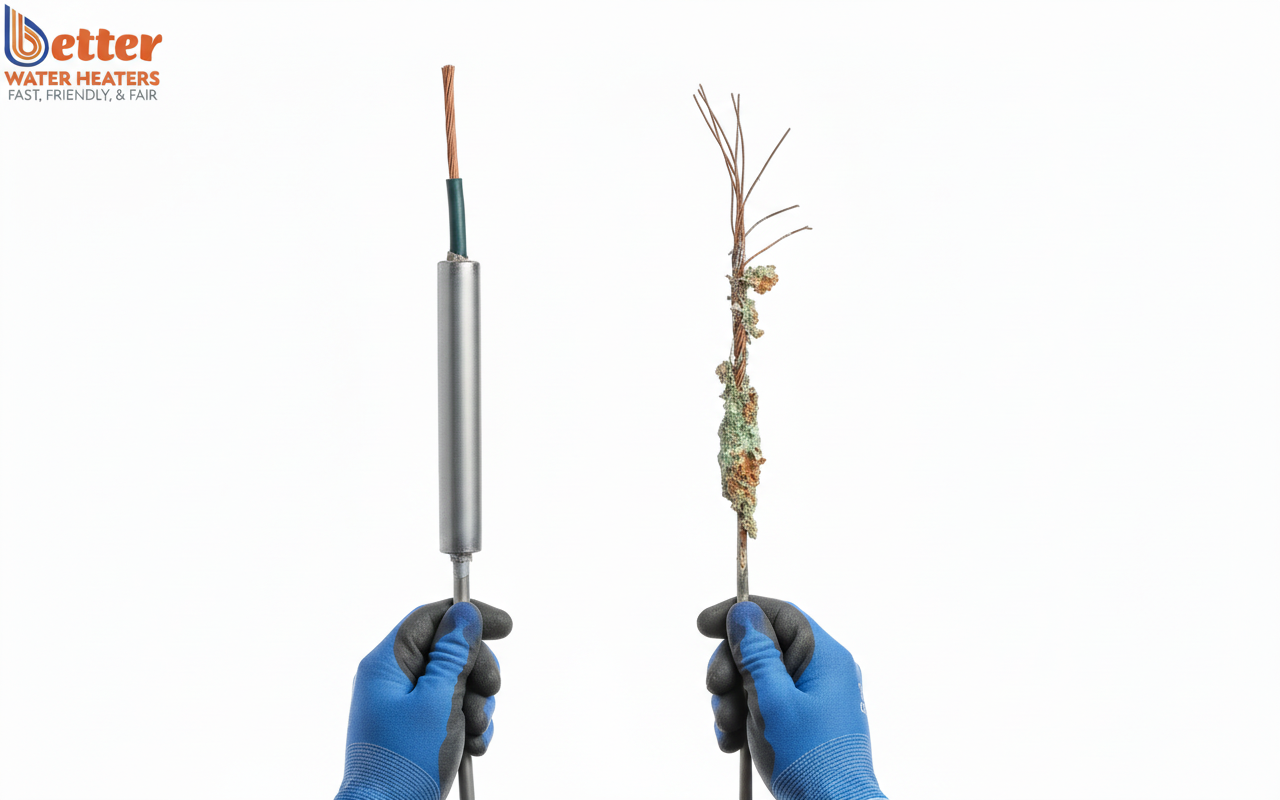
Manufacturers like Rheem, Bradford White, and AO Smith explicitly state in their fine print that warranties cover defects, not neglect. Consequently, if a tank leaks because the anode rod was depleted and never replaced, your 6-year or 12-year warranty is effectively void. This ‘Warranty Trap’ costs local homeowners thousands of dollars in premature replacement costs that could have been avoided with a $50 part.
The Science of Corrosion: Why Your Tank is ‘Eating’ Itself
To understand why water heater anode rod replacement is critical, we must look at the process of electrolysis. Inside your steel tank, water and minerals create an electrochemical reaction that naturally seeks to corrode the metal. The anode rod, usually made of magnesium or aluminum, is designed to be more reactive than the steel tank itself.
Essentially, the rod ‘sacrifices’ itself so the tank doesn’t have to. Over time, the rod dissolves until only a thin wire remains. Once that rod is gone, the corrosive forces turn their attention to the glass-lined steel of your tank. In the Peninsula, where water hardness levels often exceed 150 mg/L, this process happens at an accelerated rate.
- Electrolysis: The chemical process that pulls metal ions away from the weakest point.
- Galvanic Corrosion: What happens when two different metals are submerged in water.
- Passivation: The protective layer the anode helps maintain on the tank interior.
According to Energy.gov, sediment and mineral buildup are the leading causes of reduced efficiency and premature failure. If you haven’t scheduled a sacrificial anode rod service in the last three years, your tank is likely already beginning to pit.
The Peninsula Water Quality Crisis: Hard Water vs. Your Warranty
Why is this a specific concern for Bay Area residents? The Peninsula relies on a mix of Hetch Hetchy water and local groundwater wells. While Hetch Hetchy water is relatively soft, many local municipalities blend it with groundwater that contains high levels of calcium and magnesium. This creates a ‘hard water’ environment that is brutal on plumbing components.
Furthermore, the water treatment chemicals used to ensure potability can actually increase the conductivity of the water. This higher conductivity speeds up the depletion of your sacrificial anode. If you live in San Jose, Redwood City, or Menlo Park, your water heater warranty protection depends entirely on your records of maintenance.
| Factor | National Average | Peninsula Average | Impact on Tank |
|---|---|---|---|
| Water Hardness | Moderate | High/Very High | Accelerated Scaling |
| Anode Lifespan | 5-7 Years | 2-4 Years | Faster Depletion |
| Warranty Risk | Standard | High | Frequent Denials |
If you are unsure of your current rod’s condition, it may be time to consult with local water heater specialists who understand the unique chemistry of our region. Waiting for a leak means you’ve waited too long.
The ‘Hidden’ Rod: Why Homeowners Miss the Warning Signs
Modern water heaters are designed with sleek aesthetics, often hiding the anode rod port under the top insulation or plastic caps. Unlike older models where the hex head was visible, many newer tanks require removing a ‘knock-out’ plug to access the rod. This design choice has led to a ‘DIY Maintenance Myth’ where homeowners believe their tank doesn’t have an anode or that it’s a ‘lifetime’ part.
Additionally, the symptoms of a failing rod are often subtle until the damage is irreversible. Have you noticed a slight ‘rotten egg’ smell in your hot water? This is often the first sign that the sacrificial anode rod service is overdue, as bacteria can react with a depleted magnesium rod.
- Hidden Access: Rods are often buried under 2 inches of foam insulation.
- Clearance Issues: Low-ceiling garages often make rod removal difficult without specialized tools.
- Tool Requirements: You typically need a 1-1/16 inch socket and a breaker bar to remove a factory-tightened rod.
Need a professional eye? Schedule a 25-point water heater inspection with Better Water Heaters today to ensure your warranty remains valid.
Water Heater Anode Rod Replacement: Magnesium vs. Aluminum
When performing a water heater anode rod replacement, choosing the right material is vital for both your health and your tank’s longevity. Most manufacturers install magnesium rods by default because they provide the best electrochemical protection. However, in areas with high pH or specific bacteria, magnesium can produce odors.
Aluminum rods are often used as a cheaper alternative or to solve odor issues, but they are less effective at corrosion protection water heater needs. For Peninsula homeowners, we often recommend powered anode rods—a non-sacrificial titanium option that uses a small electrical pulse to prevent rust without ever needing replacement.
- Magnesium: Best protection, but reacts poorly with some local well water.
- Aluminum/Zinc: Good for ‘smelly water’ issues but less eco-friendly.
- Powered Anodes: The ‘permanent’ solution that eliminates the need for future replacements.
According to the EPA, minerals like iron and manganese are considered ‘nuisance’ chemicals, but for your water heater, they are existential threats. Using the wrong rod material can actually accelerate tank failure if not matched to your local water profile.
The Warranty Trap: How Manufacturers Deny Your Claim
It is a common misconception that a 10-year warranty is an unconditional guarantee. In reality, it is a limited warranty. If you file a claim for a leaking tank, the first thing a manufacturer’s representative will ask for is your maintenance log. If you cannot prove that you performed a water heater anode rod replacement or at least a documented inspection, your claim will likely be denied.
Specifically, the 2027 California regulations regarding zero-NOx water heaters will make replacements significantly more expensive. Protecting your current investment is more financially critical now than ever before. By maintaining your records, you ensure that if a legitimate defect occurs, you aren’t left holding a $2,500 bill for a new installation.
- Keep Receipts: Always save the invoice from your sacrificial anode rod service.
- Photo Evidence: Take a photo of the old rod vs. the new rod during replacement.
- Serial Number Tracking: Ensure your plumber notes the tank’s serial number on the maintenance record.
Step-by-Step: What a Professional Sacrificial Anode Rod Service Includes
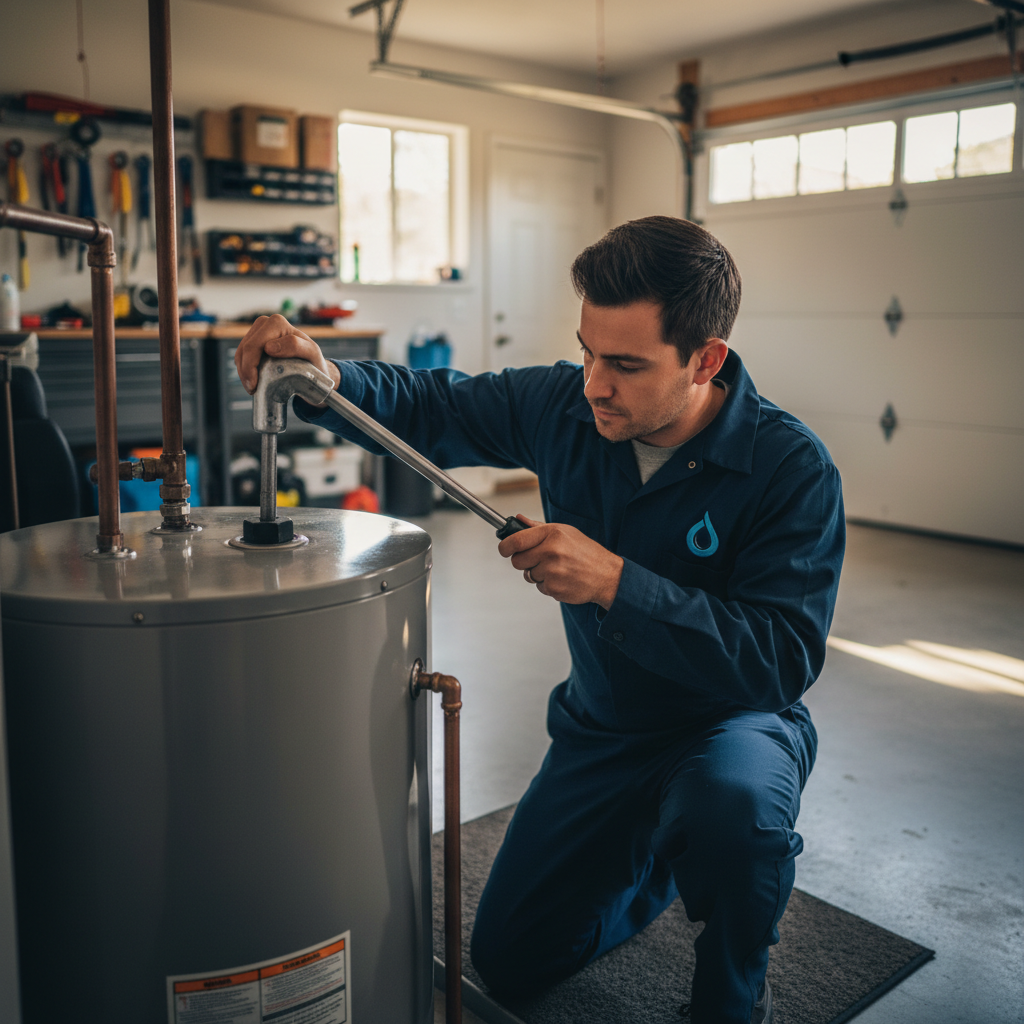
When you hire a specialist for water heater anode rod replacement, the process involves more than just swapping a part. A comprehensive service ensures the entire system is optimized for the Peninsula’s unique conditions. This is why DIY attempts often fail—homeowners lack the torque or the clearance to properly seal the new rod, leading to leaks at the top of the tank.
A professional service includes: flushing the sediment from the bottom of the tank (which also voids warranties if neglected), checking the Temperature and Pressure (T&P) relief valve, and ensuring the seismic strapping meets current California building codes. This holistic approach is what provides true water heater warranty protection.
- System Shutdown: Safely turning off gas or power and closing the cold water intake.
- Pressure Relief: Draining a few gallons to lower the water level below the rod port.
- Extraction: Using high-torque impact tools to remove the often-corroded factory rod.
- Inspection: Analyzing the ‘spent’ rod to diagnose water quality issues.
- Installation: Sealing the new rod with PTFE tape or pipe dope to prevent future leaks.
Don’t risk a flooded garage or a voided warranty. Learn more about our comprehensive tank maintenance packages and keep your home protected.
Frequently Asked Questions
How often should I perform water heater anode rod replacement in the Bay Area?
In the Peninsula and South Bay, we recommend inspecting the rod every 2 years and replacing it every 3-4 years. If you have a water softener, the salt actually increases the rate of sacrificial anode rod service needs, often requiring replacement every 18-24 months to maintain water heater warranty protection.
Will a water softener affect my anode rod?
Yes, significantly. Water softeners replace calcium with sodium, which makes the water more conductive. This speeds up the sacrificial process of the anode rod. If you have a softener, you must be even more diligent about water heater anode rod replacement to prevent the tank from corroding prematurely.
Can I replace the anode rod myself?
While possible for a very handy homeowner, it is difficult. Most factory rods are installed with over 200 lb-ft of torque. Without a 1-1/16″ deep socket and a breaker bar—and the ability to stabilize a 500lb tank—you risk tipping the heater or snapping the rod. Professional sacrificial anode rod service ensures it is done safely and to code.
What happens if I ignore the anode rod?
Once the anode rod is fully depleted, the water begins to attack the steel tank itself. This leads to internal rusting, which eventually causes a pinhole leak. Because this is considered ‘wear and tear’ due to lack of maintenance, most manufacturers will deny water heater warranty protection, leaving you responsible for the full cost of a new unit.
Ready to secure your home’s hot water? Better Water Heaters has served the Peninsula for over 20 years. We specialize in maximizing the lifespan of your appliances through expert water heater anode rod replacement and maintenance. Contact us today to schedule your service or call us for a free consultation on upgrading to a more efficient system.