
📋 Table of Contents
Making the switch with a gas-to-electric conversion is a strategic move for Bay Area homeowners looking to slash carbon footprints and leverage massive local rebates. However, while most focus on the electrical panel, a silent technical hurdle often goes unnoticed: the management of 5 to 20 gallons of water produced daily by high-efficiency heat pump units.
Key Takeaways for Executives and Homeowners
- Volume Matters: A heat pump water heater (HPWH) can generate up to 20 gallons of condensate daily in humid conditions.
- Drainage is Non-Negotiable: Without a proper floor drain or condensate pump installation, you risk slab erosion and mold.
- Financial Incentives: Federal tax credits and state programs like ENERGY STAR and TECH Clean California can offset the costs of these necessary drainage upgrades.
The Hidden Liquid Logic of a Gas-to-Electric Conversion
When you transition from a standard gas tank to a hybrid heat pump model, you are essentially installing a small air conditioner on top of your water heater. As the unit pulls heat from the surrounding garage air to warm your water, it creates significant condensation.
Consequently, this moisture must go somewhere. In many older Bay Area homes in San Jose or Fremont, garages weren’t designed with active floor drains positioned near the water heater closet.
Failure to plan for heat pump condensate drain requirements can lead to standing water on your garage floor. Over time, this causes significant damage to drywall, storage boxes, and even the concrete slab itself due to the slight acidity of the condensate.
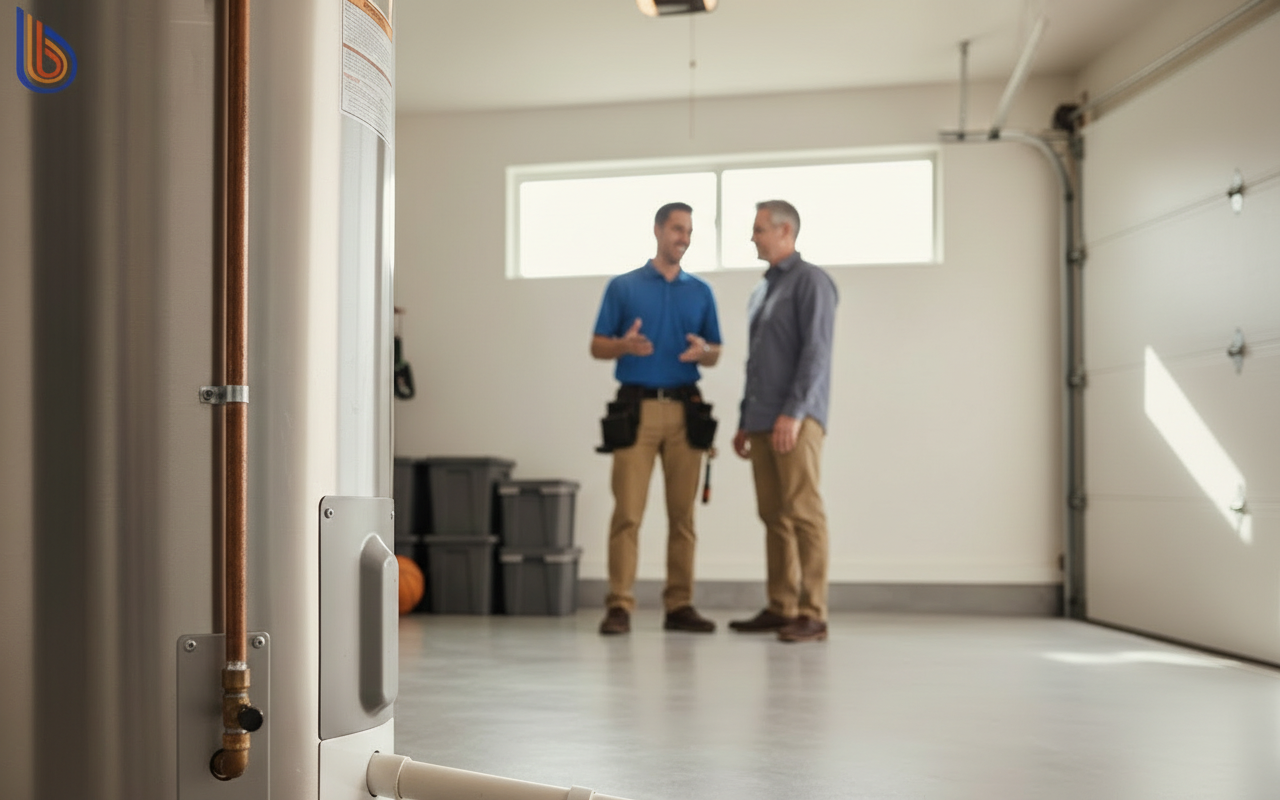
Understanding Heat Pump Condensate Drain Requirements
The California Plumbing Code is specific about how we handle discharge from high-efficiency appliances. During a gas-to-electric conversion, our team must ensure the installation meets these three primary criteria:
- Gravity Drainage: If your garage has a floor drain within a few feet that is properly sloped (1/4 inch per foot), we can often run a simple PVC line.
- The Air Gap: To prevent backflow contamination, the drain line cannot be direct-plumbed into a sewer line without a physical air gap.
- Termination Points: Condensate should ideally be routed to a floor sink, a standpipe, or outdoors to a permeable surface away from the foundation.
Interestingly, some homeowners are now using this water for “dual-benefit” landscaping. Because the water is essentially distilled from the air, it can be routed to thirsty garage-side plants, though a condensate neutralizer kit is recommended to balance pH levels before it hits your soil.
Comparison: Drainage Solutions for Your Garage
| Solution | Ideal For | Typical Cost | Maintenance |
|---|---|---|---|
| Gravity Drain | Garages with existing floor drains | $50 – $150 | Annual flush |
| Condensate Pump | Garages with no nearby drain | $250 – $500 | Check valve cleaning | Protecting cast iron pipes | $100 – $200 | Media replacement |
Need a professional assessment of your garage’s drainage capacity? Schedule a free site inspection with our Bay Area experts today.
When You Need a Condensate Pump Installation
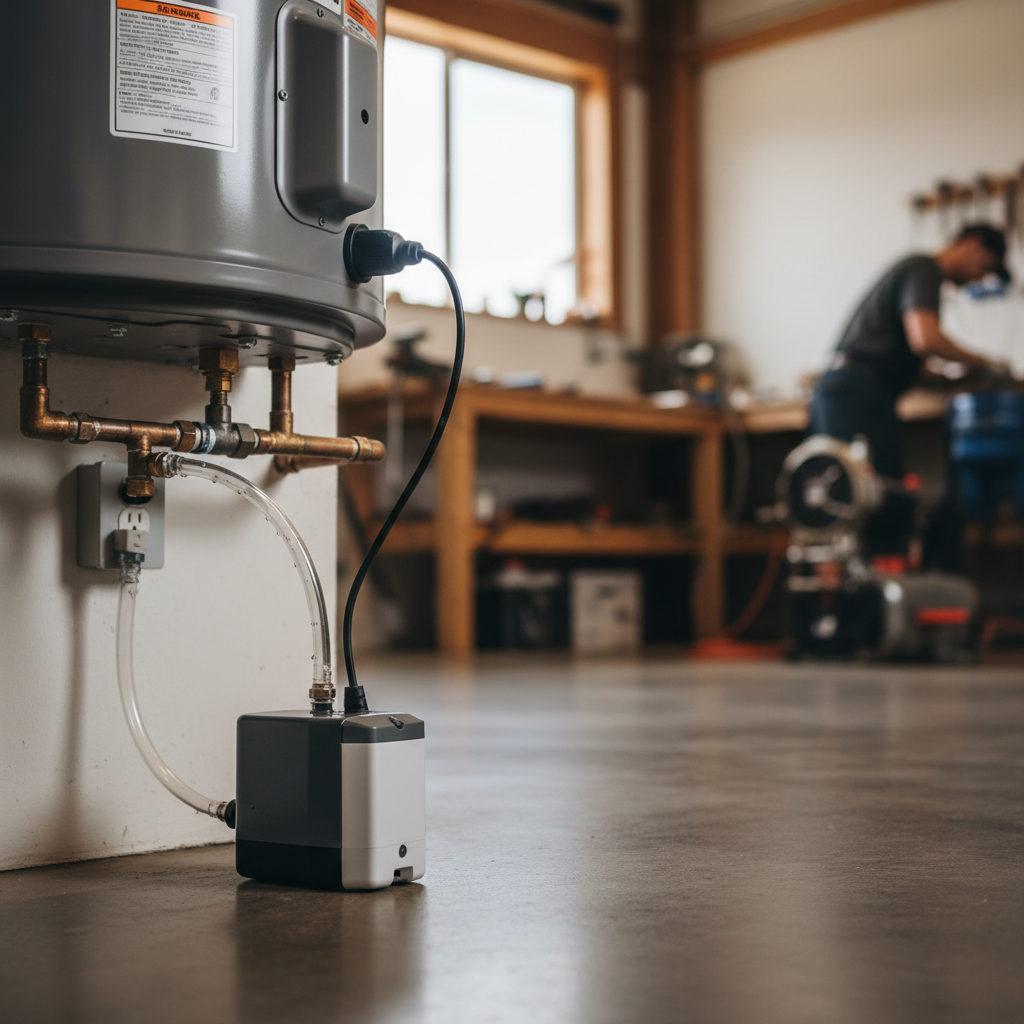
If your garage floor is flat or sloped away from the nearest exit, a condensate pump installation becomes mandatory. These small, automated reservoirs sit at the base of your water heater and pump the water vertically through a small tube to a laundry sink or an exterior wall.
Modern pumps are incredibly reliable, but they do require a standard 120V outlet to operate. This is often a “hidden cost” in a gas-to-electric conversion because the heat pump itself usually requires a 240V circuit (like a NEMA 14-50), meaning your electrician may need to pull an additional line for the pump.
According to EPA ENERGY STAR guidelines, ensuring your pump is properly sized for the unit’s peak output is critical during high-humidity Bay Area mornings.
The ‘Drain Readiness’ Checklist for Homeowners
Before our technicians arrive for your gas-to-electric conversion, you can perform a simple 5-minute check to understand your installation needs:
- Locate the Drain: Is there a floor drain within 5 feet of your current water heater?
- Test the Pitch: Pour a small cup of water on the floor where the new unit will sit. Does it migrate toward the drain or pool in place?
- Check for Power: Is there a standard 3-prong outlet near the water heater to power a potential pump?
- Inspect the Path: If we need to run a line outside, is the wall behind the water heater accessible, or is it a shared wall with the kitchen?
By identifying these factors early, you avoid the “installation day surprise” where costs can escalate due to unforeseen plumbing rerouting. We pride ourselves on transparent pricing; knowing these details allows us to give you a firm, guaranteed quote.
Learn more about our specific heat pump installation services and how we handle complex Bay Area garage layouts.
Maximizing ROI: Rebates and the Inflation Reduction Act
The cost of a gas-to-electric conversion is significantly offset by current incentives. As of 2024, the federal tax credit (25C) covers 30% of the project cost, up to $2,000. When combined with TECH Clean California rebates, which can reach $3,100 or more in specific Bay Area territories, the “hidden costs” of drainage and electrical upgrades are often completely covered.
At Better Water Heaters, we handle the permit process and rebate documentation for you. We ensure that your condensate pump installation and drainage strategy meet the strict requirements for these incentive programs, protecting your investment from start to finish.
Conclusion: Don’t Let Drainage Dampen Your Upgrade
A gas-to-electric conversion is one of the best upgrades you can make for your home’s value and efficiency. By addressing the heat pump condensate drain requirements upfront, you ensure a seamless transition that protects your garage and your peace of mind.
Ready to upgrade to a high-efficiency system with the Bay Area’s most trusted specialists? Contact Better Water Heaters today for a comprehensive quote that includes all necessary drainage and electrical considerations.
Frequently Asked Questions
How much water does a heat pump water heater really produce?
Depending on the humidity in your Bay Area garage, a heat pump water heater can produce between 5 and 20 gallons of condensate per day. This is a byproduct of the dehumidification process as the unit extracts heat from the air. Proper drainage is essential to prevent this water from pooling on your garage floor.
Can I drain the condensate directly into my garden?
Yes, many homeowners route the drain line to outdoor landscaping. However, because the condensate is slightly acidic, we recommend a condensate neutralizer kit. This protects your plants and prevents the water from etching any concrete walkways it might flow over on its way to the soil.
Do I need a special permit for a gas-to-electric conversion?
Yes, in most Bay Area jurisdictions like San Jose and Palo Alto, a plumbing and electrical permit is required for a gas-to-electric conversion. This ensures the 240V circuit is safe and the heat pump condensate drain requirements are met according to California Building Code Title 24.
What happens if my condensate pump fails?
Most high-quality condensate pump installations include a safety overflow switch. If the pump fails or the line clogs, the switch will automatically shut off the water heater to prevent a flood. We recommend annual maintenance to clear sediment from the pump reservoir and ensure the check valve is functioning.