
📋 Table of Contents
For many residents in sprawling ranch-style homes across the Peninsula, the morning routine begins with a frustrating ritual: turning on the shower and waiting. If your home requires a recirculation pump to solve a five-minute wait for hot water, you are likely losing gallons of treated water down the drain every single day.
Key Takeaways for Peninsula Homeowners
- Eliminate the Wait: Modern systems provide hot water in seconds, not minutes.
- Water Conservation: The average family wastes 12,000 gallons annually waiting for hot water.
- Property Value: Instant hot water is considered a ‘silent luxury’ in high-end Bay Area real estate.
- Code Compliance: New installations often must meet strict California Title 24 energy requirements.
Why Peninsula Homes Suffer from Slow Hot Water
The architectural charm of Peninsula homes often comes with a hidden plumbing tax. Whether it is a sprawling mid-century modern ranch in Menlo Park or a multi-story custom build in Hillsborough, the distance between your water heater and the master suite is the primary culprit.
As hot water sits in your pipes, it loses heat to the surrounding environment. When you turn on the tap, you must flush out all that ‘standing’ cold water before the fresh hot water arrives from the tank. This is where an instant hot water pump becomes a game-changer for daily convenience.
- Pipe Volume: Long horizontal runs in crawlspaces increase the volume of water that must be displaced.
- Thermal Loss: Uninsulated copper pipes in older homes bleed heat rapidly into the Bay Area’s cool evening air.
- Modern Fixtures: Low-flow showerheads, while great for the environment, actually increase wait times because they move water more slowly through the pipes.
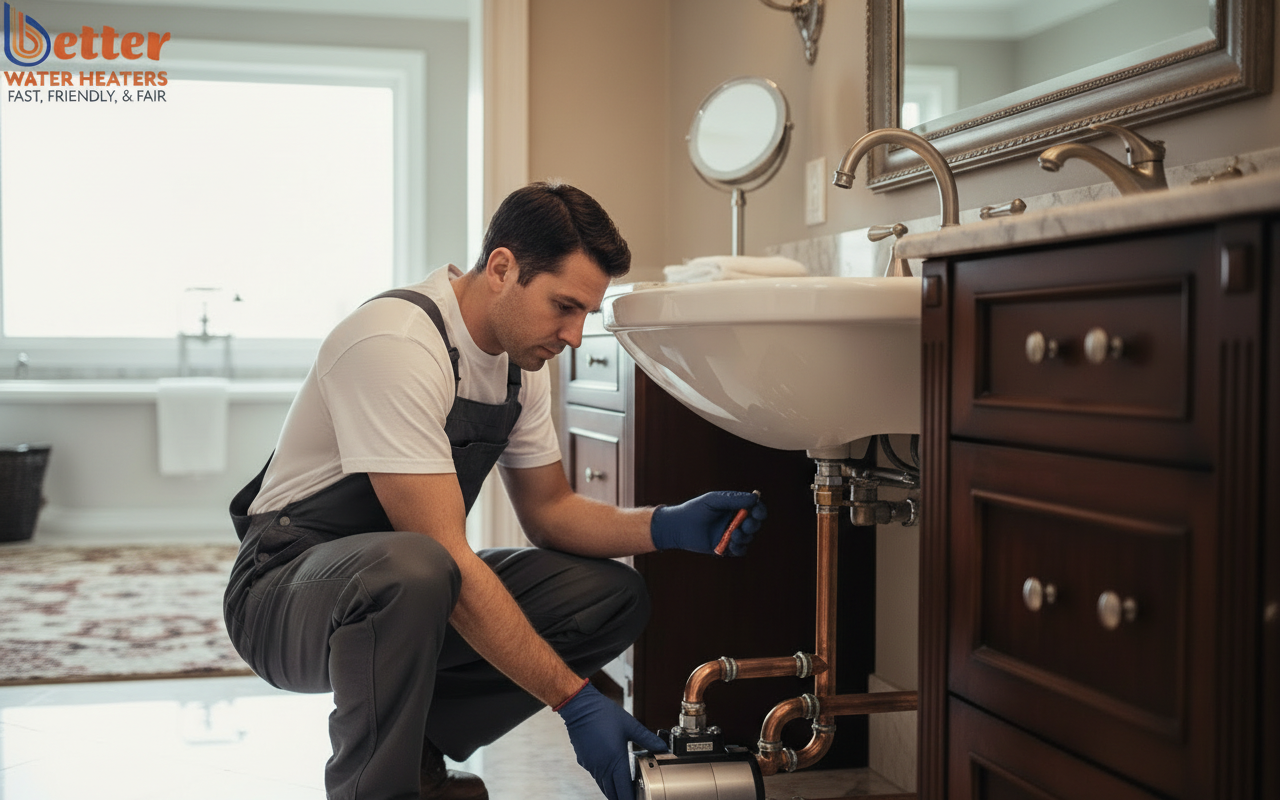
The ROI of a Hot Water Recirculation System
Investing in a hot water recirculation system is not just about comfort; it is a strategic financial decision. With Bay Area water rates among the highest in the country, pouring 3-5 gallons down the drain every morning is an expensive habit.
According to the U.S. Environmental Protection Agency (EPA), the energy used to heat water that is simply wasted can account for a significant portion of your monthly utility bill. By recirculating that water back to the heater instead of the sewer, you close the loop on waste.
| Feature | Traditional Plumbing | Recirculation Loop |
|---|---|---|
| Wait Time | 2–5 Minutes | 0–15 Seconds |
| Annual Water Waste | ~12,000 Gallons | Negligible |
| Energy Impact | High (Heating wasted water) | Low (Smart pump technology) |
Furthermore, these systems help homeowners stay ahead of California Title 24 plumbing requirements, which increasingly mandate efficient hot water delivery in new constructions and major remodels.
Need a custom assessment for your home? Schedule a free consultation with our Peninsula specialists today.
Types of Recirculation Pump Technologies
Choosing the right recirculation pump depends heavily on your home’s existing infrastructure. As a dedicated water heater specialist in San Mateo, we typically categorize these into three main strategies.
1. Dedicated Return Lines
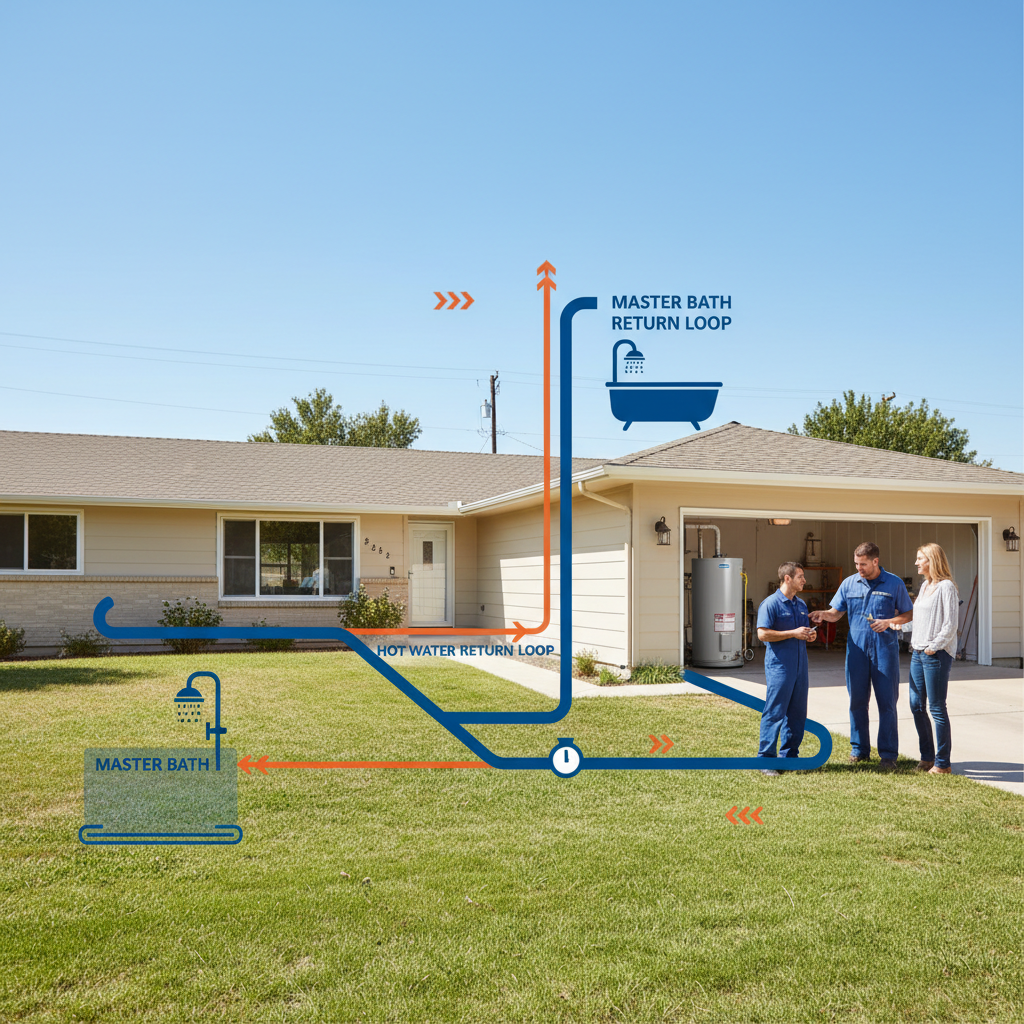
This is the gold standard for new builds and major renovations. A dedicated pipe runs from the furthest fixture back to the water heater, creating a continuous loop. This system is highly efficient and offers the most consistent performance.
2. Crossover/Bridge Valve Retrofits
For existing homes where tearing out drywall isn’t an option, a recirculation pump retrofit using a bridge valve is ideal. This ‘hidden’ tech uses your existing cold water line to return water to the heater, effectively creating a loop without new piping.
3. Demand-Controlled Pumping
Modern luxury homes often utilize sensor-based or button-activated pumps. This ensures the pump only runs when you actually need hot water, maximizing energy savings and extending the life of your plumbing components.
- Timer-Based: Runs on a schedule (e.g., 6:00 AM to 9:00 AM).
- Thermostatic: Runs when the water in the loop drops below a certain temperature.
- Smart-Integrated: Controlled via smartphone or voice assistants like Alexa and Google Home.
Overcoming the ‘Cold Water Sandwich’ and Other Challenges
Transitioning to a high-efficiency system, such as a tankless unit, can sometimes introduce the ‘Cold Water Sandwich’ effect. This occurs when a burst of hot water is followed by a brief cold spell before returning to hot. Integrating a recirculation pump with your tankless system is the most effective way to smooth out these temperature fluctuations.
Moreover, the Bay Area water conservation movement has pushed many homeowners toward these upgrades. In cities like Palo Alto and Redwood City, where environmental responsibility is a core value, reducing your carbon footprint by optimizing your water heater is a significant win.
- Assess: Have a pro check your pipe layout and insulation levels.
- Select: Choose between a Grundfos Comfort pump or a Navien integrated system.
- Install: Ensure the pump is sized correctly to avoid ‘pinhole leaks’ from excessive velocity.
- Optimize: Set timers or smart sensors to match your family’s actual usage patterns.
Beyond the technical benefits, there is the ‘Silent Luxury’ factor. Imagine never having to plan your morning around the water heater again. For busy executives and families on the Peninsula, that reclaimed time is invaluable.
Ready to stop the wait? Contact Better Water Heaters at (408) 250-6672 for a same-day diagnostic and estimate.
Smart Home Integration and the Future of Pumping
The latest trend in Peninsula plumbing is the move toward demand-controlled pumping. Instead of a pump that circulates water 24/7—which can lead to high electric bills—modern systems use motion sensors or smart home triggers. When you walk into the bathroom, the recirculation pump activates, ensuring hot water is ready by the time you reach the shower.
This level of efficiency is crucial for meeting the ENERGY STAR® standards and maximizing potential rebates available through local utility programs like Peninsula Clean Energy or Silicon Valley Clean Energy.
Common Misconceptions About Recirculation
- “It uses too much electricity”: Modern pumps use less energy than a 25-watt lightbulb.
- “It wears out the heater”: Properly configured systems actually reduce the ‘cycling’ stress on your heater.
- “It’s only for new homes”: Retrofit kits make this technology accessible to almost any Peninsula residence.
FAQs: Solving Your Hot Water Wait
How much does a recirculation pump cost to install in the Bay Area?
Installation costs typically range from $600 to $1,500 depending on whether you need a simple under-sink retrofit or a dedicated return line. While the upfront cost is an investment, the water savings and increased property value often provide a full ROI within a few years of high-utility usage.
Will a recirculation pump work with my tankless water heater?
Yes, but it requires specific compatibility. High-end tankless models from brands like Navien often have internal pumps built-in. For older tankless units, an external demand-based pump is required to prevent the heater from constantly firing, which can shorten its lifespan.
Does a recirculation pump affect my cold water?
In ‘bridge valve’ retrofit systems, you may notice the cold water is slightly lukewarm for the first few seconds. This is because the system uses the cold line to return warm water to the heater. Most Peninsula homeowners find this a very minor trade-off for instant hot water.
Is a permit required for a recirculation pump installation?
In most Bay Area jurisdictions, adding a pump to an existing system may require a basic plumbing permit, especially if electrical modifications are needed. Better Water Heaters handles all local permitting and ensures your installation meets current seismic and safety codes.
Don’t let another gallon go to waste. Schedule your Peninsula hot water audit today and experience the luxury of instant hot water.