
📋 Table of Contents
When a 6.0 magnitude seismic event strikes the San Andreas or Hayward fault, the structural integrity of your home is often the first concern. However, for many Bay Area homeowners, the most immediate danger isn’t a collapsing roof—it is an unsecured earthquake strap water heater becoming a high-velocity liability. A standard 50-gallon tank weighs approximately 450 to 500 pounds when full, creating massive shear forces that can snap rigid copper piping and gas lines in seconds.
According to the California Geological Survey, the secondary disasters following a tremor—specifically fire and water damage—frequently exceed the cost of structural repairs. In a major quake, an unstrapped heater can tip over, severing the gas line and sparking a catastrophic fire, or rupturing the cold water inlet and flooding your home with thousands of gallons of water. Seismic water heater safety is not just a regulatory hurdle; it is a critical component of your family’s survival strategy.
Key Takeaways for Bay Area Homeowners
- Survival Asset: Your water heater is the largest source of emergency potable water in your home (40-80 gallons).
- Code Compliance: California law requires two straps—one in the top third and one in the bottom third of the tank.
- Fire Prevention: An automatic earthquake shut-off valve can prevent gas-related explosions after a 5.0+ event.
- Modern Risk: Newer high-efficiency and heat pump units are taller and heavier, making them more prone to tipping than older models.
The Anatomy of a 6.0 Event: Why Rigid Pipes Fail
During a significant tremor, the ground moves in multiple directions simultaneously, creating a whipping effect on appliances. Most older installations in cities like San Jose or Redwood City utilize rigid copper or galvanized steel piping for water and gas connections. These materials have zero flexibility; when the tank shifts even two inches, the rigid pipes act as levers, snapping at the joints or the threaded inlets.
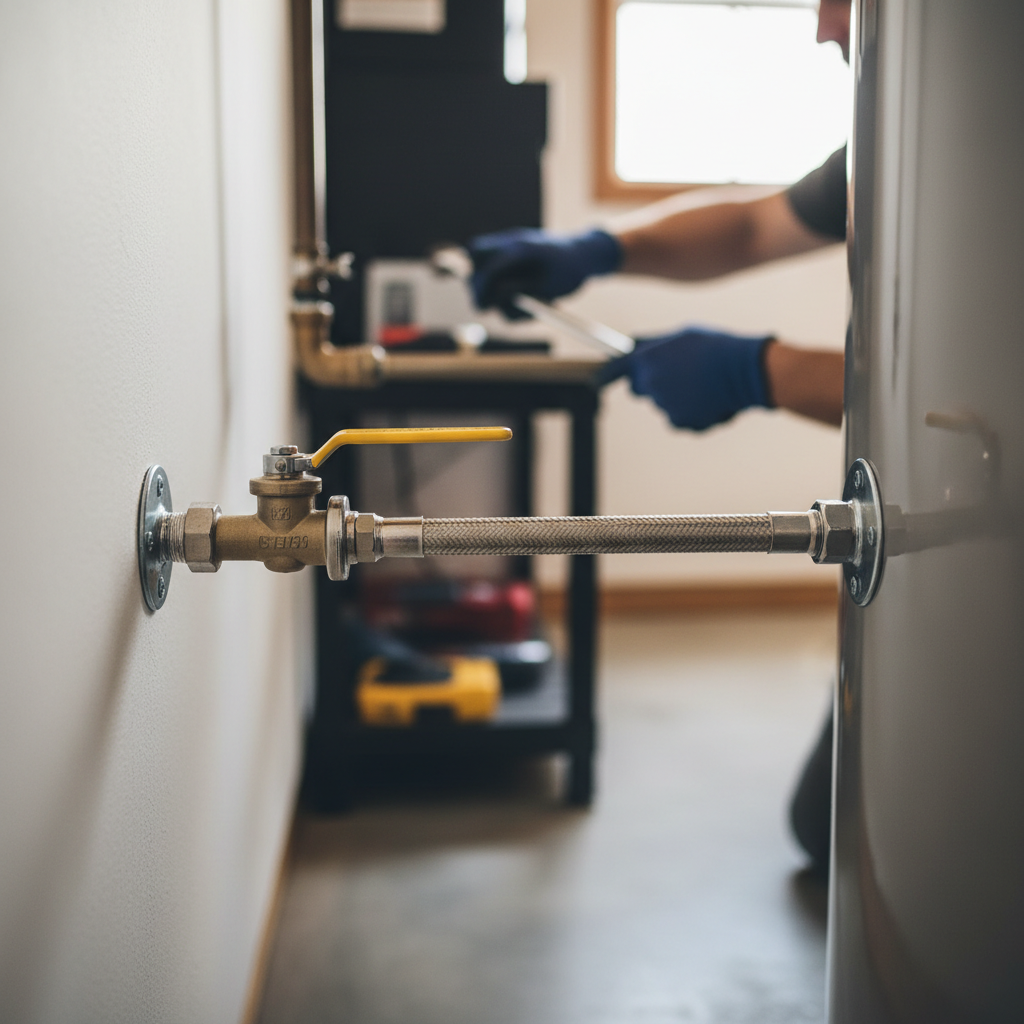
Transitioning to high-quality flexible connectors is a cornerstone of Bay Area emergency preparedness. These stainless steel braided lines allow the tank to move slightly without breaking the seal. Furthermore, if you haven’t inspected your earthquake strap water heater in the last three years, the straps may have loosened or corroded, rendering them useless when the big one hits.
- Shear Forces: Lateral movement can exert over 1,000 lbs of force on a 50-gallon tank.
- Connection Points: Rigid gas lines are the #1 cause of post-earthquake residential fires.
- Sediment Risk: Shaking stirs up sediment, which can clog valves if you attempt to drain the tank for emergency water.
California Health and Safety Code: The Double-Strap Standard
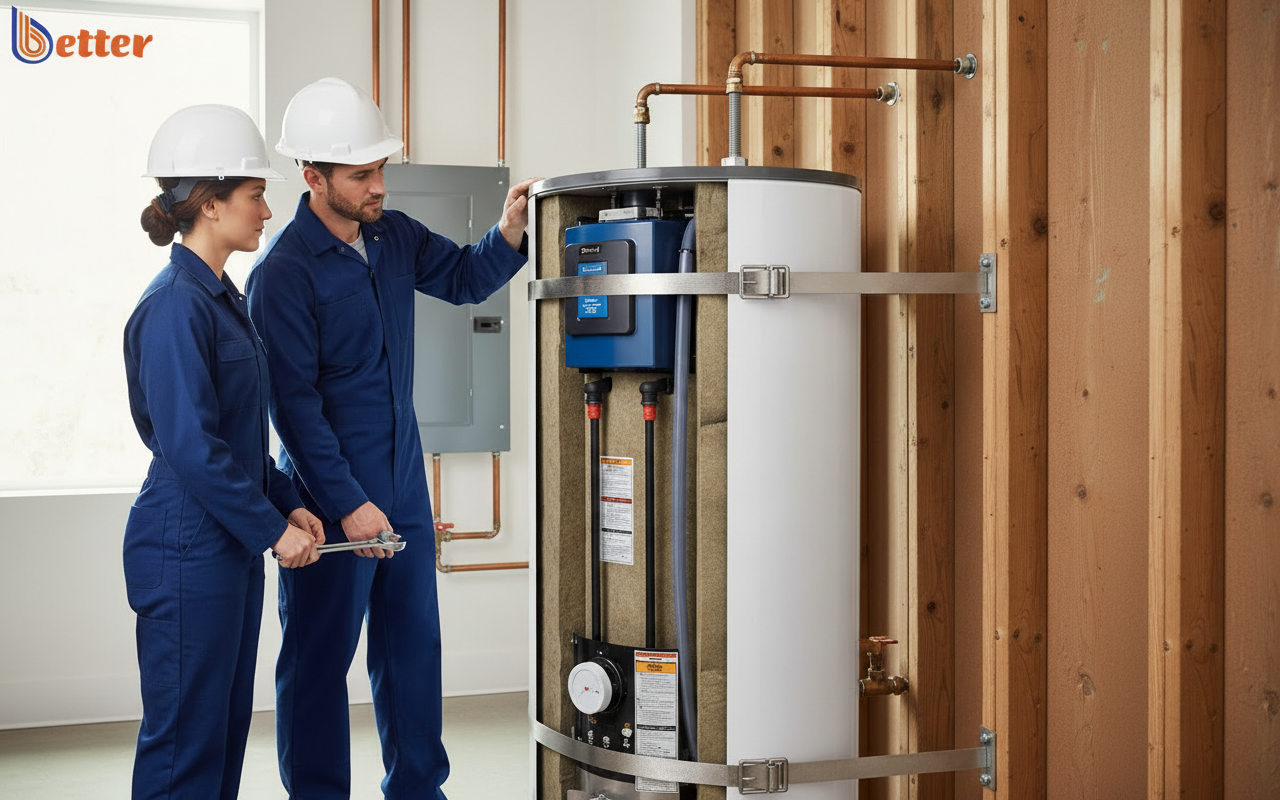
Many homeowners believe a single strap around the middle of the unit is sufficient. However, modern California building codes (specifically Health and Safety Code Section 19211) mandate a much more rigorous seismic strapping kit installation. Because newer high-efficiency tanks are often narrower and taller to accommodate extra insulation, their center of gravity is higher and less stable.
To meet current standards, your earthquake strap water heater must be secured to the wall studs in two distinct locations. The top strap must be at least 9 inches below the draft hood, and the bottom strap must be at least 4 inches above the controls. This “top and bottom” bracing prevents the tank from pivoting or sliding out from underneath the straps during vertical ground acceleration.
| Feature | Old Standard (Pre-1990s) | Current CA Code (Post-2010) |
|---|---|---|
| Number of Straps | 1 Strap (Middle) | 2 Straps (Top & Bottom Thirds) |
| Strap Material | Plumber’s Tape (Thin) | Heavy-duty Gauge Steel Strapping |
| Gas Connection | Rigid Iron Pipe | Certified Flexible Gas Connector |
| Wall Attachment | Drywall Screws | 3-inch Lag Bolts into Studs |
Are you unsure if your current bracing meets the 2024 California requirements? Don’t wait for the next tremor to find out. Schedule a 10-minute safety audit with our specialists to ensure your home is protected and compliant.
The Survivalist’s Secret: Your Water Heater as a Reservoir
In a major disaster, the municipal water supply in the Bay Area is likely to be compromised or shut off to prevent contamination. Your water heater is essentially a 50-to-80-gallon emergency drinking water reservoir. If your earthquake strap water heater remains upright, you have enough potable water to sustain a family of four for over two weeks.
However, this survival asset is only useful if the tank doesn’t rupture. A 6.0 event can cause the internal glass lining of a tank to crack if it hits the floor, contaminating the water with shards and insulation. By investing in seismic water heater safety, you aren’t just protecting your floors; you are securing your family’s most vital resource. Remember to keep a dedicated wrench near the water heater to shut off the intake valve immediately after a quake to prevent contaminated water from the city lines from entering your tank.
The ROI of an Automatic Earthquake Shut-off Valve (ASV)
Beyond the seismic strapping kit, the most sophisticated upgrade for a Bay Area home is the Automatic Seismic Shut-off Valve. This device is installed on your main gas line or directly at the water heater. It is designed to automatically trip and sever the gas flow when it senses a 5.1 or greater magnitude earthquake. This technology is a primary requirement for many insurance providers in high-risk zones like Fremont or Oakland.
- Fire Mitigation: 25% of all post-earthquake fires are caused by broken gas lines at the water heater.
- Insurance Benefits: Many providers offer premium discounts for homes with professionally installed ASVs.
- Peace of Mind: If you are away from home during the event, the valve acts as an automated first responder.
Considering that a single flood restoration claim can cost upwards of $30,000, the few hundred dollars spent on a professional earthquake strap water heater upgrade and a seismic valve is one of the highest-ROI investments a homeowner can make. You can learn more about local requirements by searching for Bay Area water heater regulations on our site.
The 10-Minute Safety Audit: A Homeowner’s Checklist
Before the next tremor hits, perform this quick visual inspection of your system. If you answer “No” to any of these, your earthquake strap water heater may be a liability. Most Bay Area homes built or sold before 2010 are likely out of compliance with the latest safety standards.
- Double Check: Are there two distinct heavy-duty straps wrapping entirely around the tank?
- The Stud Test: Are the straps bolted into wall studs with at least 3-inch lag bolts, or are they just screwed into the drywall?
- Flex Factor: Are the water and gas lines made of flexible, braided material, or are they rigid copper/iron?
- Clearance: Is the area around the heater clear of heavy items that could fall and crush the gas pilot assembly?
- Expansion Tank: If you have an expansion tank, is it independently braced or supported?
If you find any deficiencies, our team at Better Water Heaters can bring your system up to code in a single visit. We specialize in seismic retrofitting and water heater installation across the entire Bay Area, from San Francisco to San Jose.
Hiring a Professional vs. DIY Strapping
While big-box stores sell seismic strapping kits, improper installation is common. A strap that is too loose allows the tank to gain momentum during a quake, which can snap the lag bolts right out of the wood. Professional installers ensure the tension is calibrated and the geometry of the bracing accounts for the specific weight of modern heat pump or high-capacity units. According to FEMA, professional seismic bracing is significantly more effective at preventing appliance migration during long-duration shaking.
Secure Your Home Before the Next Big One
The question in the Bay Area isn’t if a 6.0 event will occur, but when. Your water heater can either be a source of life-saving water or the cause of a devastating home fire. By ensuring your earthquake strap water heater is installed to the highest modern standards, you are taking a proactive step in protecting your property and your family. At Better Water Heaters, we have 20+ years of experience navigating local codes and the unique seismic challenges of Northern California.
Ready to eliminate the risk? Contact Better Water Heaters today for a professional seismic safety inspection. We offer same-day service and transparent pricing to give you the peace of mind you deserve before the ground starts to move.
Frequently Asked Questions
Does California law really require two straps on a water heater?
Yes, California Health and Safety Code Section 19211 requires all new and replacement water heaters to be braced and anchored to resist falling during an earthquake. This specifically requires two straps—one in the top third and one in the bottom third of the tank—to prevent the unit from tipping or sliding. Failure to comply can lead to denied insurance claims and issues during home inspections for sales.
Can I use my water heater as drinking water after an earthquake?
Absolutely. Your water heater is the largest source of potable water in your home. To access it, you must first turn off the cold water intake valve to prevent contamination from the city main. Then, open a hot water faucet elsewhere in the house to let air in, and use the drain valve at the bottom of the tank to collect water. Ensure your earthquake strap water heater remained upright to avoid internal glass contamination.
What is the benefit of a seismic gas shut-off valve?
A seismic gas shut-off valve is a safety device that automatically stops the flow of natural gas to your home when it detects a seismic event of sufficient magnitude (usually 5.1 or higher). This is critical because it prevents fires and explosions caused by broken gas lines, which are common when appliances shift during a quake. Many Bay Area municipalities and insurance companies now highly recommend or require these valves.
Are heat pump water heaters more at risk during earthquakes?
Newer heat pump water heaters are often taller and heavier than traditional gas tanks due to the integrated compressor on top. This higher center of gravity makes seismic water heater safety even more critical. These units require specialized bracing that accounts for the extra weight and height to ensure they don’t become top-heavy liabilities during lateral ground movement.