
📋 Table of Contents
For many homeowners in San Jose, Fremont, and across the Peninsula, water heater relocation has shifted from a luxury renovation to a critical safety necessity. Aging units tucked away in finished lofts or tight attic crawlspaces represent a ‘ticking time bomb’ for structural water damage and seismic instability.
Key Takeaways for Executives and Homeowners
- Risk Mitigation: Moving units to the garage eliminates the 100% certainty of gravity-fed water damage during a tank failure.
- Financial Incentives: Bay Area residents can access up to $4,900 in rebates for switching to heat pump technology during a relocation.
- Compliance: Modern Bay Area seismic bracing requirements are often impossible to meet in cramped attic spaces, necessitating a move.
The High Cost of Inaccessible Attic Water Heaters
Statistically, a standard tank water heater lasts 10 to 15 years, but units in Bay Area attics often fail sooner due to extreme temperature fluctuations. When these units leak, the damage isn’t contained to a utility room; it destroys ceilings, hardwood floors, and expensive electronics below.
Furthermore, insurance companies are increasingly flagging attic-installed units as high-risk assets. According to The Insurance Information Institute, water damage and freezing are among the most frequent and costly home insurance claims, often leading to premium spikes for homes with inaccessible plumbing appliances.
- Gravity is the Enemy: A 50-gallon tank weighs approximately 450 pounds; when it leaks in an attic, gravity ensures the damage spreads through every floor below.
- Maintenance Neglect: If a unit is hard to reach, it doesn’t get flushed. Sediment buildup leads to overheating and premature tank wall failure.
- Structural Strain: Many older Bay Area homes weren’t engineered to support the weight of modern, high-capacity tanks in the roof structure.
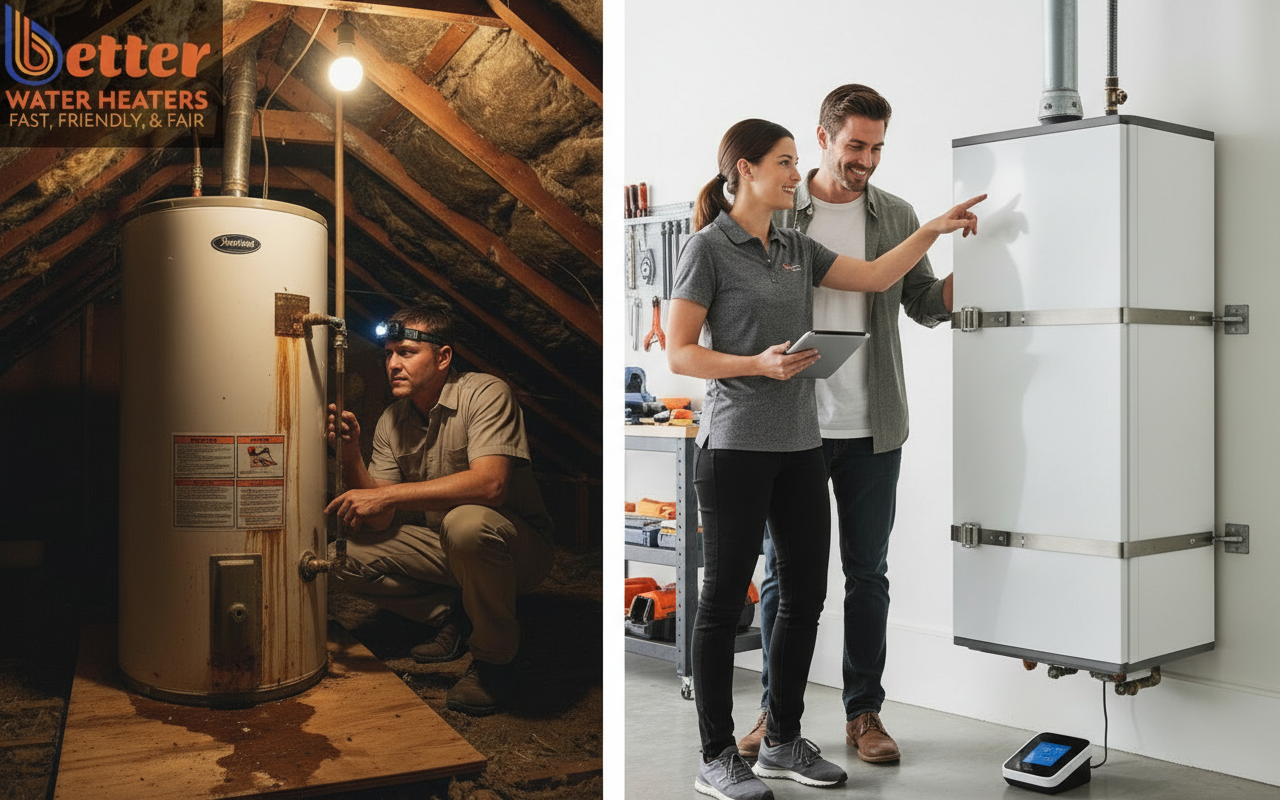
Why Water Heater Relocation is the Smartest 2024 Investment
Strategic water heater relocation allows you to reclaim valuable square footage while upgrading to more efficient technology. By moving the unit to a garage or an exterior closet, you simplify future maintenance and ensure your home meets the latest California building codes.
Transitioning during a relocation is the perfect time to consider a heat pump water heater conversion. These systems are significantly more efficient than gas or standard electric models, and because they require more physical space for airflow, the garage is often the only viable location.
Benefits of Moving to the Garage or Exterior
- Seismic Safety: It is significantly easier to install heavy-duty Bay Area seismic bracing requirements on a concrete garage slab than on wooden attic joists.
- Leak Management: In a garage, a simple floor drain or a smart leak detection shut-off valve can prevent any property damage.
- Noise Reduction: Eliminate the hum of a heating cycle occurring directly above your primary bedroom or home office.
Need an expert assessment of your attic unit? Schedule a professional safety audit with Better Water Heaters today to evaluate your relocation options.
Navigating Bay Area Seismic Bracing Requirements and Codes
California’s Health and Safety Code requires all new and replacement water heaters to be braced, anchored, or strapped to resist falling during an earthquake. In the Bay Area, these requirements are strictly enforced during the permit process.
Relocating your unit ensures Title 24 compliance water heaters standards are met. This includes proper venting for gas units or dedicated electrical circuits for high-efficiency electric models. Failure to comply can complicate home sales and lead to significant fines during city inspections.
| Requirement | Attic Installation | Garage Relocation |
|---|---|---|
| Seismic Strapping | Difficult to anchor to studs | Standard/Highly Secure |
| Drain Pan/Lines | Required & prone to clogs | Simple floor drainage |
| Accessibility | Poor (requires ladders) | Excellent |
| Code Compliance | Often grandfathered/unsafe | Fully compliant with 2024 codes |
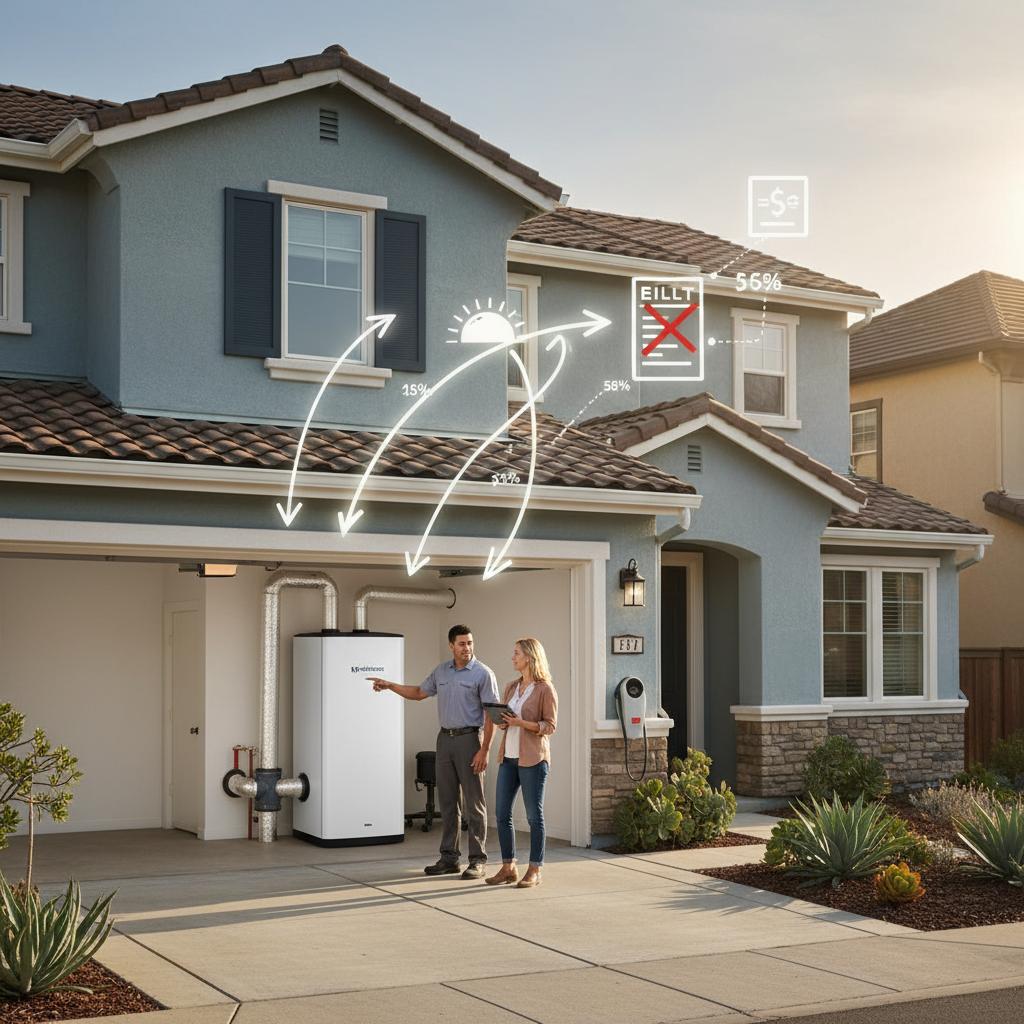
Maximizing Rebates: TECH Clean California and Beyond
The labor involved in water heater relocation—including extending gas lines, water pipes, and electrical circuits—can be offset by aggressive local incentives. The U.S. Department of Energy highlights that heat pump technology can save households hundreds per year in energy costs.
In the Bay Area, programs like TECH Clean California and Peninsula Clean Energy offer thousands of dollars in rebates for residents moving away from gas units. These incentives are specifically designed to encourage the transition to electric heat pump models, which are safer and more environmentally friendly.
- Federal Tax Credits: Claim up to 30% of the project cost (up to $2,000) under the Inflation Reduction Act.
- Local Utility Rebates: Silicon Valley Clean Energy and other providers offer localized bonuses for electrification.
- Expert Handling: At Better Water Heaters, we handle the complex permit and rebate paperwork for you.
Don’t leave money on the table. Check our latest guide on Bay Area water heater rebates to see how much you can save on your relocation project.
The ‘Space Reclamation’ Strategy for Modern Homes
Sophisticated homeowners are using attic water heater replacement as an opportunity to gain storage or even living space. By removing a bulky 50-gallon tank from a finished loft, you can convert that ‘dead space’ into a walk-in closet or a climate-controlled storage area for family heirlooms.
This strategy is particularly effective when paired with a tankless water heater retrofit. Tankless units are roughly the size of a suitcase and can be mounted on an exterior wall, freeing up every inch of interior utility space. This increases the appraisal value of your home by maximizing usable square footage.
Relocation Safety Checklist
- Verify the new location has adequate ventilation (for gas) or airflow (for heat pumps).
- Ensure the path from the old attic location to the new spot is structurally sound for pipe routing.
- Confirm the electrical panel can support a 30-amp breaker if switching to electric.
- Install a Wi-Fi-enabled leak detection system for ultimate peace of mind.
Conclusion: Act Before the ‘Big One’
Relocating a water heater is a proactive measure that protects your most valuable asset. In the Bay Area, it isn’t a matter of if an earthquake or a tank failure will occur, but when. By moving your unit now, you ensure your home is compliant, efficient, and safe from catastrophic water damage.
Better Water Heaters has over 20 years of experience navigating the specific challenges of Bay Area homes. From San Mateo to Santa Clara, we specialize in complex relocations that other plumbers won’t touch. We ensure every job meets local codes and maximizes your available rebates.
Ready to move your water heater to a safer location? Contact Better Water Heaters today for a free on-site consultation and take the first step toward a safer, more efficient home.
Frequently Asked Questions
How much does water heater relocation cost in the Bay Area?
The cost typically ranges from $2,500 to $6,000 depending on the distance of the move and the need for new gas or electrical lines. However, when combined with a heat pump upgrade, local rebates can often cover a significant portion of these labor costs, making it a highly cost-effective safety upgrade.
Do I need a permit to move my water heater to the garage?
Yes, all Bay Area municipalities require a plumbing and/or electrical permit for relocation. This ensures that the new installation meets Bay Area seismic bracing requirements and Title 24 energy standards. Better Water Heaters manages the entire permitting process for our clients to ensure full compliance.
Can I replace my attic tank with a tankless unit in the same spot?
While possible, it is rarely recommended. Tankless units still require maintenance and can leak. Moving the unit to an exterior wall or garage during a tankless water heater retrofit is safer and provides easier access for the annual descaling required to maintain the manufacturer’s warranty.
Will moving my water heater affect my hot water delivery time?
It can, but this is easily mitigated. If the new location is further from your primary bathrooms, we recommend installing a high-efficiency recirculation pump. This ensures instant hot water at every tap, regardless of where the heater is located, while actually reducing overall water waste.