
📋 Table of Contents
In the high-stakes world of Bay Area real estate, every square foot is a premium asset. Yet, many homeowners allow a bulky, 50-gallon cylindrical tank to occupy prime real estate in their garage. Transitioning to a space-saving water heater is no longer just a plumbing upgrade; it is a strategic move to reclaim functional living space.
Key Takeaways for Bay Area Homeowners
- Reclaim 9-12 Square Feet: Moving to a wall-mounted unit eliminates the bulky tank and its required safety clearances.
- Enhance Property Value: Converting utility corners into functional workspace or EV charging bays increases home ROI.
- Safety First: Removing gas pilot lights from garage floors reduces fire risks from stored paints or gasoline.
- Maximize Rebates: Access up to $4,900 in local incentives for high-efficiency upgrades.
The High Cost of the ‘Utility Corner’ in the Bay Area
Consequently, the traditional water heater setup is the single biggest obstacle to modern garage utility. A standard tank requires not just its own footprint, but a specific radius of “clearance space” for ventilation and maintenance access. In cities like San Jose or Palo Alto, where the price per square foot can exceed $1,000, that ‘utility corner’ is effectively costing you $10,000 in unusable equity.
Furthermore, the shift toward electric vehicles (EVs) has created a new demand for wall space. Many homeowners find that their old tank sits exactly where a Level 2 charging station needs to be installed. By opting for a space-saving water heater, you clear the path for the green energy transition without sacrificing storage.
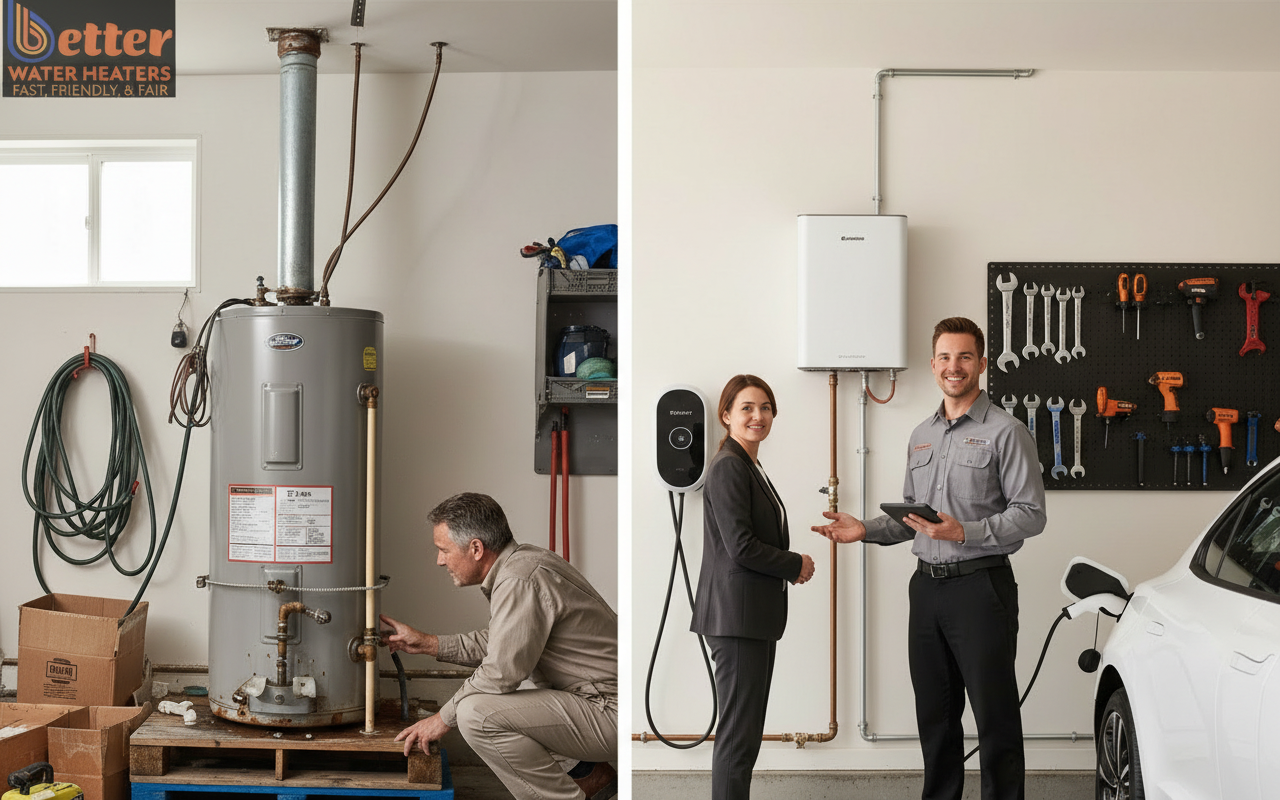
Why Traditional Tanks Waste Your Space:
- The Footprint: A 50-gallon tank usually occupies a 24-inch diameter circle.
- The Stand: California code often requires tanks to be elevated 18 inches, creating a massive trip hazard.
- The Clearance: Combustible materials must be kept 12-18 inches away, further eating into your floor plan.
- The Bollard: Many garages require a steel post to protect the tank from cars, taking up even more room.
Strategic Garage Organization: Bay Area Trends
Currently, we are seeing a massive surge in “lifestyle garages.” Homeowners are no longer content with a dusty storage room; they want home gyms, high-tech workshops, and Accessory Dwelling Units (ADUs). A wall-mounted water heater installation is the foundation of these transformations.
Specifically, the use of a recessed water heater box allows the unit to sit flush within the wall framing. This “zero-clearance” approach means your water heater effectively disappears, leaving a flat surface for cabinetry or tool racks. According to Energy.gov, these units are also 24% to 34% more energy-efficient than conventional tanks.
| Feature | Traditional 50-Gal Tank | Wall-Mounted Tankless |
|---|---|---|
| Floor Space Used | 9-15 sq. ft. (with clearance) | 0 sq. ft. (Wall-mounted) |
| Lifespan | 10-12 Years | 20+ Years |
| Safety Risk | Pilot light near floor/flammables | Sealed combustion/Wall-height |
| Bay Area Rebates | Minimal | Up to $4,900+ |
Ready to see how much space you can save? Schedule your free on-site consultation with our Bay Area specialists today.
Maximizing ROI with Exterior Relocation
Interestingly, one of the most effective ways to achieve garage floor space optimization is to move the unit outside entirely. Modern tankless systems are designed with freeze protection and weather-proof casing, allowing them to be mounted on the exterior of your home. This eliminates garage noise and the risk of indoor flooding from a ruptured tank.
Moreover, this relocation is a game-changer for ADU conversions. If you are turning your garage into a livable apartment, removing the water heater from the interior footprint is often the only way to meet strict California building codes for square footage and safety. To learn more about local requirements, check out our guide on Bay Area water heater regulations.
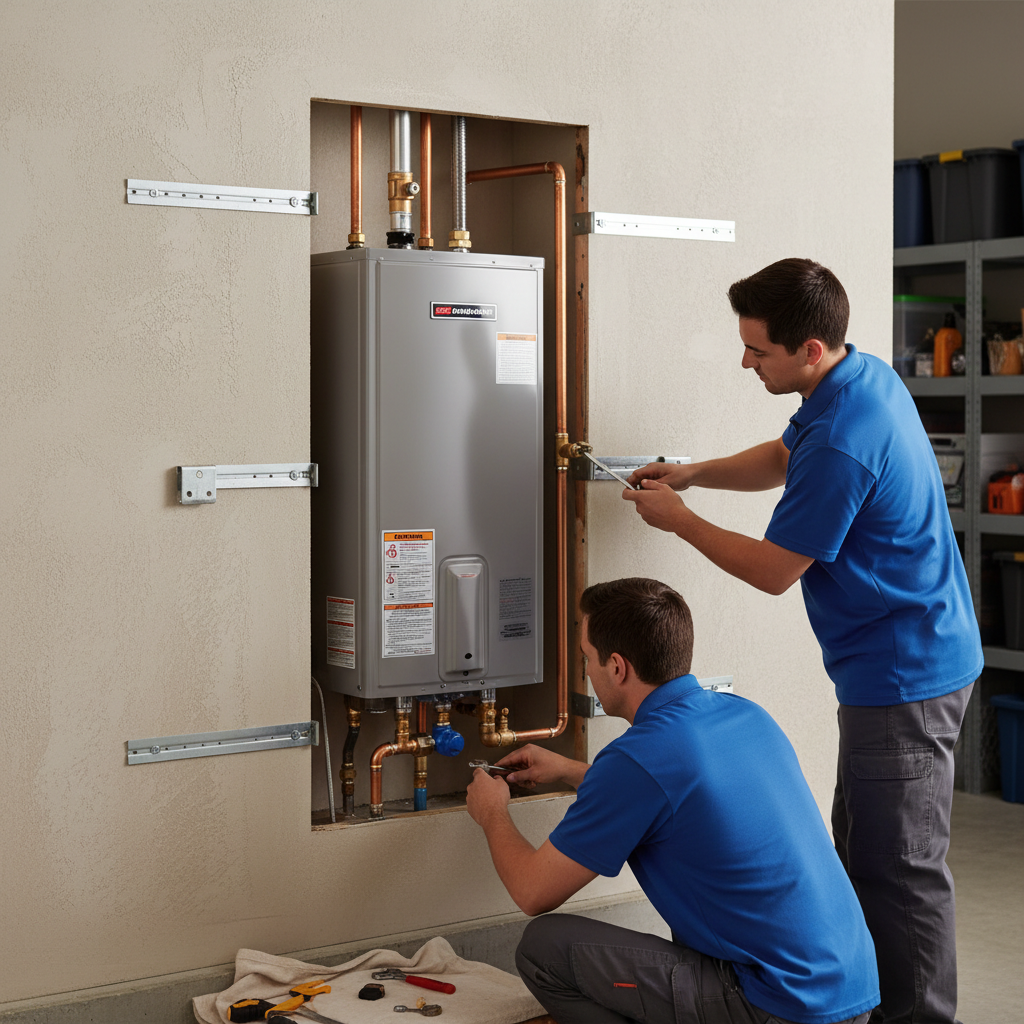
The Benefits of Outdoor Mounting:
- Zero Interior Footprint: Reclaim 100% of the previous utility area for storage.
- Noise Reduction: No more hearing the burner kick on through the garage-to-kitchen wall.
- Simplified Venting: Exterior units vent directly to the atmosphere, avoiding complex indoor pipe runs.
- Flood Prevention: If the unit eventually fails, the water drains outside, not into your home.
The Financial Logic of the Upgrade
While the upfront cost of a space-saving water heater is higher than a standard tank, the electric tankless water heater ROI is significant when factoring in property value. If you reclaim 10 square feet of space in a San Francisco or San Mateo home, you have essentially added $10,000+ in functional value to your floor plan.
Additionally, the EPA highlights that high-efficiency appliances are a top priority for modern homebuyers. By installing a high-end Navien or Rinnai system, you are future-proofing your home against the 2027 gas water heater regulations. You can explore more about these transitions in our heat pump water heater guide.
Don’t wait until your old tank leaks and ruins your garage storage. Contact Better Water Heaters to discuss your garage organization Bay Area goals and get a transparent quote.
Safety and Seismic Considerations
Safety is a major driver for wall-mounted conversions in Northern California. Traditional tanks are heavy—often weighing over 500 pounds when full. During a seismic event, even a strapped tank can pose a significant risk to your home’s structure. A space-saving water heater is lightweight and securely bolted to the wall studs, significantly reducing the center of gravity and potential for damage.
Furthermore, wall-mounting keeps the appliance away from floor-level hazards. In many Bay Area garages, homeowners store lawn chemicals, gasoline for mowers, and oil-based paints. Elevating the ignition source (the water heater) is a critical safety recommendation from the National Fire Protection Association.
Installation Checklist for Reclaiming Space:
- Assess Gas Line Capacity: Tankless units often require a larger gas line to handle the high-output burners.
- Electrical Requirements: If switching to an electric or heat pump model, you may need a 240V circuit.
- Permit Compliance: Every city from Fremont to Redwood City has specific permit requirements for relocation.
- Rebate Paperwork: Ensure your installer handles the TECH Clean California or local utility rebate applications.
Conclusion: Your Garage, Reimagined
Ultimately, the decision to install a space-saving water heater is about more than just hot water. It is about taking back control of your home’s most versatile room. Whether you are building a home gym, installing an EV charger, or simply tired of the clutter, removing the bulky tank is the first step toward a more efficient, valuable home.
At Better Water Heaters, we have spent 20+ years helping Bay Area residents optimize their homes. We handle the permits, the plumbing, and the rebate applications so you can focus on enjoying your newly reclaimed space. Ready to transform your garage? Request your free estimate today or call us to speak with a specialist.
Frequently Asked Questions
How much garage space can I actually save?
Most homeowners reclaim between 9 and 12 square feet of floor space. When you factor in the required safety clearances and the removal of the 18-inch tank stand, you effectively clear an entire corner of your garage for shelving, a workbench, or an EV charging station.
Is wall-mounted water heater installation more expensive?
The initial installation cost for a wall-mounted tankless system is higher than a standard tank, typically ranging from $3,500 to $5,500. However, when you factor in the 20-year lifespan, energy savings, and the $4,900+ in available Bay Area rebates, the long-term cost is often lower.
Can I mount my water heater on an exterior wall in the Bay Area?
Yes, the Bay Area’s temperate climate is ideal for exterior-mounted units. Modern systems include built-in freeze protection. This move is a popular choice for garage organization Bay Area projects because it completely removes the appliance from the interior footprint of the home.
Do I need an electrical upgrade for a space-saving water heater?
If you are installing a gas tankless unit, you only need a standard 120V outlet for the digital controller. However, if you are switching to a high-efficiency heat pump or electric tankless model, you may need a dedicated 240V circuit, which our team can coordinate during the installation process.