
📋 Table of Contents
If you live in an older home in San Jose or Oakland, you might find your electric panel maxed out when trying to go green. Many homeowners face a $5,000 roadblock when told their 100-amp service can’t handle a traditional electric water heater. Fortunately, a new generation of ‘power-sipping’ technology is changing the game for Bay Area residents.
Key Takeaways for Sophisticated Homeowners:
- Avoid Upgrades: 120V ‘plug-in’ models operate on standard circuits, saving you $2,000–$5,000 in electrical work.
- Massive Rebates: Access up to $4,900 in incentives through programs like TECH Clean California.
- Fast Installation: Since no high-voltage wiring is required, these units are ideal for emergency replacements.
- Energy Efficiency: These units use up to 70% less energy than conventional tanks, according to Energy.gov.
The 100-Amp Dilemma: Why Your Electric Panel Is Maxed Out
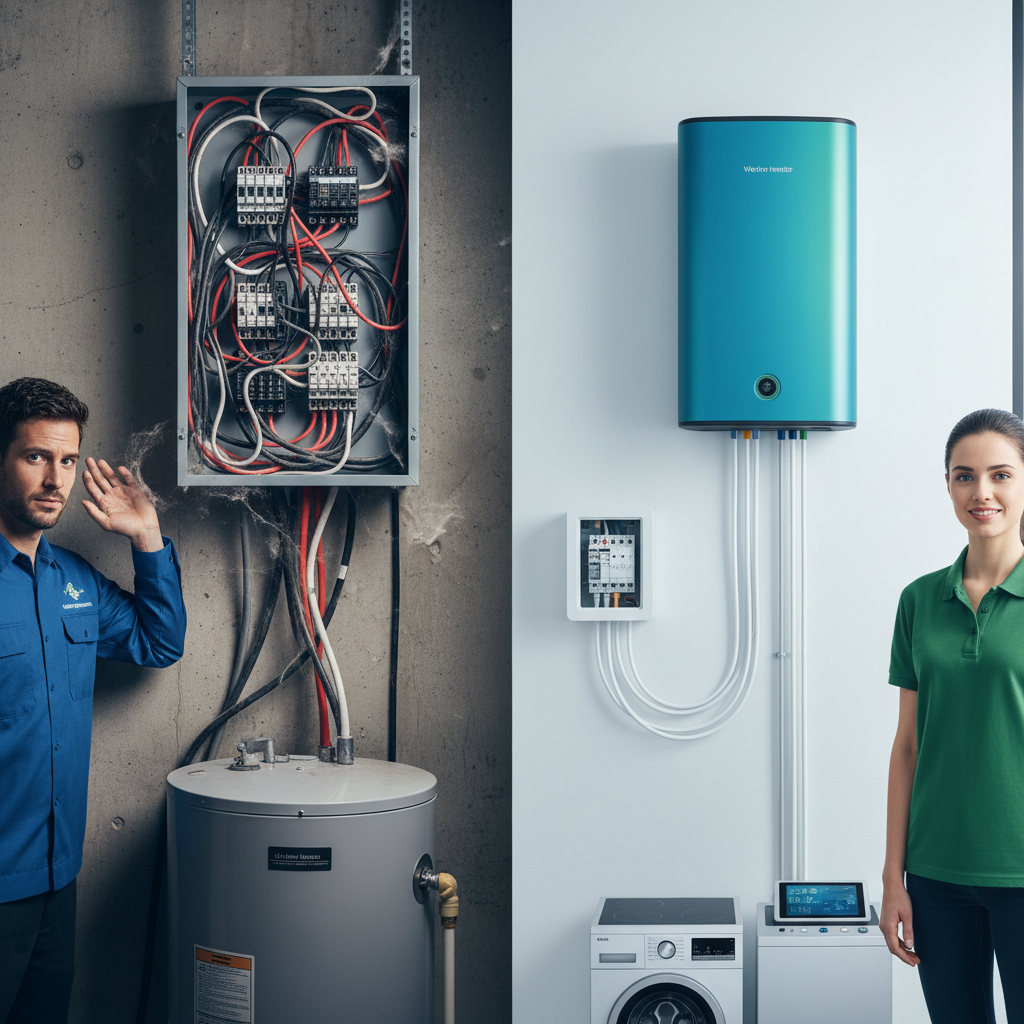
Most mid-century homes in the Bay Area were built with 100-amp electrical panels, which were never designed for the total electrification of heating, cooking, and EV charging. When you attempt to add a standard 240V electric water heater, you often hit a capacity ceiling.
Consequently, many contractors will tell you that a service upgrade is mandatory. This involves coordinating with PG&E, pulling expensive permits, and potentially replacing your entire main breaker box. For many, this unexpected expense kills the project before it starts.
- Traditional electric tanks require a dedicated 30-amp double-pole breaker.
- Many 100-amp panels are already at 90% utilization with existing appliances.
- Utility-side upgrades can take weeks or months to schedule in high-demand areas like Palo Alto or Fremont.
The ‘No-Rewire’ Revolution: 120V Heat Pump Technology
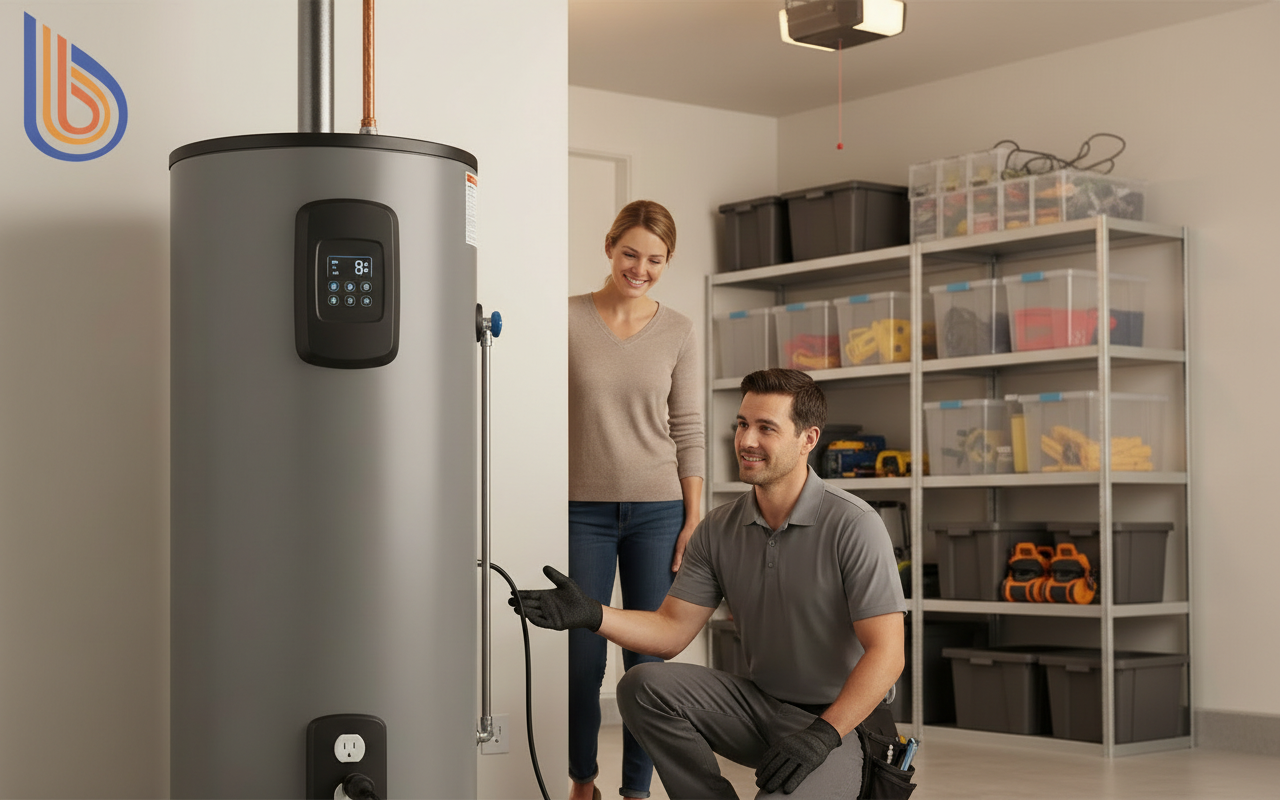
To solve the issue of an electric panel maxed out, manufacturers like Rheem and AO Smith have introduced 120V ‘plug-in’ heat pump water heaters. These units are designed specifically for the retrofit market, allowing for avoiding electrical panel upgrade costs entirely.
Furthermore, these ‘power-sipping’ units utilize ‘volt-shift’ technology to deliver high-efficiency hot water using the same amount of power as a common toaster. This makes Bay Area home electrification accessible to those with older infrastructure who want to transition away from gas.
Technical Advantages of Low-Amp Models:
- Shared Circuit Capability: Some models can run on a 15-amp shared circuit, though a dedicated line is always preferred.
- Soft Start Technology: These units avoid high ‘in-rush’ current, preventing your breakers from tripping during startup.
- Integrated Mixing Valves: To compensate for slower recovery times, these units often store water at higher temperatures and mix it down, effectively increasing your hot water capacity.
Need to know if your home is a candidate for a 120V swap? Schedule a professional capacity assessment with our expert team today.
Financial Comparison: Standard vs. Power-Sipping Models
When evaluating the total cost of ownership, looking only at the unit price is a mistake. You must factor in the ‘hidden’ electrical infrastructure costs that arise when your electric panel is maxed out.
| Feature | Standard 240V Electric | 120V ‘Power-Sipping’ HPWH |
|---|---|---|
| Electrical Requirement | 30-Amp / 240V | 15-Amp / 120V |
| Panel Upgrade Needed? | Likely ($3,000 – $5,000) | Rarely ($0) |
| Bay Area Rebates | High | Maximum (incentivized for gas-to-HP) |
| Installation Speed | 2-3 Days (inc. Electrician) | Same Day (Plumber only) |
By choosing a 120V model, you aren’t just buying a water heater; you are implementing a financial strategy. The savings on electrical labor alone often pays for the premium cost of the heat pump unit itself.
Emergency Strategy: Why Low-Amp Units Save the Day
When your water heater fails on a Tuesday morning, you don’t have three weeks to wait for an electrical panel upgrade. This is where the 100 amp panel heat pump water heater shines as the ultimate emergency solution.
Since these units can often plug into a nearby standard outlet (with proper plumbing modifications), the installation timeline is drastically reduced. We can often get your hot water back online within 24 hours while still helping you meet your decarbonization goals.
- Zero Downtime: Avoid the wait for utility permits and inspections required for panel upgrades.
- Code Compliance: These units meet all 2024 California Title 24 requirements for energy efficiency.
- Future-Proofing: Even if you eventually upgrade your panel for an EV, you’ve already reserved 30 amps of capacity by choosing a low-draw water heater.
As noted by the EPA, reducing peak demand is critical for the stability of our local power grid. By installing a ‘power-sipping’ unit, you are doing your part for the Bay Area’s energy future.
Maximizing Your Investment with Local Rebates
The Bay Area is currently the best place in the country to upgrade your water heater. Between federal tax credits and local incentives, the net cost of a ‘power-sipping’ unit can be lower than a basic gas tank.
Current Incentive Programs:
- TECH Clean California: Offers thousands in direct-to-contractor incentives that we pass on to you.
- BayREN: Provides $1,000+ for switching from gas to heat pump technology.
- Inflation Reduction Act (25C Tax Credit): Claim 30% of the project cost, up to $2,000, on your annual tax return.
- Utility-Specific Rebates: Silicon Valley Clean Energy (SVCE) and Peninsula Clean Energy offer additional ‘top-up’ bonuses for residents in their service areas.
Don’t leave money on the table. Check your eligibility for local rebates and let us handle the paperwork for you.
Is a 120V Water Heater Right for Your Family?
While these units are revolutionary for an electric panel maxed out, they do require a slight shift in how you think about hot water. Because they pull less power, their ‘recovery rate’ (how fast they reheat water) is slower than a high-amp unit.
However, for most 2-4 person households in the Bay Area, this is easily managed by sizing up the tank. A 66-gallon or 80-gallon 120V unit provides a massive ‘buffer’ of hot water, ensuring you never notice the lower power draw during your morning shower.
- Sizing Matters: We typically recommend going one size larger than your current gas tank.
- Location: These units need air space (usually 700-1,000 cubic feet) or ducting to operate efficiently.
- Noise: Modern heat pumps are about as loud as a quiet dishwasher—perfect for garages or utility rooms.
Conclusion: Solving the Electrification Puzzle
Transitioning to a sustainable home shouldn’t require a $10,000 investment in electrical infrastructure. If your electric panel is maxed out, the move to a ‘power-sipping’ 120V heat pump is the smartest way to achieve Bay Area home electrification without the stress of a major renovation.
Ready to upgrade to a smarter, more efficient home? Contact Better Water Heaters today for a free, transparent estimate. Our specialists will help you navigate the technical requirements, maximize your rebates, and ensure you have reliable hot water for years to come.
Frequently Asked Questions
Can I really run a water heater on a standard 120V outlet?
Yes, specifically designed ‘plug-in’ heat pump water heaters are engineered to operate on a standard 120V circuit. While they heat water more slowly than 240V models, they use highly efficient heat pump technology to provide plenty of hot water for most Bay Area families without requiring a panel upgrade.
How much can I save by avoiding an electrical panel upgrade?
Homeowners typically save between $2,000 and $5,000 by avoiding a main service upgrade. This includes the cost of the new panel, permit fees, labor, and potential utility charges from PG&E to bring more power from the street to your home.
Will a 120V heat pump water heater work in a cold garage?
Absolutely. The Bay Area’s moderate climate is ideal for heat pump technology. Even in the ‘colder’ winter months in areas like San Ramon or Los Gatos, these units efficiently extract heat from the surrounding air to warm your water.
What happens if my family uses all the hot water at once?
Because 120V units have a slower recovery time, we recommend installing a larger tank (such as an 80-gallon model) to provide a larger reserve. Additionally, many units feature a ‘high demand’ mode that can be activated via a smartphone app for days when you have guests.