
📋 Table of Contents
For homeowners in historic districts like Berkeley, North Oakland, or San Francisco’s Sunset District, the transition to sustainable energy often hits a literal wall: the electrical panel. However, the emergence of the 120V heat pump water heater has fundamentally changed the financial math of home decarbonization by offering a high-performance, plug-and-play solution.
Key Takeaways for Bay Area Homeowners
- Avoid Massive Overhead: Skip the $3,000–$5,000 cost of a main electrical panel upgrade.
- Maximize Incentives: Combine federal tax credits (30%) with local TECH Clean California rebates.
- Rapid Deployment: These units plug into standard NEMA 5-15 outlets, ideal for emergency gas-to-electric swaps.
- Future-Proofing: Meet upcoming 2027 zero-NOx regulations before the rush drives up labor costs.
The Financial Logic of Panel Upgrade Avoidance
Traditional 240V heat pump models often require a dedicated 30-amp circuit, which frequently triggers a mandatory main service panel upgrade in homes built before 1970. By contrast, a 120V heat pump water heater utilizes advanced shared-circuit technology to operate on a standard household outlet.
Strategically, this allows a Series A executive or a busy property manager to bypass the weeks of permitting and thousands in PG&E service fees associated with panel up-sizing. According to Energy.gov, heat pump technology is up to three times more efficient than conventional electric resistance units.
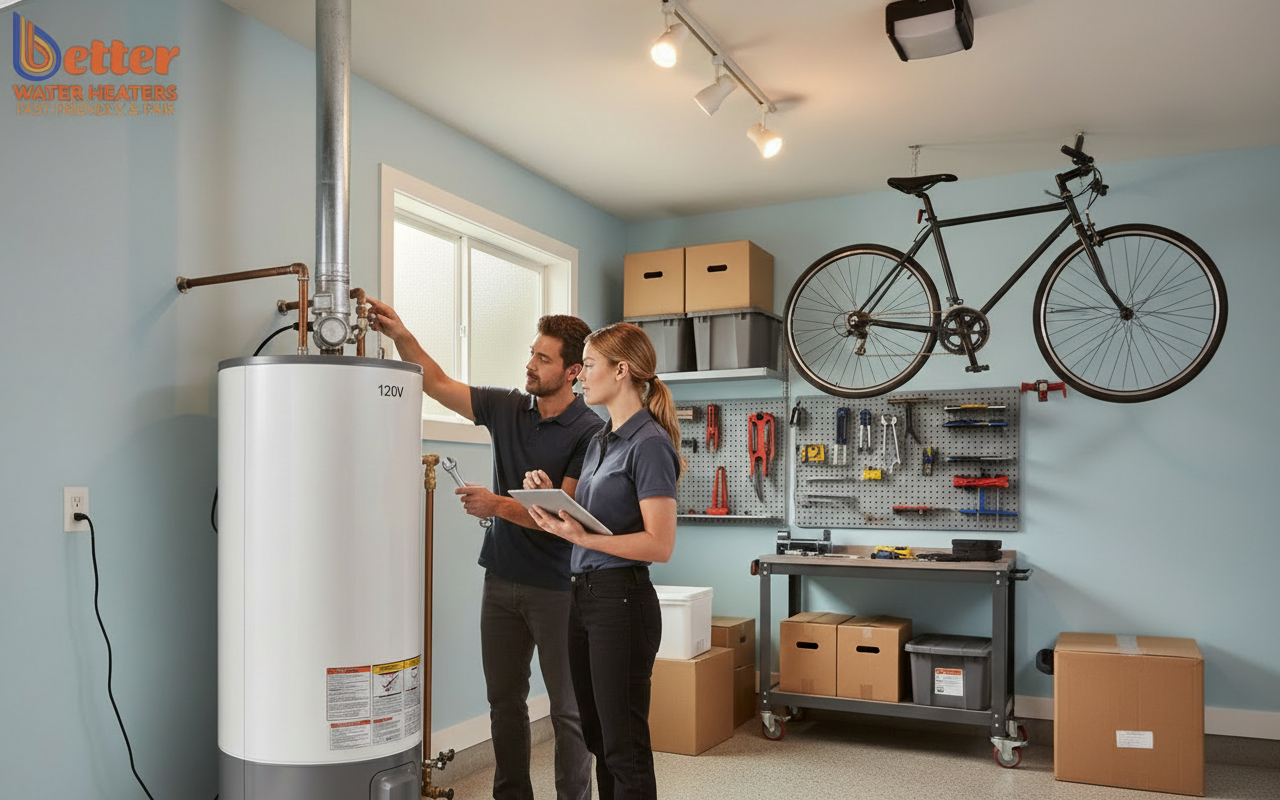
Cost Comparison: 120V vs. 240V Installation
| Expense Item | Standard 240V Hybrid | 120V Plug-In Model |
|---|---|---|
| Equipment Cost | $1,800 – $2,500 | $2,200 – $3,000 |
| Electrical Panel Upgrade | $3,500 – $5,500 | $0 |
| New 240V Circuit Wiring | $800 – $1,500 | $0 (Uses existing outlet) |
| Total Estimated Investment | $6,100 – $9,500 | $2,200 – $3,000 |
Maximizing ROI with Bay Area Electrification Rebates
The real ROI of a 120V heat pump water heater isn’t just in the avoided costs; it’s in the aggressive incentive stacking available to California residents. Sophisticated investors look at the Net Present Value (NPV) of these upgrades, which often reach a break-even point in under three years.
- Federal Tax Credit (25C): Claim 30% of the project cost, capped at $2,000 annually.
- TECH Clean California: Access base incentives that can range from $1,000 to $4,800 depending on your utility provider and home equity status.
- BayREN Home+ Incentives: Additional rebates for San Mateo and Santa Clara county residents often apply.
If you are navigating these complex filing requirements, our team at Better Water Heaters handles the rebate paperwork for you to ensure you don’t leave money on the table.
Technical Performance: Does 120V Meet the Demand?
A common concern among VPs and high-growth leaders is whether a 120V heat pump water heater can keep up with a family’s morning routine. Modern units like the Rheem ProTerra 120V utilize an integrated mixing valve and high-capacity storage to deliver equivalent first-hour ratings to their 240V counterparts.
- Efficiency: These units maintain a high Uniform Energy Factor (UEF), often exceeding 3.0.
- Micro-Climate Adaptation: In the temperate Bay Area climate, these units perform exceptionally well in unconditioned garages or crawlspaces.
- Quiet Operation: Advanced compressors mean these units are significantly quieter than older models, perfect for tight Berkeley lots.
Need a professional assessment for your specific floor plan? Schedule a site visit with our specialists to determine if your existing plumbing is ready for a plug-and-play conversion.
Strategic Advantages for Mid-Century Berkeley and Oakland Homes
Older homes in the East Bay often feature “utility closets” with limited ventilation and space. The 120V heat pump water heater is engineered for these exact constraints, often featuring a smaller footprint than traditional gas tanks.
- Zero Emissions: Eliminate the risk of CO2 leaks and the need for complex gas venting.
- Seismic Safety: Our installations include California-code compliant seismic strapping, critical for homes near the Hayward fault.
- Emergency Readiness: If your gas heater leaks today, a 120V unit can often be installed in 24 hours without waiting for an electrician.
By choosing a plug-in water heater conversion, you are not just replacing an appliance; you are increasing your home’s equity in a market that increasingly values “green” certifications and modern infrastructure.
The 2027 Gas Ban: Why Waiting Costs More
The Bay Area Air Quality Management District (BAAQMD) has signaled a phase-out of gas water heaters starting in 2027. Forward-thinking homeowners are acting now to avoid the inevitable surge in labor costs and equipment shortages that will occur as the deadline approaches.
According to Harvard Business Review, early adopters of infrastructure technology often benefit from lower acquisition costs and longer periods of operational savings. Transitioning to a 120V heat pump water heater today secures your home’s compliance and starts your energy savings immediately.
Conclusion: A High-Yield Investment for the Modern Home
The 120V heat pump water heater represents the intersection of fiscal responsibility and environmental stewardship. By eliminating the need for expensive electrical work, it provides a clear path to electrification for the most challenging Bay Area properties.
Ready to upgrade your home’s efficiency without the headache of a major renovation? Call Better Water Heaters today at 408-250-6672 or request a quote online to see how much you can save through local rebates and the latest heat pump technology.
Frequently Asked Questions
Is a 120V heat pump water heater as fast as a gas heater?
While the recovery time (the time to reheat the whole tank) is slower than gas, the 120V heat pump water heater uses a large storage capacity and a mixing valve to provide a similar amount of initial hot water. For a typical 4-person household, these units perform seamlessly without running out of water during peak demand.
Do I need a special outlet for a plug-in water heater conversion?
Most 120V models are designed to work with a standard NEMA 5-15 or 5-20 grounded outlet. However, it is highly recommended that the outlet be on a dedicated circuit to ensure consistent power delivery and compliance with local Bay Area building codes.
How much can I actually save with TECH Clean California rebates?
As of 2024, many Bay Area residents qualify for $1,000 to $3,100 in direct rebates for switching from gas to a heat pump. When combined with the 30% federal tax credit, the net cost of a 120V heat pump water heater can often be lower than a traditional gas replacement.
Will a heat pump water heater make my garage too cold?
Heat pumps extract heat from the surrounding air, which can lower the temperature of a small room by 3-5 degrees. In the Bay Area’s moderate climate, this is rarely an issue in garages or basements, and the cooling effect can actually be a benefit during our increasingly warm summer months.