
📋 Table of Contents
Key Takeaways:
- A water heater anode rod replacement every 3–5 years can double your tank’s operational lifespan.
- Bay Area water varies significantly; East Bay hard water depletes rods faster than SF’s Hetch Hetchy supply.
- Replacing a $50 rod prevents a $3,000+ emergency tank failure and potential water damage.
- Powered anode rods are an advanced solution for eliminating ‘rotten egg’ odors in well-water systems.
Maintaining a home in the Bay Area requires strategic foresight, especially when a standard 50-gallon tank replacement now exceeds $2,500 in many local municipalities. The most effective way to protect this investment is a water heater anode rod replacement, a simple maintenance task that acts as a primary defense against internal tank corrosion.
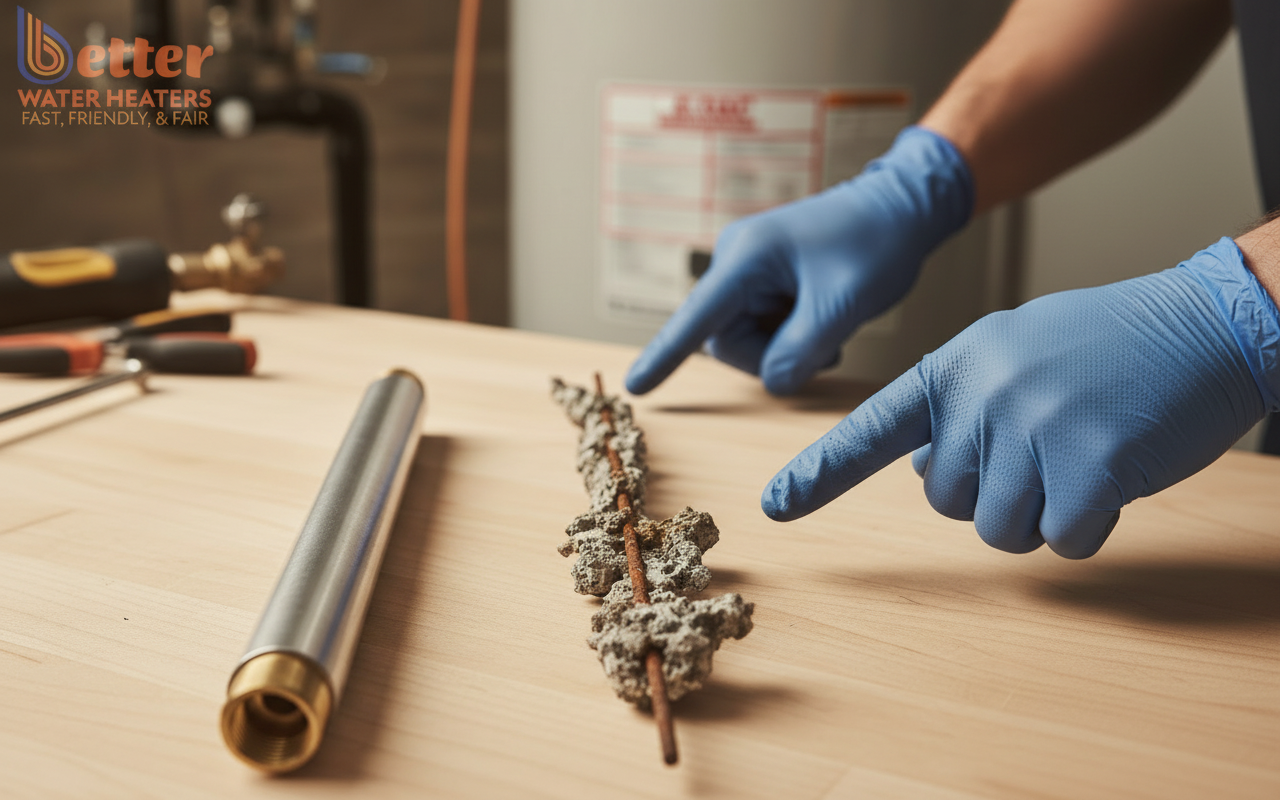
Furthermore, many homeowners are unaware that their water heater contains a ‘sacrificial’ component designed specifically to rust so the steel tank doesn’t have to. Without this rod, the electrochemical process of electrolysis will eat through your tank lining in as little as six or seven years, leading to catastrophic leaks.
What is a Sacrificial Anode Rod and Why Does It Matter?
The sacrificial anode rod is a magnesium or aluminum wire wrapped around a steel core, suspended inside your water heater tank. Its sole purpose is to attract corrosive elements in the water, sacrificing its own metal to prevent the steel tank from rusting.
As of 2024, rising material costs have made proactive maintenance more critical than ever for Bay Area residents. According to Energy.gov, internal corrosion is the leading cause of premature tank failure, yet it is almost entirely preventable through routine inspection.
- Magnesium Rods: Best for most Bay Area homes with standard municipal water; provides the highest level of galvanic protection.
- Aluminum Rods: Often used in areas with high pH levels or hard water to prevent rapid depletion.
- Powered Anodes: Use electrical pulses to prevent rust; these never need replacement and are ideal for high-tech Silicon Valley homes.
If you haven’t checked your rod in over three years, you are likely operating on borrowed time. You can schedule a professional inspection today to ensure your tank remains structurally sound.
The Bay Area Micro-Climate Effect: Hard Water vs. Hetch Hetchy
Your water heater anode rod replacement schedule depends heavily on where you live in the region. The Bay Area’s water chemistry is notoriously diverse, affecting how quickly your sacrificial rod dissolves.
Residents in San Francisco benefit from the Hetch Hetchy reservoir, which provides relatively soft water. However, homeowners in San Jose, Fremont, and parts of the East Bay often deal with blended groundwater that is significantly harder. Hard water contains high mineral concentrations that accelerate the depletion of magnesium rods.
| Region | Water Type | Anode Lifespan | Recommended Service |
|---|---|---|---|
| San Francisco | Soft (Hetch Hetchy) | 5-7 Years | Inspection every 3 years |
| San Jose / South Bay | Hard / Blended | 2-4 Years | Annual inspection |
| Fremont / East Bay | Moderate to Hard | 3-5 Years | Bi-annual inspection |
Consequently, the ‘Drought Aftermath’ has seen fluctuating mineral levels in California’s water table, meaning even ‘soft’ areas are seeing faster corrosion rates than a decade ago. Proactive sacrificial anode rod service is the only way to account for these environmental shifts.
Signs You Need a Water Heater Anode Rod Replacement
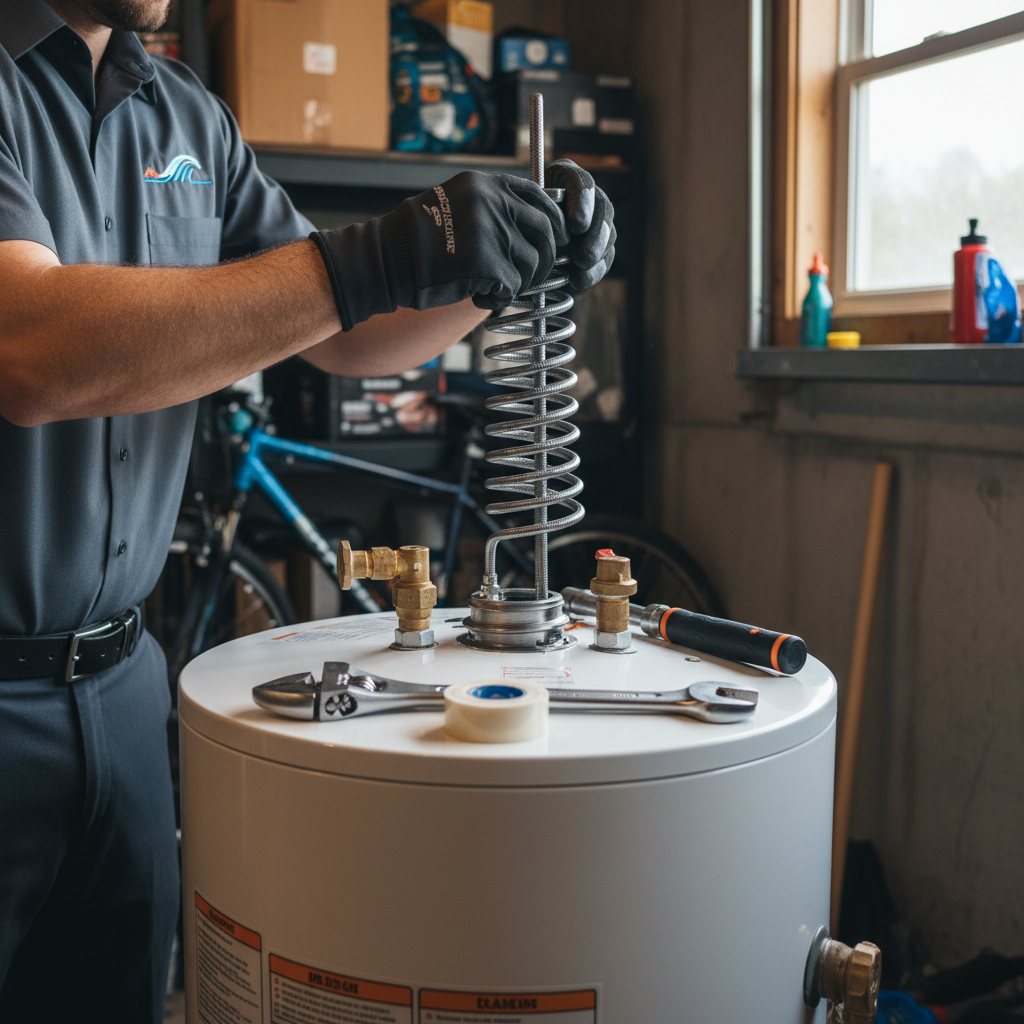
Identifying a failing rod before the tank leaks is the hallmark of a sophisticated homeowner. Watch for these specific corroded anode rod symptoms:
- The ‘Rotten Egg’ Smell: A sulfur odor often indicates that bacteria are reacting with a magnesium rod; switching to an aluminum or powered rod usually solves this.
- Rusty Water: If your hot water looks discolored but your cold water is clear, your tank’s internal lining is likely starting to corrode.
- Popping Noises: While often caused by sediment, these sounds indicate an environment where the anode is working overtime.
- Age of Unit: If your heater is 5+ years old and has never been serviced, the rod is likely 75% depleted.
Need an expert opinion? Read our full maintenance guide or call us for a diagnostic visit.
How to Extend Water Heater Life via Maintenance ROI
Strategic water heater tank life extension is about simple math. A professional water heater anode rod replacement typically costs between $150 and $300, depending on the rod type and accessibility.
Compare this to the cost of a new high-efficiency unit, which can range from $2,500 to $6,000 when including Bay Area permits and seismic strapping requirements. By spending a few hundred dollars twice a decade, you can push a tank’s life from 10 years to 20 years, effectively halving your long-term appliance costs.
- Step 1: Turn off power/gas and water supply.
- Step 2: Drain a few gallons of water to lower the level below the top of the tank.
- Step 3: Use a 1-1/16 inch socket wrench to unscrew the old rod.
- Step 4: Inspect for ‘core wire’ exposure; if the wire is visible, the rod is spent.
- Step 5: Install the new rod using Teflon tape on the threads.
Moreover, for those looking to maximize their ‘smart home’ efficiency, powered anode rod installation offers a ‘set it and forget it’ solution. These devices use a small amount of electricity to provide permanent protection, which is particularly valuable for protecting high-cost Heat Pump Water Heaters incentivized by BayREN rebates.
Sustainability and Insurance: The Hidden Benefits
Beyond the financial ROI, performing a sacrificial anode rod service has significant environmental and legal implications. In the Bay Area, we are increasingly focused on reducing landfill waste.
Every water heater that lasts 20 years instead of 10 represents one less massive steel appliance in our local recycling centers. Additionally, many modern home insurance policies in high-value markets like Palo Alto or Menlo Park are becoming stricter about ‘preventable’ water damage. Documenting your water heater anode rod replacement can be a vital piece of evidence if you ever need to file a claim for a plumbing failure.
Why Professional Service Beats DIY in the Bay Area
While many Silicon Valley DIY enthusiasts attempt this task, there are local complexities to consider. Many older Bay Area homes have limited overhead clearance in closets or crawlspaces, requiring ‘segmented’ or flexible anode rods.
A professional service from Better Water Heaters ensures that the rod is torqued correctly to prevent leaks and that your T&P valve is tested simultaneously. We also handle the specific seismic strapping checks required by California code during every service visit. For military personnel and seniors, we offer specialized discounts to make this essential maintenance even more accessible.
Ready to protect your home? Book your Anode Inspection & Flush with Better Water Heaters today.
Frequently Asked Questions
How often should I perform a water heater anode rod replacement?
For most Bay Area homes, we recommend an inspection every 3 years. If you live in a hard water area like San Jose or use a water softener (which accelerates anode depletion), you should check the rod every 2 years to prevent tank corrosion.
Can a powered anode rod eliminate the rotten egg smell?
Yes, powered anode rod installation is the most effective way to eliminate sulfur odors. Unlike sacrificial magnesium rods, powered anodes do not react with sulfate-reducing bacteria, effectively stopping the production of hydrogen sulfide gas in your hot water tank.
Will replacing the anode rod void my manufacturer warranty?
No, in fact, regular sacrificial anode rod service is often a requirement of the warranty. Most manufacturers, such as Rheem or Bradford White, expect homeowners to maintain the sacrificial components to ensure the tank’s structural integrity over its warranted life.
What is the difference between magnesium and aluminum anode rods?
Magnesium rods provide better galvanic protection and are preferred for most municipal water. Aluminum rods are more durable in hard water or high-pH environments but should be used cautiously as they can accumulate more sediment at the bottom of the tank over time.
Is it worth replacing the anode rod on a 10-year-old water heater?
If the tank isn’t currently leaking and doesn’t have excessive sediment buildup, a water heater anode rod replacement can still add several years of life. However, at the 10-year mark, we recommend a full diagnostic to see if a transition to a high-efficiency heat pump model is a better long-term investment.