
📋 Table of Contents
Understanding your water heater lifespan Bay Area homeowners often realize, requires looking beyond the manufacturer’s label and toward the unique microclimate outside your front door. While a standard tank might last 12 years in a stable environment, the Bay Area’s radical shifts—from the salt-saturated fog of the Sunset District to the blistering dry heat of the Tri-Valley—can shave years off that estimate if you aren’t prepared.
Key Takeaways for Bay Area Homeowners
- Coastal zones (Pacifica, Daly City) face 25-30% faster exterior corrosion due to salt air.
- Inland areas (Livermore, Concord) experience higher thermal fatigue from extreme day-night temperature swings.
- Water source matters: Hetch Hetchy water is soft, but local well-blends in the South Bay increase scale buildup.
- Electrification: Heat pump water heaters (HPWH) perform differently based on ambient humidity and fog levels.
How Microclimates Dictate Water Heater Lifespan in the Bay Area
The San Francisco Bay Area is world-renowned for its microclimates, where the temperature can drop 20 degrees just by crossing the Caldecott Tunnel. For a mechanical system like a water heater, these atmospheric changes aren’t just weather patterns; they are active variables in the rate of mechanical degradation.
Consequently, a homeowner in Walnut Creek faces entirely different maintenance requirements than someone in San Mateo. According to Energy.gov, environmental factors are the leading cause of premature appliance failure. In our region, these factors manifest as “The Fog Tax” or “The Inland Expansion Stress.”
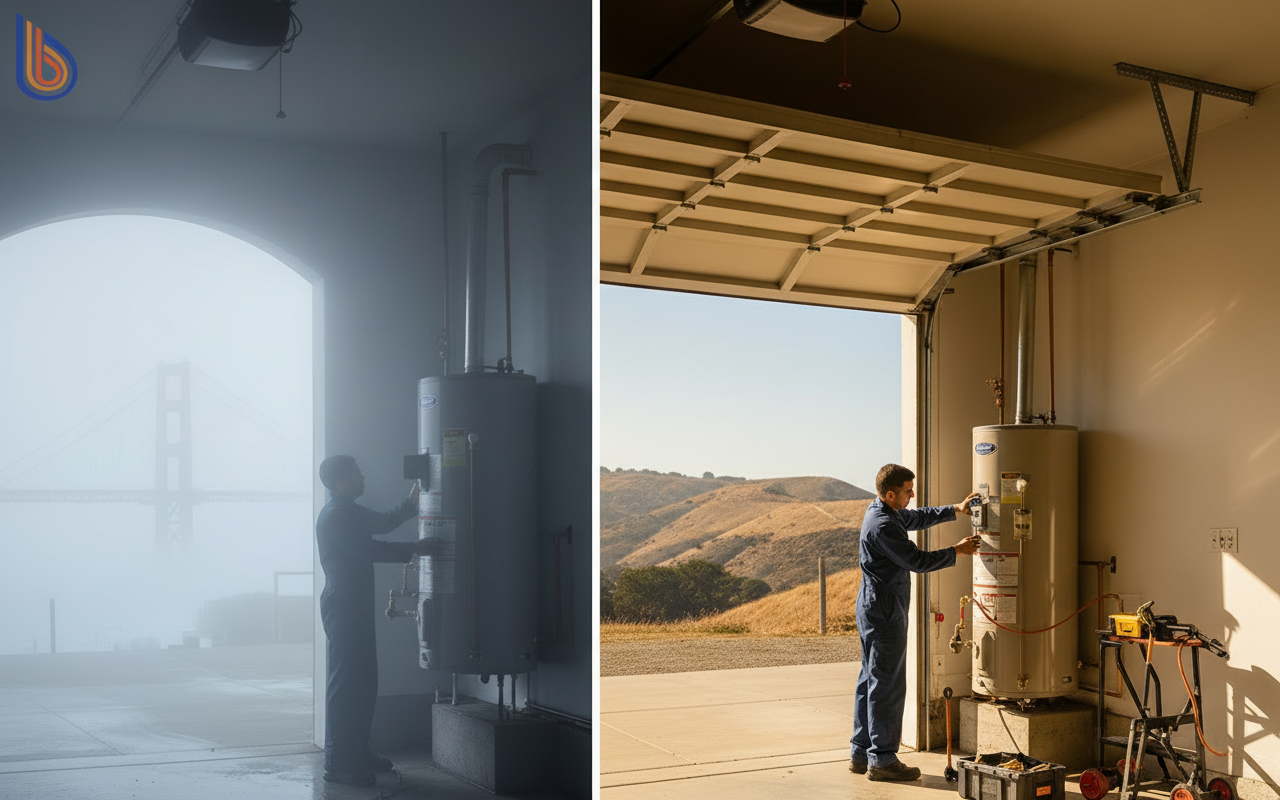
The Coastal Corrosion Factor: Pacifica to Santa Cruz
If you live within five miles of the ocean, coastal corrosion water heater issues are your primary concern. Salt-laden air is highly conductive and chemically aggressive, attacking the outer jacket of your heater and, more dangerously, the delicate electronic sensors found on modern high-efficiency units.
- Exterior Rusting: Salt air penetrates garage vents, leading to pinhole leaks in the tank shell.
- Sensor Failure: On Heat Pump Water Heaters, salt can coat the evaporator coils, reducing heat exchange efficiency by up to 15%.
- Ventilation Issues: High-wind coastal corridors can cause backdrafting in older atmospheric vent models, a serious safety risk.
The Inland Challenge: Thermal Expansion and Heat Stress
In contrast to the coast, the East Bay and Tri-Valley regions deal with intense heat and rapid cooling cycles. This fluctuation causes the metal in your tank to expand and contract more aggressively than it would in a temperate zone like Redwood City. This is where thermal expansion tank installation becomes a non-negotiable requirement for system longevity.
Furthermore, these temperature swings put immense pressure on the tank’s glass lining. Over time, the constant “breathing” of the metal leads to microscopic cracks in the lining, allowing water to touch the steel tank directly—the beginning of the end for any water heater.
| Region | Primary Threat | Avg. Lifespan (Standard) | Recommended Protection |
|---|---|---|---|
| Coastal (Pacifica/SF) | Salt Air Corrosion | 7-9 Years | Powered Anode / Stainless Connectors |
| Bayside (San Mateo/Fremont) | Humidity & Scale | 10-12 Years | Annual Flush / Expansion Tank |
| Inland (Livermore/Concord) | Thermal Fatigue | 9-11 Years | Thermal Expansion Tank / Insulation |
Need a professional assessment of your home’s specific climate risks? Schedule a free Bay Area site evaluation with our experts to ensure your system is built to last.
Water Quality Variations: Hetch Hetchy vs. Local Wells
While atmospheric conditions attack the outside, water chemistry attacks the inside. Much of the Bay Area enjoys pristine water from the Hetch Hetchy reservoir, which is naturally soft. However, many districts in the South Bay and East Bay supplement this with groundwater, leading to Hetch Hetchy water hardness variations that catch homeowners off guard.
- Soft Water Risks: Counter-intuitively, very soft water can be more corrosive to anode rods, requiring more frequent checks.
- Hard Water Buildup: In areas like San Jose or Santa Clara, mineral scale acts as an insulator, forcing your heater to run longer and hotter to reach the same temperature.
- The Solution: Tailoring your anode rod replacement San Francisco schedule to your specific zip code’s water report.
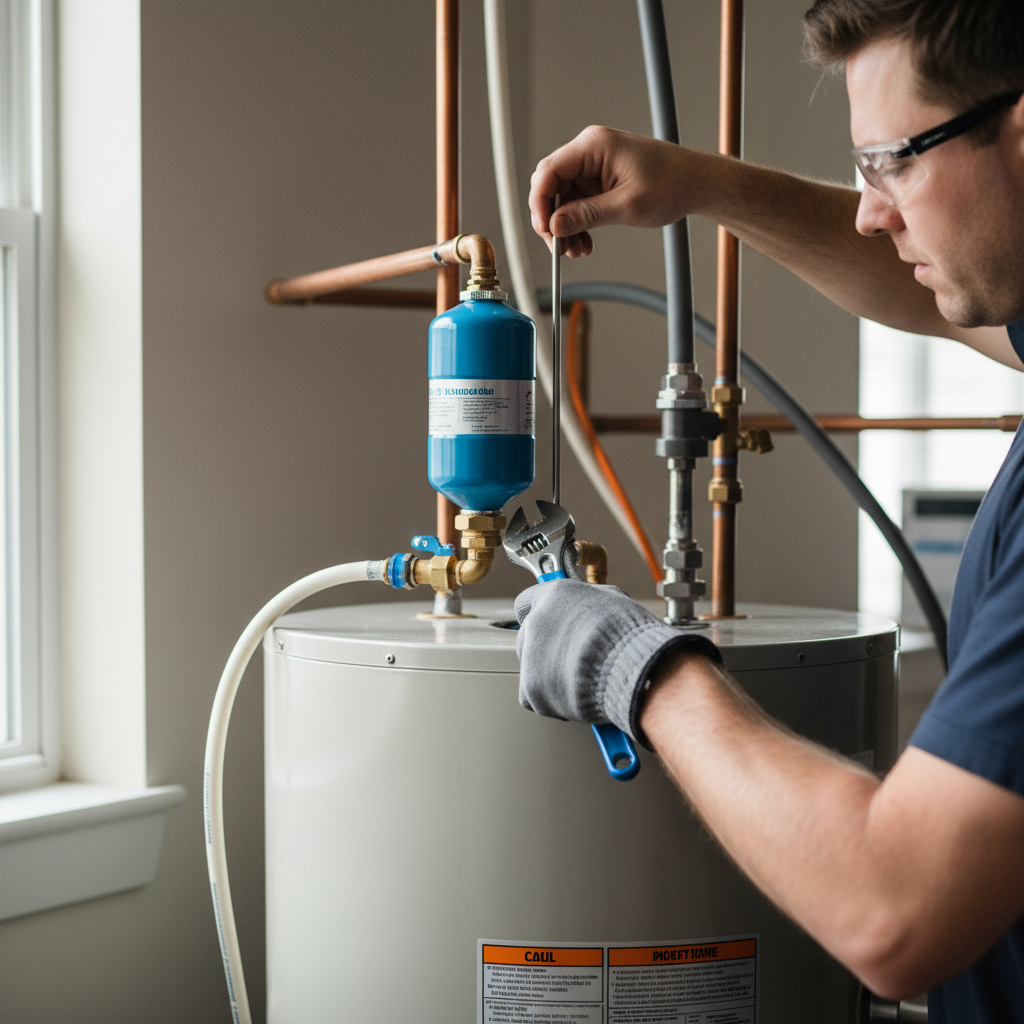
Electrification and the Fog Belt: Heat Pump Efficiency
As California moves toward the 2027 gas water heater ban, many are switching to Heat Pump Water Heaters. However, heat pump water heater fog efficiency is a real concern for those in the “Fog Belt.” Because these units pull heat from the surrounding air, high humidity and low temperatures mean the unit must work harder.
Transitioning to these systems requires a sophisticated understanding of your garage’s ambient temperature. In the Peninsula’s morning chill, a hybrid model might rely more on its electric backup elements, increasing your utility bill if the unit isn’t sized correctly for the microclimate.
Climate-Proofing Your Installation
- Powered Anode Rods: Unlike sacrificial rods, these use small electrical pulses to prevent rust, lasting years longer in corrosive environments.
- Stainless Steel Connectors: Essential for coastal homes to prevent the “electrolysis” that eats through standard copper flex lines.
- Smart Leak Detection: With the high cost of Bay Area real estate, protecting your home from a climate-related tank failure is a high-ROI move.
Are you concerned about how the upcoming regulations affect your home? Learn more about the 2027 Bay Area gas water heater transition and how to stay ahead of the curve.
Maximizing ROI: Maintenance for the Sophisticated Homeowner
For high-growth professionals and property managers, the goal is efficiency and predictability. A proactive maintenance strategy doesn’t just extend your water heater lifespan Bay Area style; it prevents the $10,000+ emergency disaster that happens on a Friday night before a long weekend.
Regular maintenance should include a full system flush to remove sediment, a check of the thermal expansion tank installation pressure, and a visual inspection of all electrical components for signs of Bay Area water heater corrosion. According to Consumer Reports, consistent maintenance can nearly double the life of a modern water heater.
When to Call the Specialists
If you notice any of the following, your microclimate might be winning the battle against your appliance:
- Rusty water or staining around the base of the unit.
- Popping or rumbling sounds (a sign of heavy mineral scale).
- Visible salt crusting on pipes or the tank jacket.
- Frequent circuit breaker trips on electric or heat pump models.
Don’t wait for a flood to find out your water heater has reached its limit. At Better Water Heaters, we’ve spent 20 years mastering the nuances of San Francisco, San Jose, and everything in between. Contact us today for a same-day diagnostic or to discuss a climate-ready upgrade for your home.
Frequently Asked Questions
How long does a water heater last in San Francisco vs. San Jose?
Due to the higher salt content in the air and higher humidity, a water heater in San Francisco typically lasts 8-10 years. In San Jose, where the air is drier but the water is often harder, you can expect 10-12 years, provided you perform annual flushes to manage mineral buildup.
Do I really need a thermal expansion tank in the East Bay?
Yes. Because the East Bay experiences significant temperature swings and many homes are on closed-loop plumbing systems, thermal expansion tank installation is critical. Without it, the pressure spikes caused by heating water can cause your tank to fail prematurely or even burst.
Are tankless water heaters better for coastal homes?
Tankless units are excellent for coastal areas because they don’t store water, reducing internal corrosion. However, you must choose a “coastal grade” model with protected electronics to prevent salt air from damaging the internal circuit boards and sensors.
What is the benefit of a powered anode rod in the Bay Area?
In areas with inconsistent water chemistry or high conductivity (like the Peninsula), a powered anode rod provides superior protection. Unlike standard rods that dissolve over time, powered versions use a small electrical current to stop corrosion, potentially adding 5-10 years to your water heater lifespan Bay Area homeowners expect.