
📋 Table of Contents
- The Core Challenges of Retrofitting Historic Bay Area Homes
- Comparing Compact Solutions for Tight Spaces
- Navigating BAAQMD Regulations and Electrification Mandates
- Space-Saving Strategies: Beyond the Standard Closet
- The Impact of Seismic Bracing in Cramped Quarters
- Maximizing Rebates for Your Retrofit
- Practical Steps: The Compatibility Checklist
- FAQs
Key Takeaways:
- Historic Bay Area homes require specialized venting and seismic bracing for modern water heater upgrades.
- The 2024 BAAQMD regulations are accelerating the shift toward electric heat pump models.
- Space-saving tankless and compact hybrid units are the primary solutions for tight Victorian closets.
- Local rebates can cover up to $4,900 of the installation costs for high-efficiency retrofits.
When retrofitting historic Bay Area homes, homeowners often encounter a frustrating reality: modern high-efficiency appliances are significantly larger than the coal-fired or early gas units they replace. In a city like San Francisco or Oakland, where every square inch of a Victorian-era closet or Mission District basement is precious, finding a system that meets 2024 BAAQMD NOx rules while fitting into a 24-inch wide space is a significant engineering challenge.
As of 2024, the Bay Area Air Quality Management District (BAAQMD) has implemented stricter standards that phase out traditional gas water heaters in favor of zero-NOx alternatives. For owners of historic properties, this transition isn’t just about environmental responsibility; it’s about navigating structural limitations and outdated electrical panels to ensure long-term property value and compliance.
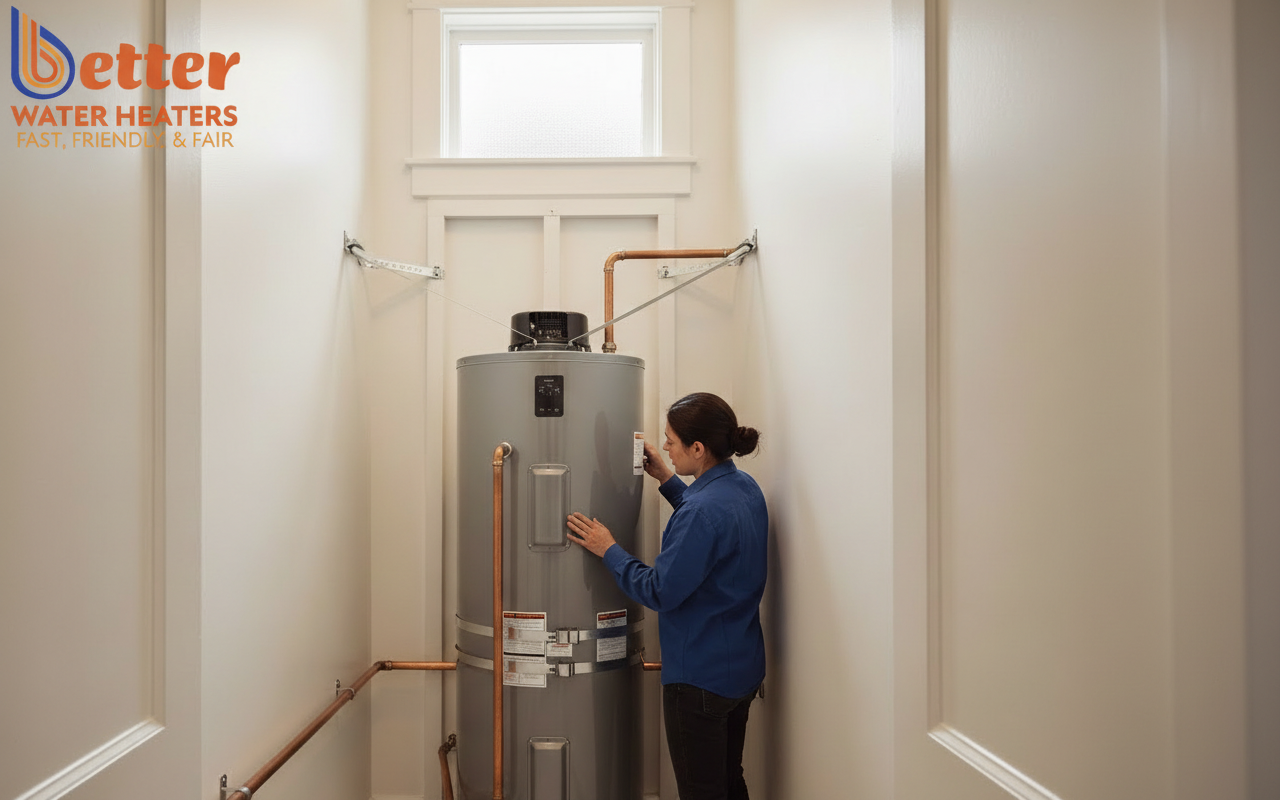
According to the U.S. Department of Energy, heat pump water heaters are up to three times more efficient than standard electric models, but they require specific air volume to function—a luxury many 100-year-old homes don’t have. Consequently, successful installation requires a strategic blend of preservation and performance.
The Core Challenges of Retrofitting Historic Bay Area Homes
Retrofitting a home built in the early 1900s presents unique obstacles that modern suburban builds simply don’t face. These challenges typically fall into three categories: spatial constraints, structural integrity, and regulatory compliance.
- The ‘Closet’ Crisis: Many Victorian and Edwardian homes utilize narrow utility closets that were never intended for units with 30-plus gallon capacities or the clearance needs of heat pump technology.
- Electrical Deficits: Historic homes often operate on 60-amp or 100-amp panels, which may require an upgrade to support the 30-amp dedicated circuit needed for a hybrid heat pump unit.
- Venting Limitations: Older masonry chimneys are often unsuitable for high-efficiency gas venting, necessitating new wall penetrations that must respect historic preservation codes.
Furthermore, the seismic activity in Northern California adds a layer of complexity. The California Division of the State Architect mandates specific strapping and bracing that can be difficult to execute in a cramped crawlspace or a narrow basement corner.
Comparing Compact Solutions for Tight Spaces
| Feature | Traditional Tank | Tankless Retrofit | Compact Heat Pump |
|---|---|---|---|
| Typical Width | 20″ – 24″ | 14″ – 18″ | 22″ – 26″ |
| Energy Source | Gas/Electric | Gas/Electric | Electric (Hybrid) |
| Vent Needs | Standard Flue | Power Vent/Direct | None (Requires Air) |
| Bay Area Rebates | Low/None | Moderate | Up to $4,900 |
Choosing the right technology depends heavily on your existing footprint. While tankless units are the gold standard for space-saving, the new generation of 120V ‘plug-and-play’ heat pumps is becoming the preferred choice for those looking to avoid a full electrical panel upgrade.
Navigating BAAQMD Regulations and Electrification Mandates
The push toward electrification is no longer a suggestion; it is a regulatory requirement for many. Retrofitting historic Bay Area homes now involves planning for the 2027 phase-out of gas water heater sales, making current upgrades a critical bridge to future-proofing your property.
Because these regulations are local, homeowners in San Jose, Fremont, and San Francisco must be aware of how their specific municipality handles permits for historic districts. For instance, installing an outdoor enclosure for a water heater—a common ‘space-saving’ tactic—may require architectural review in neighborhoods like Pacific Heights or the Rose Garden.
Need a professional assessment of your space? Schedule your free estimate with our Bay Area specialists to find the perfect fit for your historic home.
Space-Saving Strategies: Beyond the Standard Closet
When the existing water heater closet is too small, we look for ‘hidden utility’ opportunities. This involves thinking vertically and horizontally to find air volume or clearance that wasn’t previously utilized.
- Point-of-Use (POU) Systems: In some large historic homes, installing multiple small electric units near bathrooms can be more efficient than one massive central unit.
- Outdoor Enclosures: If interior space is non-existent, specialized, weather-protected cabinets can house tankless units on an exterior wall, freeing up interior square footage.
- Attic Eave Integration: Modern horizontal units can sometimes be tucked into unused attic spaces, provided the flooring is reinforced to handle the weight.
Additionally, the transition to Victorian home plumbing upgrades often reveals ancient galvanized pipes that should be replaced simultaneously to prevent sediment from damaging your new high-efficiency unit. This holistic approach ensures that your investment in new technology isn’t undermined by century-old infrastructure.
The Impact of Seismic Bracing in Cramped Quarters
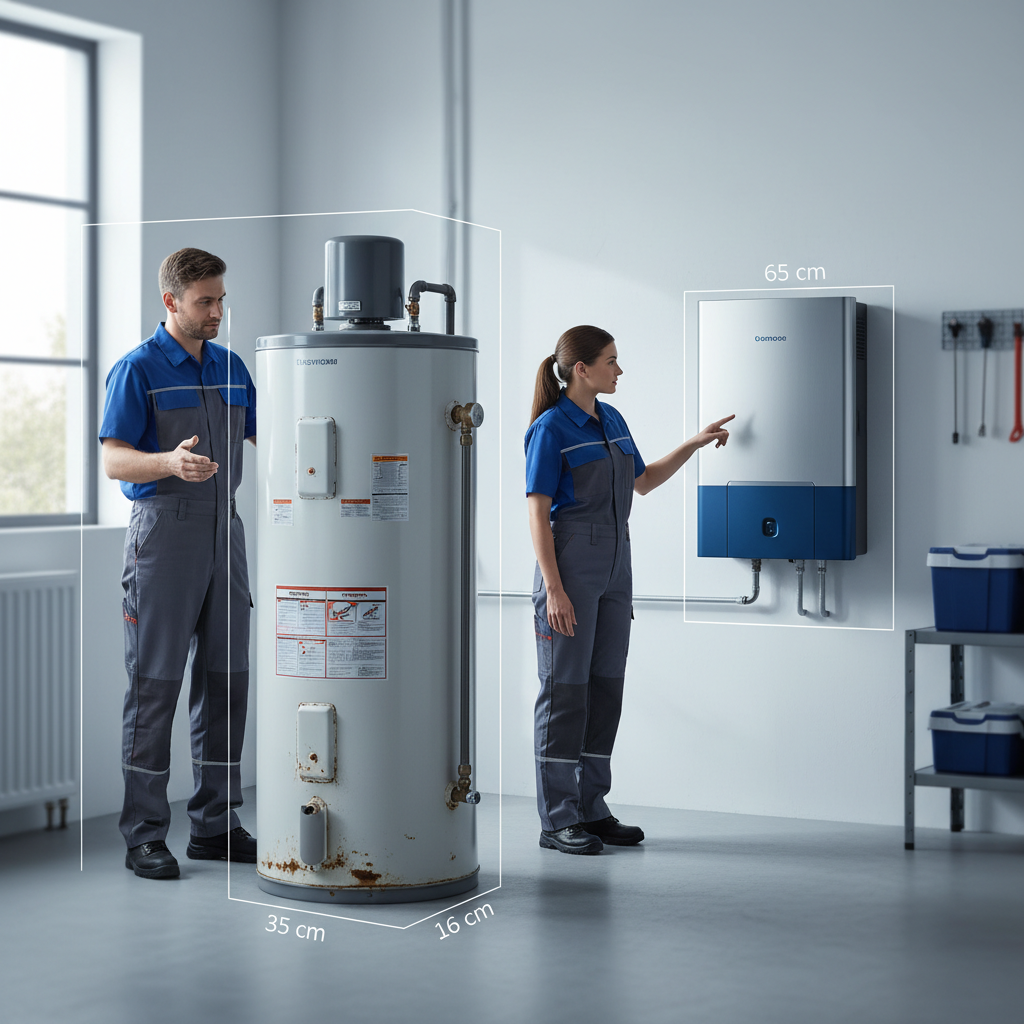
In the Bay Area, seismic safety is non-negotiable. San Francisco plumbing code seismic bracing requires two straps—one in the upper third and one in the lower third of the unit—anchored into the wall studs. In a tight closet, this often means there is no room for a technician’s hands, let alone a power drill.
- Custom Blocking: We often install 2×4 blocking behind the plaster and lath to provide a secure mounting point for straps.
- Flexible Connectors: Using high-quality flexible gas and water lines allows the unit to move slightly during a tremor without snapping the connections.
- Automatic Shut-off Valves: We highly recommend installing seismic shut-off valves that cut gas flow during a significant earthquake, providing an extra layer of protection for historic structures.
By prioritizing these safety measures during the retrofit, you protect both your family and the heritage of your home. It is a specialized skill set that requires 20+ years of local expertise to execute correctly in a 30-inch wide space.
Maximizing Rebates for Your Retrofit
The cost of retrofitting historic Bay Area homes can be higher than a standard replacement due to the labor involved in tight spaces. However, programs like TECH Clean California and local utility incentives from Peninsula Clean Energy or Silicon Valley Clean Energy can significantly offset these costs.
- Federal Tax Credits: Under the Inflation Reduction Act, you may be eligible for a 30% tax credit (up to $2,000) for heat pump installations.
- Local Utility Rebates: Many Bay Area providers offer $1,000 to $3,500 for switching from gas to electric.
- Manufacturer Incentives: Brands like Rheem and Bradford White often have seasonal rebates that we can stack with local programs.
Don’t leave money on the table. Explore our guide to Bay Area water heater rebates to see how much you can save on your historic home upgrade.
Practical Steps for Homeowners: The Compatibility Checklist
Before you commit to a specific unit, use this checklist to gauge your home’s readiness for a modern retrofit:
- Measure the Entryway: Will the new unit fit through the 28-inch Victorian door frame?
- Check the Panel: Do you have at least two empty slots in your electrical breaker box?
- Verify Venting: Is there an exterior wall within 10-15 feet for a tankless or power-vent unit?
- Assess Drainage: High-efficiency units produce condensate; is there a floor drain or a place for a condensate pump?
If you find yourself checking ‘no’ to more than one of these, you aren’t alone. Most historic homes require some level of modification. The key is determining whether it is more cost-effective to modify the structure or invest in a more expensive, ultra-compact unit designed for zero-clearance installation.
Conclusion: Future-Proofing Your Bay Area Legacy
Retrofitting historic Bay Area homes is a complex task that balances modern necessity with architectural preservation. By choosing compact water heater options and leveraging local rebates, you can upgrade your home’s efficiency without sacrificing its character. Whether you are dealing with a 1920s bungalow in San Jose or a 1890s Victorian in San Francisco, the right approach ensures your hot water is as reliable as your home’s history is rich.
Ready to bring your historic home into the 21st century? At Better Water Heaters, we specialize in the ‘impossible’ installs. From navigating tight basements to maximizing your rebate potential, we handle the entire process from permit to final inspection. Call us today at 408-250-6672 or contact us online to schedule your professional consultation.
Frequently Asked Questions
Can I install a heat pump water heater in a small closet?
Yes, but it requires careful planning. Many modern heat pump units need around 700-1,000 cubic feet of air to operate efficiently. In a small closet, we can use louvered doors or ducting to pull air from a larger room or attic, ensuring the unit doesn’t overheat or lose efficiency.
How much do Victorian home plumbing upgrades typically cost?
A standard water heater replacement in a modern home might be straightforward, but historic retrofits often range from $3,500 to $7,000 depending on electrical needs and venting. However, with Bay Area rebates reaching up to $4,900, your out-of-pocket cost can often be comparable to a basic gas replacement.
Do I need a permit for a water heater retrofit in a historic district?
Absolutely. All Bay Area cities require permits for water heater replacements to ensure seismic strapping and venting meet current safety codes. In historic districts, additional ‘Certificate of Appropriateness’ reviews may be needed if you are altering the exterior appearance of the home.
What is the best small footprint hybrid water heater for a Bay Area home?
The Rheem ProTerra and the Bradford White AeroTherm are excellent choices. Specifically, the new 120V ‘Plug-in’ models are game-changers for historic homes because they often don’t require a full electrical panel upgrade, making them the most cost-effective path to electrification in tight spaces.