
📋 Table of Contents
Planning a kitchen remodel water heater upgrade is often an afterthought for many homeowners, yet it is one of the most strategic financial decisions you can make during a renovation. In the high-stakes Bay Area real estate market, where every square foot is valued at a premium, integrating your utility upgrades with your aesthetic changes maximizes both home value and operational efficiency. As of 2024, the convergence of new California energy standards and local incentive programs has made the ‘invisible utility’ upgrade a cornerstone of smart home ownership.
Key Takeaways for Bay Area Homeowners
- Labor Synergy: Opening walls for a kitchen remodel reduces the labor cost of new venting and gas lines by up to 40%.
- Space Optimization: Switching to a tankless system can reclaim 10-15 square feet of pantry or cabinet space.
- Future-Proofing: Addressing SB 1414 compliance now avoids emergency replacement costs before the 2027 gas appliance ban.
- Financial Incentives: Stackable rebates from TECH Clean California and local utilities can offset up to $4,900 of installation costs.
1. Why the Kitchen Remodel Water Heater Upgrade is Logistically Superior
Typically, water heater replacement is a reactive event triggered by a leak or failure. However, proactive upgrading water heater during remodel cycles allows you to leverage the presence of plumbers and electricians already on-site. When your kitchen is down to the studs, the logistical hurdles of running new dedicated electrical circuits or upgrading gas lines vanish.
Furthermore, Bay Area building departments often require comprehensive inspections for permitted kitchen renovations. By bundling your water heater upgrade into the same permit, you streamline the administrative process and ensure your entire home meets the latest California Title 24 energy requirements. This coordination prevents the ‘double-work’ of tearing into finished drywall two years down the line when an old tank finally fails.
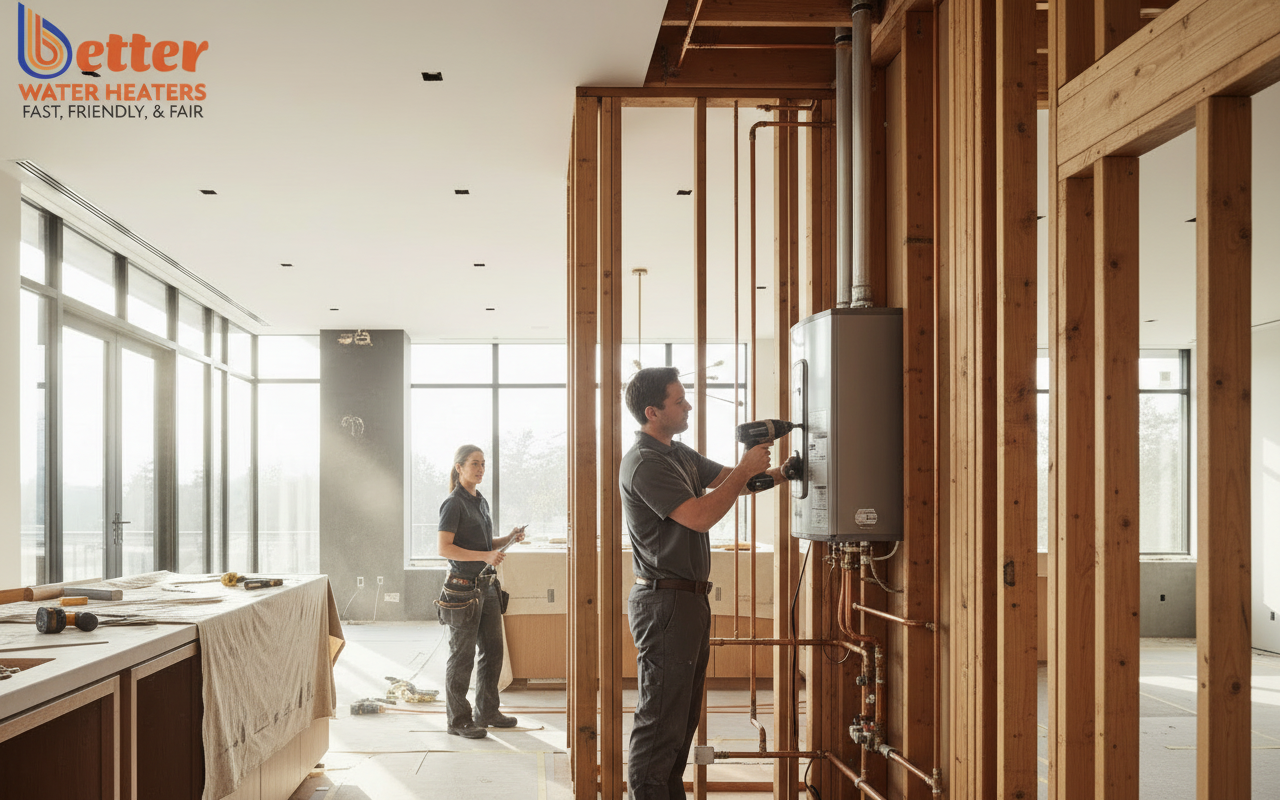
Strategic placement is another factor. During a Bay Area home renovation plumbing overhaul, you can relocate the unit to a more efficient central location. This reduces ‘wait time’ for hot water at the kitchen sink, a common frustration in larger San Jose or Palo Alto estates. Implementing a recirculating pump during this phase is significantly cheaper than a standalone retrofit.
2. Reclaiming Premium Square Footage in High-Value Zip Codes
In cities like San Francisco or Berkeley, where the cost per square foot often exceeds $1,000, a bulky 50-gallon water tank is an expensive tenant. A tankless water heater kitchen remodel allows you to move the unit to an exterior wall or a small recessed niche. This transition can unlock enough space for a floor-to-ceiling pantry or a dedicated wine fridge.
- Wall-Mounted Convenience: Modern units like Rinnai or Navien occupy about the size of a carry-on suitcase.
- Outdoor Installation: Many Bay Area homes can accommodate exterior-mounted units, completely removing the appliance from the home’s footprint.
- Point-of-Use Options: For massive open-concept kitchens, adding a small electric point-of-use heater under the island ensures instant boiling water for cooking.
Beyond the physical space, consider the aesthetic ROI. Removing a rusted tank from a utility closet adjacent to your new luxury kitchen eliminates the noise of a firing burner and the risk of a flood ruining your new hardwood floors. Contact our specialists today to see how much space you could reclaim in your specific floor plan.
3. Navigating SB 1414 and the Shift to Electrification
Sophisticated homeowners must stay ahead of California SB 1414 compliance, which emphasizes energy transparency and the transition toward heat pump technology. With the Bay Area Air Quality Management District (BAAQMD) moving toward a ban on NOx-emitting gas water heaters by 2027, your current remodel is the last ‘easy’ window to transition to a heat pump system. According to the U.S. Department of Energy, heat pump water heaters are up to three times more efficient than traditional electric models.
Installing a heat pump water heater installation San Francisco residents can trust requires specific electrical capacity—usually a 30-amp, 240-volt circuit. If your kitchen remodel already involves a panel upgrade to accommodate an induction cooktop or a built-in espresso machine, adding the water heater circuit is a marginal expense. Waiting until the gas unit fails in 2027 could mean a rushed, expensive electrical overhaul during an emergency.
| Feature | Traditional Gas Tank | Tankless Gas | Heat Pump (Hybrid) |
|---|---|---|---|
| Lifespan | 10-12 Years | 20+ Years | 13-15 Years |
| Space Required | High (Floor) | Low (Wall) | Medium (Floor + Airflow) |
| Bay Area Rebates | None | Up to $900 | Up to $4,900 |
4. Maximizing Bay Area Electrification Rebates and Tax Credits
One of the most compelling reasons for upgrading water heater during remodel projects is the immediate injection of capital from rebate programs. Because these programs often require professional installation and specific permitting, they align perfectly with a managed renovation. Programs like Clean Energy Connection and TECH Clean California offer substantial incentives that are often higher for heat pump technology.
- Federal Tax Credits (25C): Take advantage of up to $2,000 in annual tax credits for energy-efficient heat pump installations.
- TECH Clean California: Access instant mid-stream incentives that can reach $3,100+ depending on your utility provider (PG&E, SVCE, or Peninsula Clean Energy).
- Local Utility Rebates: Many Bay Area cities offer an additional $500 to $1,000 to encourage the move away from gas-fired appliances.
Need help navigating the paperwork? Explore our guide on local rebate maximization to ensure you aren’t leaving money on the table during your kitchen overhaul.
5. The Insurance and Resale Multiplier
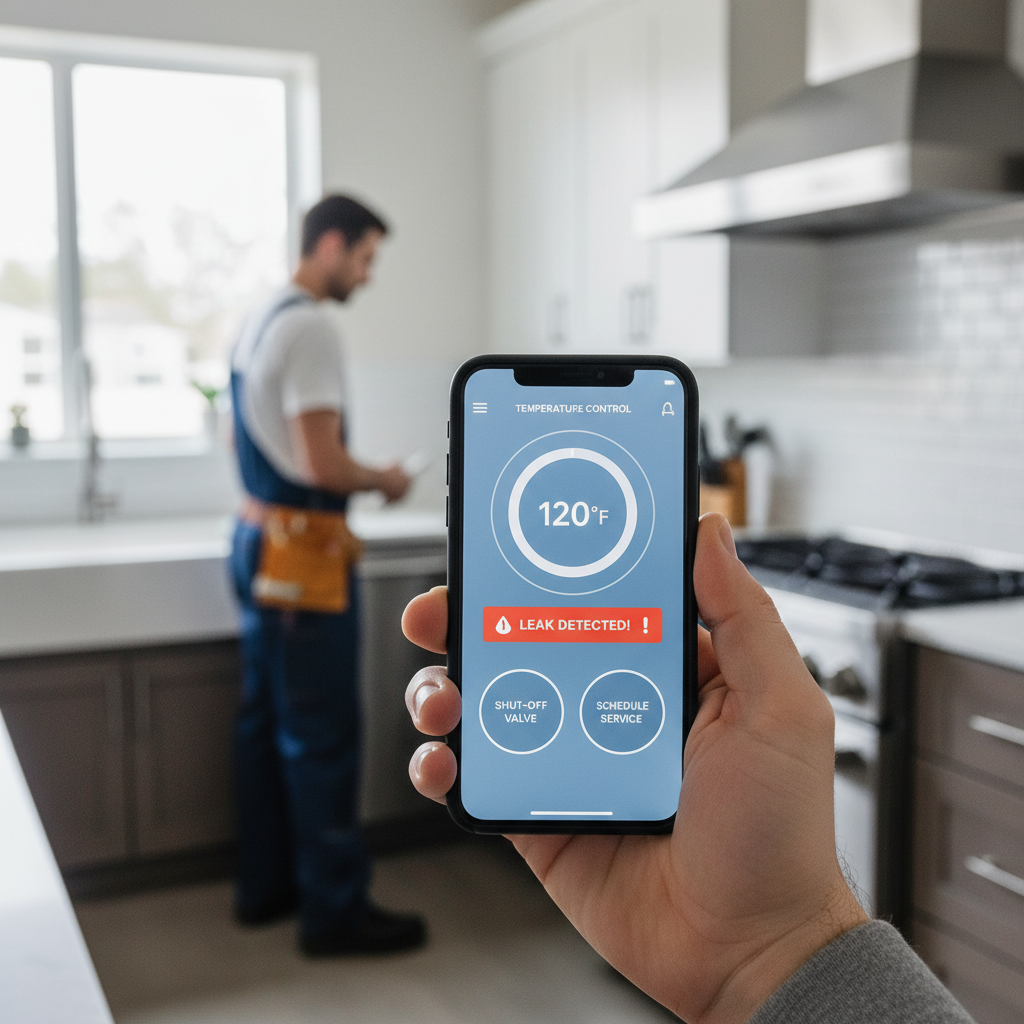
A kitchen remodel water heater upgrade provides a secondary ROI through risk mitigation. Water damage is one of the leading causes of home insurance claims in California. By installing a modern unit with integrated smart leak detection—which can automatically shut off the water supply and alert your smartphone—you may qualify for reduced homeowners insurance premiums. This is especially relevant for Silicon Valley professionals who value smart home integration.
From a resale perspective, a ‘tankless’ or ‘high-efficiency heat pump’ designation on an MLS listing acts as a signal of quality. It tells prospective buyers that the home has been maintained to modern standards. In a competitive market like Walnut Creek or Menlo Park, these upgrades often yield a 100% or greater return on investment at the time of sale, as buyers prioritize move-in-ready, energy-efficient homes.
Is your kitchen remodel the right time to upgrade?
If your current water heater is over 8 years old, the answer is a definitive yes. The cost of labor to replace a unit independently of a remodel can be 50% higher due to the need for separate mobilization, permitting, and potential drywall repair. By integrating the two, you secure a more reliable, more efficient, and more valuable home. Schedule a free consultation with Better Water Heaters to review your floor plan and rebate eligibility.
Frequently Asked Questions
How does a kitchen remodel water heater upgrade save on labor costs?
During a remodel, walls are often open, allowing plumbers to easily run new venting or gas lines without the expensive ‘cut and patch’ labor required for a finished home. Additionally, since a permit is already pulled for the kitchen, adding the water heater to the scope reduces administrative fees and inspection coordination time.
Can I move my water heater to a different location during a renovation?
Yes, and this is the best time to do it. Relocating a water heater to the garage or an exterior wall during a Bay Area home renovation plumbing project allows you to optimize your kitchen layout, perhaps adding a pantry or expanded cabinetry where the old tank stood. This requires rerouting pipes, which is significantly cheaper when flooring and walls are already being replaced.
What is the most efficient water heater for a Bay Area home in 2024?
Heat pump water heaters are currently the most efficient option, using electricity to move heat rather than create it. They are particularly effective in the moderate Bay Area climate. For those with limited space, a high-efficiency tankless gas system is a powerful alternative that provides endless hot water while occupying minimal wall space.
How do I know if I qualify for the $4,900 in rebates?
Rebate eligibility depends on your current utility provider (such as PG&E or Peninsula Clean Energy) and the type of equipment you install. Most high-efficiency heat pump systems qualify for a combination of TECH Clean California incentives and federal tax credits. At Better Water Heaters, we handle the rebate research and paperwork to ensure you maximize your savings.
Ready to future-proof your home? Better Water Heaters has served over 20,000 Bay Area families with transparent, expert service. Don’t let your kitchen remodel miss its most important utility upgrade. Call us at (408) 265-2110 or visit our contact page to book your site evaluation today.