
📋 Table of Contents
- Key Takeaways for Bay Area Homeowners
- The Strategic Impact of Smart Home Integration on Energy Bills
- Choosing the Right Smart Water Heater Controller
- Comparing PG&E Rate Plans for Smart Heating
- Water Heater Leak Detection Systems: The Silent Saver
- Navigating Bay Area Rebates and Regulations
- Maximizing ROI with Smart Mixing Valves
- FAQs
Smart Home Integration is no longer just about voice-controlled lights; for Bay Area homeowners, it is the most effective strategy to combat rising energy costs. By syncing your water heater with PG&E Time-of-Use (TOU) rates, you can transform your most energy-intensive appliance into a cost-saving thermal battery.
Key Takeaways for Bay Area Homeowners
- Load Shifting: Heat your water during off-peak hours (before 4 PM) when rates are lowest.
- Rebate Maximization: Access up to $4,900 in incentives for CTA-2045 compliant smart heaters.
- Automation: Use a smart water heater controller to manage schedules without manual intervention.
- Leak Protection: Integrated water heater leak detection systems prevent catastrophic property damage.
As of 2024, PG&E has transitioned the vast majority of residential customers to Time-of-Use rate plans. On these plans, the price you pay for electricity changes based on the time of day, with “Peak” hours typically falling between 4 PM and 9 PM. During these windows, prices can nearly double, making a standard evening shower significantly more expensive than one taken at noon.
The Strategic Impact of Smart Home Integration on Energy Bills
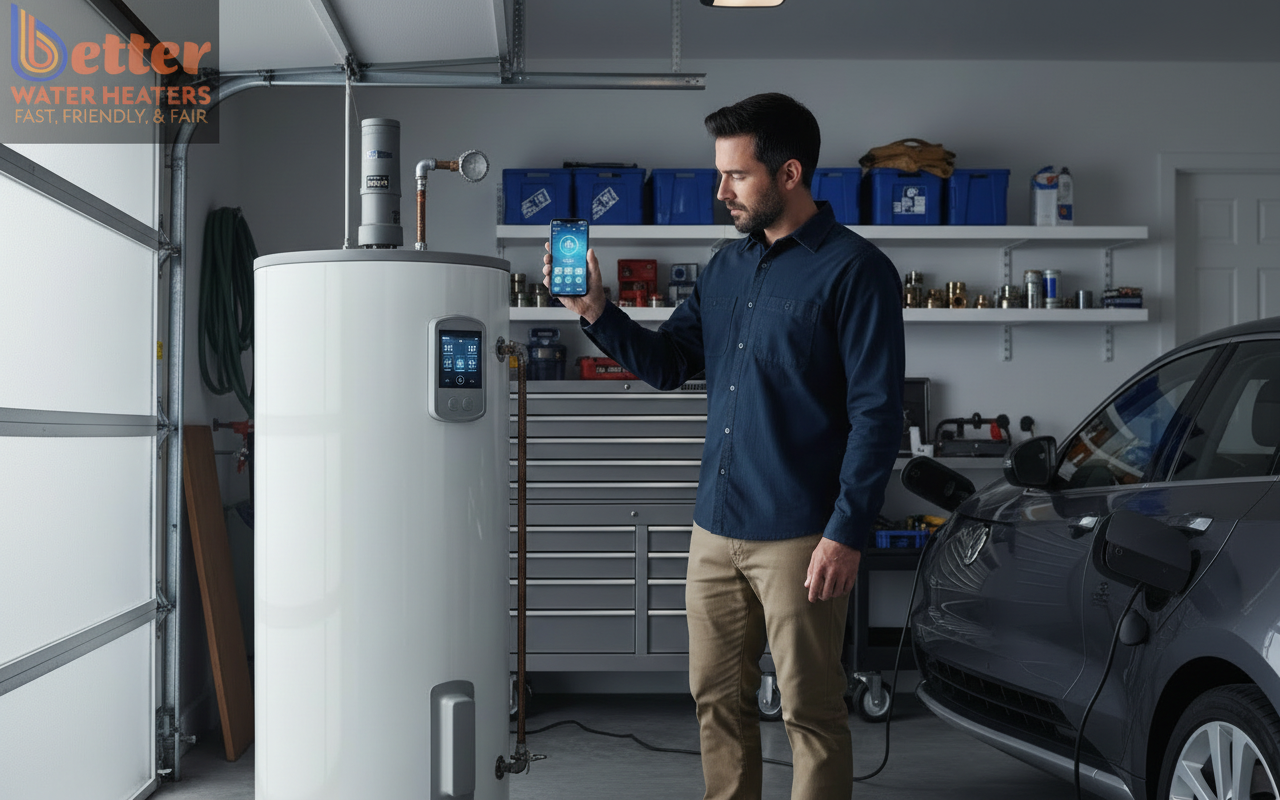
Implementing Smart Home Integration allows your water heater to communicate directly with the electrical grid. This concept, often called “demand response,” enables the unit to prioritize heating when energy is cleaner and cheaper. For those on the PG&E E-ELEC rate plan, which is specifically designed for electrified homes, this optimization is critical for ROI.
Why Load Shifting is the Future of Water Heating
- Thermal Storage: Your tank acts as a battery, storing 50+ gallons of hot water for later use.
- Pre-Heating: Smart systems raise the temperature to 140°F at 2 PM using cheap solar-heavy energy.
- Mixing Valves: A thermostatic mixing valve then blends this high-heat water with cold water to provide safe, consistent 120°F water during peak hours.
Furthermore, many modern units are “Grid-Interactive.” According to the U.S. Department of Energy, grid-interactive efficient buildings can reduce peak demand and save billions in national infrastructure costs. By participating, Bay Area residents often qualify for additional “Golden State Rebates” and program incentives.
Choosing the Right Smart Water Heater Controller
If you aren’t ready for a full unit replacement, a smart water heater controller can often be retrofitted to existing electric tanks. These devices, such as the Aquanta or EcoPort-compatible modules, provide Wi-Fi connectivity and app-based scheduling. They allow you to “set it and forget it,” ensuring your heater stays off during the expensive 4 PM to 9 PM window.
Essential Features for Bay Area Tech-Savvy Owners
- CTA-2045 Compliance: This standard ensures your heater can talk to utility demand-response programs.
- Maintenance Alerts: Get notified via smartphone if the heating element begins to fail.
- Energy Tracking: View real-time data on how much your PG&E time of use water heating strategy is actually saving.
- Vacation Mode: Remotely drop the temperature while you’re away at Tahoe or traveling for work.
Transitioning to a smart system requires professional insight to ensure local code compliance. If you’re curious about which controller fits your current setup, you can schedule a professional consultation with our Bay Area experts today.
Comparing PG&E Rate Plans for Smart Heating
Choosing the right rate plan is just as important as the hardware. Most residents are on TOU-C, but those with heat pumps or EVs should consider E-ELEC. This plan offers lower off-peak rates in exchange for a small monthly fixed charge, making the “thermal battery” strategy even more lucrative.
| Rate Plan Feature | TOU-C (Standard) | E-ELEC (Electrification) |
|---|---|---|
| Peak Window | 4 PM – 9 PM | 4 PM – 9 PM | Moderate | High |
| Best For | Typical Households | HPWH & EV Owners |
| Smart Integration ROI | 2-3 Years | 1-2 Years |
Consequently, homeowners who proactively upgrade to a heat pump system with Smart Home Integration see the fastest payback periods. We specialize in helping residents navigate these complex calculations. Learn more about our heat pump installation services to see how much you could save.
Water Heater Leak Detection Systems: The Silent Saver
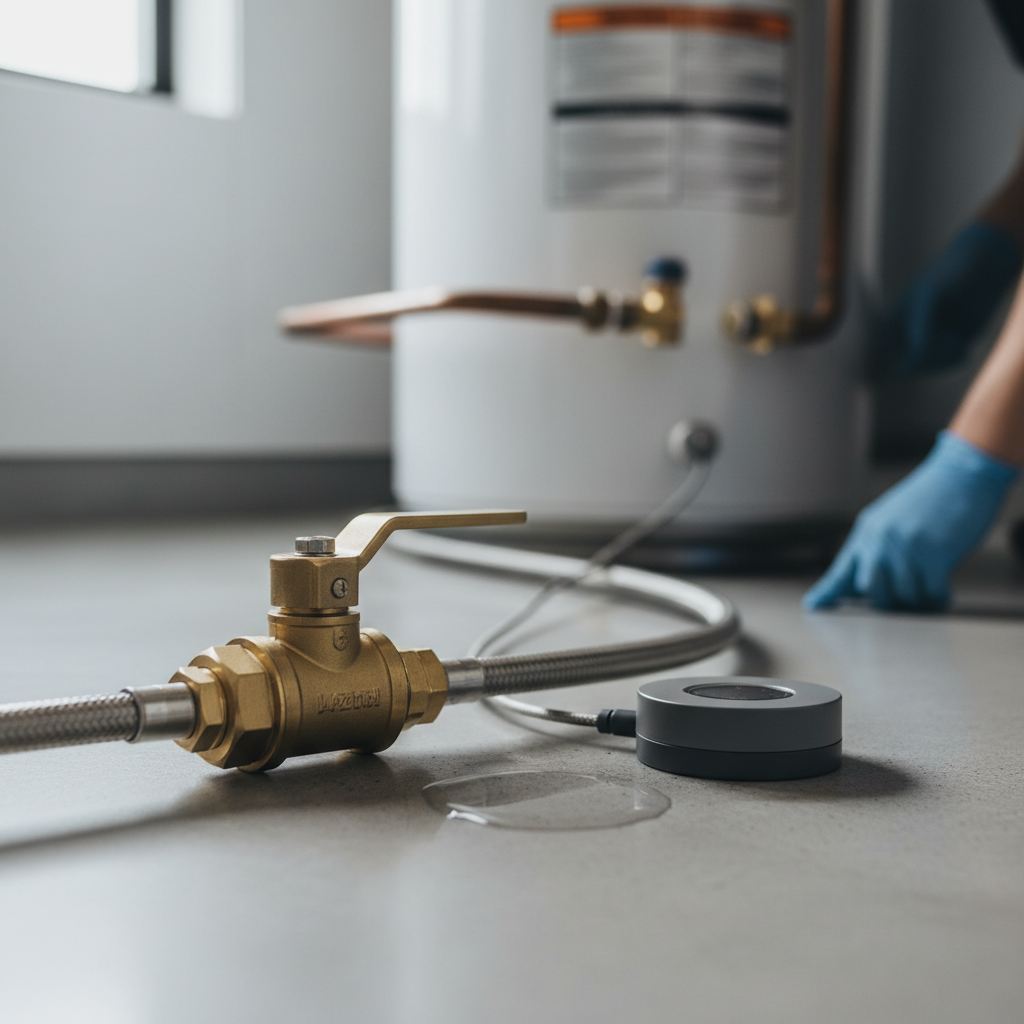
Beyond energy savings, Smart Home Integration provides essential property protection. A water heater leak detection system consists of sensors placed at the base of the unit and an automatic shut-off valve. If a leak is detected, the system immediately kills the water supply and sends an emergency alert to your phone.
The Benefits of Integrated Protection
- Mitigate Damage: Prevent thousands of dollars in flooring and drywall repairs.
- Insurance Discounts: Many Bay Area providers offer premium credits for installed leak defense.
- Peace of Mind: Essential for property managers or those with heaters located in finished attics or closets.
Indeed, the Environmental Protection Agency notes that household leaks can waste nearly 10,000 gallons of water annually. In the drought-conscious Bay Area, a smart shut-off valve isn’t just a luxury—it’s a responsible choice for any homeowner.
Navigating Bay Area Rebates and Regulations
The Bay Area is at the forefront of the transition away from gas. By 2027, the Bay Area Air Quality Management District (BAAQMD) will phase out the sale of natural gas water heaters. Investing in a smart heat pump now allows you to take advantage of massive current incentives before they potentially sunset.
Available Incentives for 2024-2025
- TECH Clean California: Up to $3,100 for switching from gas to heat pump.
- Federal Tax Credit (25C): 30% of the project cost, capped at $2,000 per year.
- BayREN: Local incentives ranging from $1,000 to $2,000 depending on the county.
- Golden State Rebates: Instant $500 coupons for qualified smart-integrated models.
Because we handle the permit process and rebate applications for you, the transition to Smart Home Integration is seamless. Our team stays updated on every city-specific requirement from San Jose to Redwood City. For a detailed breakdown of local savings, check out our guide on Bay Area water heater rebates.
Maximizing ROI with Smart Mixing Valves
A sophisticated strategy used by high-end Bay Area homes involves the use of smart mixing valves. By heating the water to 140°F or 150°F during off-peak hours, you effectively increase the capacity of your tank. The mixing valve ensures that the water exiting your tap is a safe 120°F, preventing scalding while maximizing the energy stored during low-rate windows.
Advanced Performance Metrics
- Effective Capacity: A 50-gallon tank can deliver the equivalent of 70 gallons of usable hot water when boosted.
- Peak Shaving: This allows a family of four to take consecutive showers during the 6 PM rush without the heater ever turning on during peak rates.
- Grid Stability: Reducing your draw during peak hours helps prevent local brownouts during summer heatwaves.
Ready to lower your utility bills and join the smart home revolution? Contact Better Water Heaters today for a free estimate on a smart-integrated system tailored to your home’s needs. Call us at our local Bay Area office to speak with a specialist who understands your specific neighborhood requirements.
Frequently Asked Questions
How much can I save by syncing my water heater with PG&E TOU rates?
Most Bay Area homeowners save between $150 and $400 annually by shifting their water heating to off-peak hours. When combined with a high-efficiency heat pump and the E-ELEC rate plan, total energy savings can exceed 70% compared to a standard electric tank or older gas model.
Is a smart water heater controller difficult to install?
While some Wi-Fi modules are plug-and-play, most robust Smart Home Integration setups require professional installation. This ensures the smart water heater controller is safely wired, the mixing valves are calibrated to prevent scalding, and the unit is compliant with California Title 24 energy codes.
What is a water heater leak detection system and is it worth it?
A water heater leak detection system uses moisture sensors and a motorized ball valve to stop water flow the moment a leak occurs. Given that a failed water heater can flood a home in minutes, the investment is highly recommended for Bay Area homes, especially those with units located on upper floors.
Will my smart water heater work if the Wi-Fi goes down?
Yes. All professional-grade smart water heaters and controllers have internal logic that allows them to continue operating on their last programmed schedule even without a connection. You only lose the ability to make remote adjustments or receive real-time alerts until the connection is restored.