
📋 Table of Contents
For homeowners in Pacifica, Daly City, and San Francisco, micro-leaks and mold represent a dual threat that often goes unnoticed until significant damage occurs. The picturesque coastal fog that defines our region carries high salinity and moisture, creating a relentless environment for mechanical systems. Understanding these silent threats is the first step toward protecting your home’s infrastructure and indoor air quality.
Key Takeaways for Coastal Homeowners
- Salt-Air Acceleration: Coastal units often fail 30% faster due to external galvanic corrosion.
- Health Risks: Hidden seepage combined with 70%+ humidity creates a breeding ground for toxic mold.
- Proactive Defense: Annual anode rod inspections are non-negotiable in high-salinity zones.
- Smart Solutions: Ultrasonic leak detection can identify PSI drops invisible to the naked eye.
The ‘Salt-Air Tax’: Why Coastal Water Heaters Fail Faster
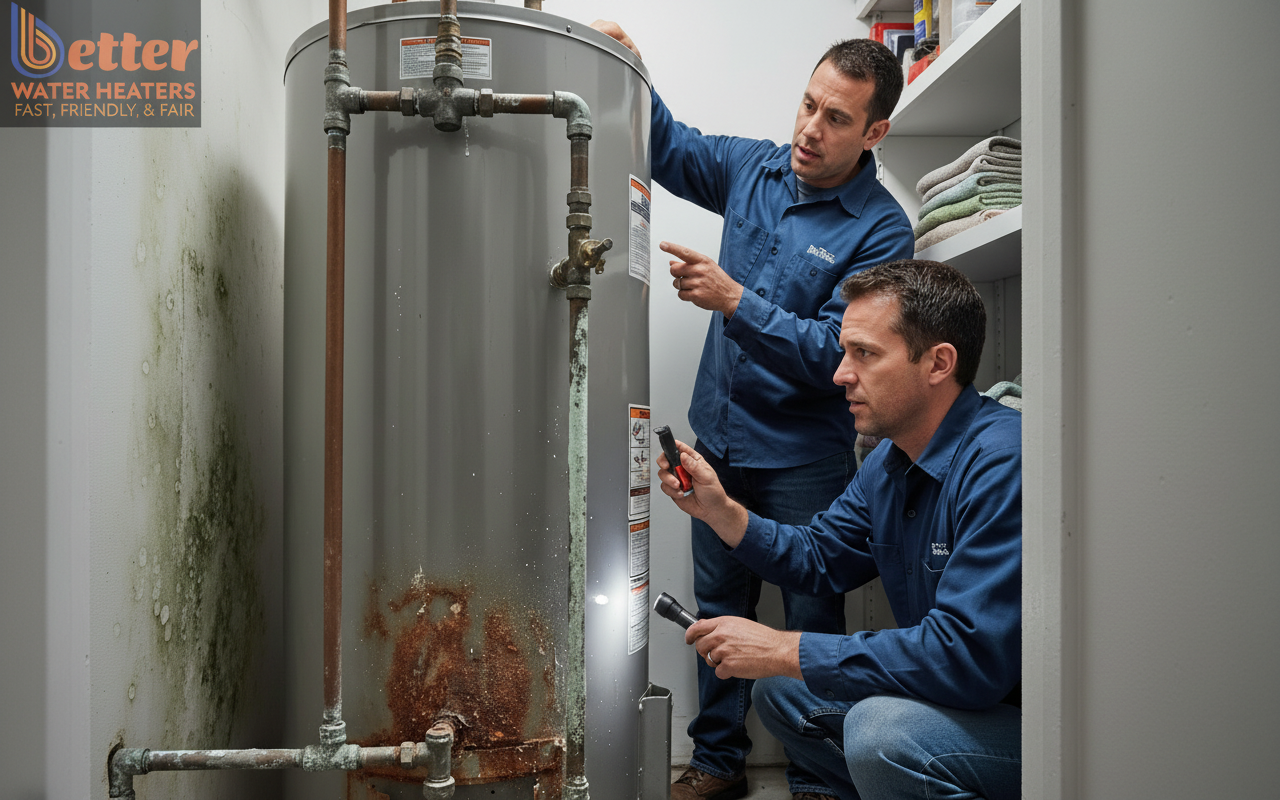
Living within five miles of the ocean introduces a phenomenon experts call the ‘Salt-Air Tax.’ While standard water heater corrosion causes usually involve internal sediment, coastal units face a two-front war. The chloride ions in sea spray accelerate the oxidation of the outer steel jacket, often bypassing the protection of the internal glass lining.
Furthermore, the high humidity levels in foggy micro-climates prevent the exterior of the tank from ever fully drying. This constant dampness leads to hygroscopic mold growth around water heater bases and insulation wraps. If your unit is tucked away in a tight utility closet, the lack of airflow compounds these issues, turning a small pinhole leak into a structural mold problem within weeks.
- External Galvanic Corrosion: Salt acts as an electrolyte, speeding up the chemical reaction that eats through metal.
- Flue Termination Vulnerability: Salt air enters the system through exhaust vents, corroding internal burners in tankless models.
- Insulation Saturation: Marine grade water heater insulation is often required to prevent moisture from trapping against the tank shell.
According to the EPA’s guide on mold and moisture, controlling indoor humidity is essential for preventing mold growth, a task made significantly harder by a weeping water heater in a coastal basement.
Preventing Mold Around Water Heater Systems in High-Humidity Zones
The intersection of micro-leaks and mold is particularly dangerous because coastal fog often masks the musty smell of early-stage fungal growth. When a water heater develops a micro-leak—a seep so small it evaporates before hitting the floor—it raises the local humidity in the closet to nearly 100%. This creates the “perfect storm” for black mold (Stachybotrys chartarum) to colonize drywall and wooden framing.
- Install a Smart Leak Sensor: Modern systems use ultrasonic technology to detect flow variations as small as 0.1 gallons per hour.
- Improve Ventilation: Ensure utility closets have louvered doors to allow coastal moisture to dissipate.
- Utilize Dehumidifiers: In San Mateo County basements, maintaining humidity below 50% is critical for appliance longevity.
Strategic homeowners are now moving from reactive repairs to proactive salt-mitigation services. If you haven’t had your system inspected in the last 12 months, you may be at risk. Schedule a professional coastal maintenance checkup today to ensure your home remains safe and dry.
Coastal Water Heater Maintenance: A Specialized Checklist
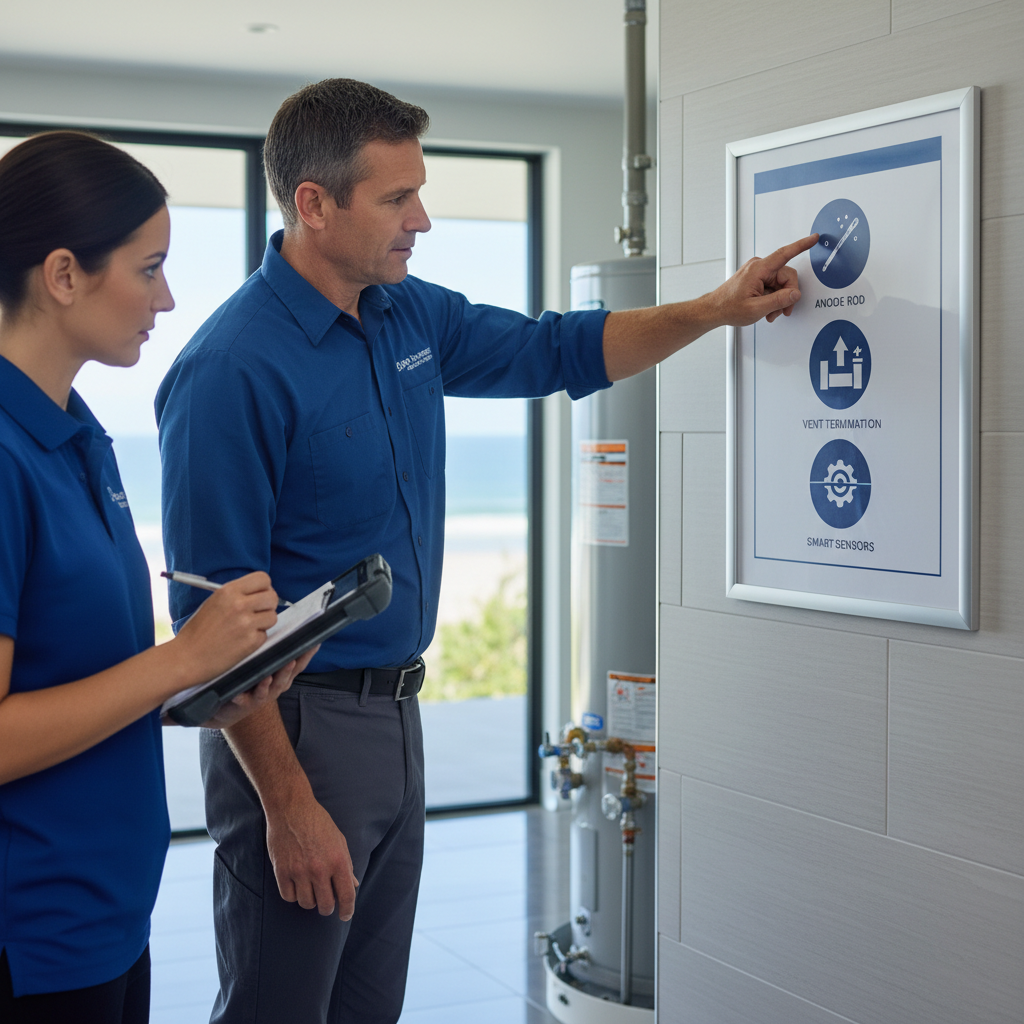
Standard maintenance manuals rarely account for the aggressive nature of the Bay Area’s marine layer. To combat micro-leaks and mold, your service plan must include specific checks for salinity-related wear. For instance, the anode rod—the “sacrificial” component that prevents tank rusting—depletes significantly faster in areas with high-mineral or softened coastal water.
| Maintenance Task | Standard Frequency | Coastal/Foggy Frequency | Reason for Change |
|---|---|---|---|
| Anode Rod Inspection | Every 3 Years | Every 12-18 Months | Accelerated galvanic reaction from salt air. |
| Tankless Descaling | Annually | Every 6-9 Months | Higher mineral content in many coastal wells/lines. |
| Exterior Jacket Cleaning | Never | Bi-Annually | Remove salt deposits to prevent exterior rust. |
| Vent Termination Check | Annually | Every 6 Months | Clear salt crusting from air intake valves. |
Beyond the physical tank, homeowners should evaluate their tankless descaling sea air protocols. Condensing water heaters are particularly susceptible to humidity issues, as the internal heat exchangers can become clogged with a mix of salt-air particulates and combustion byproducts.
The 5-Year Coastal Checkup: Moving Toward Proactive Care
By the time a water heater reaches its fifth year in a coastal environment, the cumulative effects of micro-leaks and mold often begin to surface. Sophisticated property managers in San Francisco now utilize a “Five-Year Rule,” where they transition from basic inspections to deep-system audits. This includes checking the integrity of seismic strapping, as salt air can even weaken the heavy-duty bolts securing your unit during an earthquake.
- Insurance Implications: Many coastal homeowner policies now exclude coverage for “gradual seepage.” If a micro-leak persists for months, your claim for mold remediation may be denied.
- Heat Pump Efficiency: In high-humidity zones, heat pump water heaters actually perform exceptionally well, as they dehumidify the air as a byproduct of heating water.
- Secondary Home Protection: For vacation properties in Half Moon Bay, smart shut-off valves are essential to prevent a micro-leak from turning into a catastrophic flood while the home is vacant.
Transitioning to a more resilient system, such as a stainless steel tank or a high-efficiency heat pump, can significantly reduce your long-term maintenance costs. You can explore these options further by visiting our guide on energy-efficient upgrades.
Addressing the Invisible Enemy: Indoor Air Quality
The link between micro-leaks and mold extends beyond property damage; it is a primary driver of poor Indoor Air Quality (IAQ). When mold spores are localized in a water heater closet, the home’s natural stack effect pulls that contaminated air upward into living spaces. For families with respiratory sensitivities, this “invisible enemy” can cause chronic health issues long before a puddle ever appears on the floor.
Implementing ultrasonic leak detection and ensuring proper drainage for condensing units are the best ways to mitigate these risks. As we look toward the 2027 gas water heater regulations in the Bay Area, many residents are choosing to switch to all-electric heat pump systems now to take advantage of current local rebates and tax credits.
Don’t let the fog dictate the lifespan of your home’s most essential appliance. Whether you are dealing with an aging tank or looking to upgrade to a salinity-resistant model, our team of experts is here to help. Contact Better Water Heaters today for a comprehensive coastal home evaluation and protect your investment from the silent threats of the Pacific coast.
Frequently Asked Questions
How does salt air specifically cause water heater micro-leaks?
Salt air contains chloride ions that act as a catalyst for corrosion. In coastal areas like Pacifica, these ions settle on the water heater’s exterior and vent components. This leads to “pitting corrosion,” which creates microscopic holes in the tank or heat exchanger that are often too small to trigger standard leak pans but large enough to cause significant mold growth.
Can I prevent mold around my water heater if it’s in a damp basement?
Yes, preventing mold around your water heater in a damp coastal basement requires a multi-pronged approach. You should install a high-capacity dehumidifier to keep ambient moisture below 50%, ensure the unit is elevated on a stand to allow airflow underneath, and use a smart leak detector that alerts your smartphone at the first sign of moisture.
Why is anode rod replacement more frequent in coastal Bay Area homes?
Anode rods protect your tank by corroding so the steel doesn’t have to. In coastal environments, the increased electrical conductivity of the water (due to higher mineral content or salt-air infiltration) causes the galvanic reaction to happen much faster. Replacing the rod every 12-18 months can double the life of your coastal water heater.
Are tankless water heaters better for foggy coastal climates?
Tankless units are excellent for coastal homes because they lack a large exterior steel jacket that can rust. However, they require specific “marine grade” installation practices, including high-quality vent terminations to prevent salt air from entering the combustion chamber, which can lead to internal humidity issues and component failure.