
📋 Table of Contents
Evaluating your electrical panel capacity for heat pump upgrades is the most critical step for Bay Area homeowners transitioning away from gas. As California pushes toward a carbon-free future through mandates like SB 1221, many residents in older neighborhoods like Berkeley, Oakland, and Richmond are discovering that their legacy 100-amp panels may be a bottleneck for modern electrification.
Key Takeaways for Sophisticated Homeowners
- Capacity Assessment: Most heat pump water heaters require a dedicated 30-amp, 240V circuit, but new 120V models can sometimes fit existing footprints.
- Avoid the Upgrade: Smart load-shedding devices and circuit-sharing technology can often bypass the need for a full $5,000+ panel replacement.
- Rebate Stacking: You can combine federal tax credits (25C) with TECH Clean California and BayREN incentives to offset up to $4,900+ in costs.
- Timeline Strategy: PG&E service upgrades currently face 6-9 month backlogs; early evaluation is essential to avoid emergency gas replacements.
The ‘Panel Math’ Guide: Understanding Electrical Panel Capacity for Heat Pump Units
Before investing in high-efficiency technology, you must determine if your existing infrastructure can support the load. Consequently, many homeowners assume a 100-amp panel necessitates a total Bay Area home electrical upgrade, but this isn’t always the case.
To calculate your available capacity, a professional must perform a Load Calculation according to NEC Article 220. This takes into account your square footage, existing major appliances (EV chargers, AC, electric ranges), and the specific water heater circuit requirements.
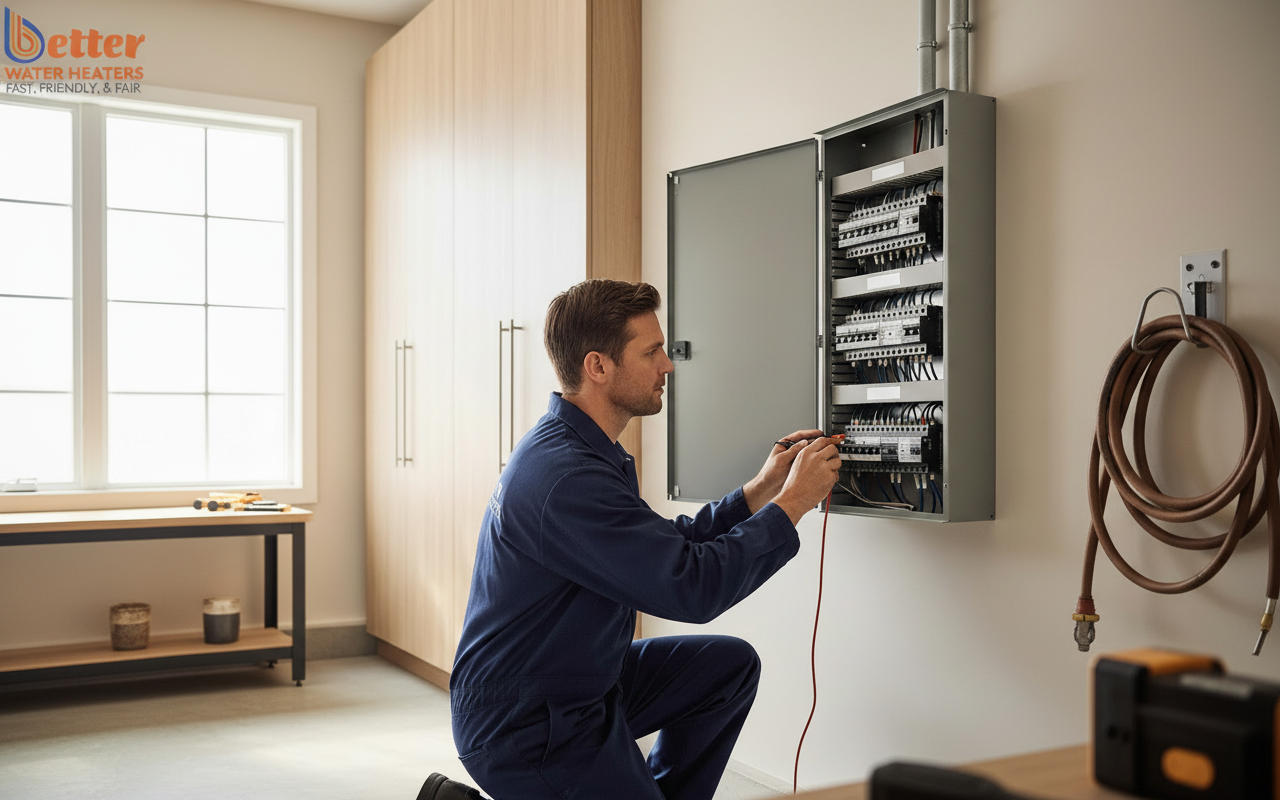
- Standard HPWH Requirements: Most units require a 30-amp double-pole breaker and 10-gauge wiring.
- 120V ‘Plug-In’ Options: Newer technology from brands like Rheem allows for 15-amp, 120V installations that utilize existing outlets.
- The 80% Rule: Continuous loads should not exceed 80% of the circuit’s rated capacity to ensure long-term safety and code compliance.
According to the U.S. Department of Energy, heat pump water heaters are up to three times more efficient than standard electric models, but their peak draw during “high demand” mode is what challenges your panel capacity.
Strategic Alternatives to a Full 200-Amp Service Upgrade
Furthermore, the 100 amp to 200 amp upgrade cost in San Francisco can easily exceed $5,000 when factoring in trenching and PG&E engineering fees. Fortunately, sophisticated homeowners are now utilizing “Load Management” technology to stay within their current 100-amp or 125-amp limits.
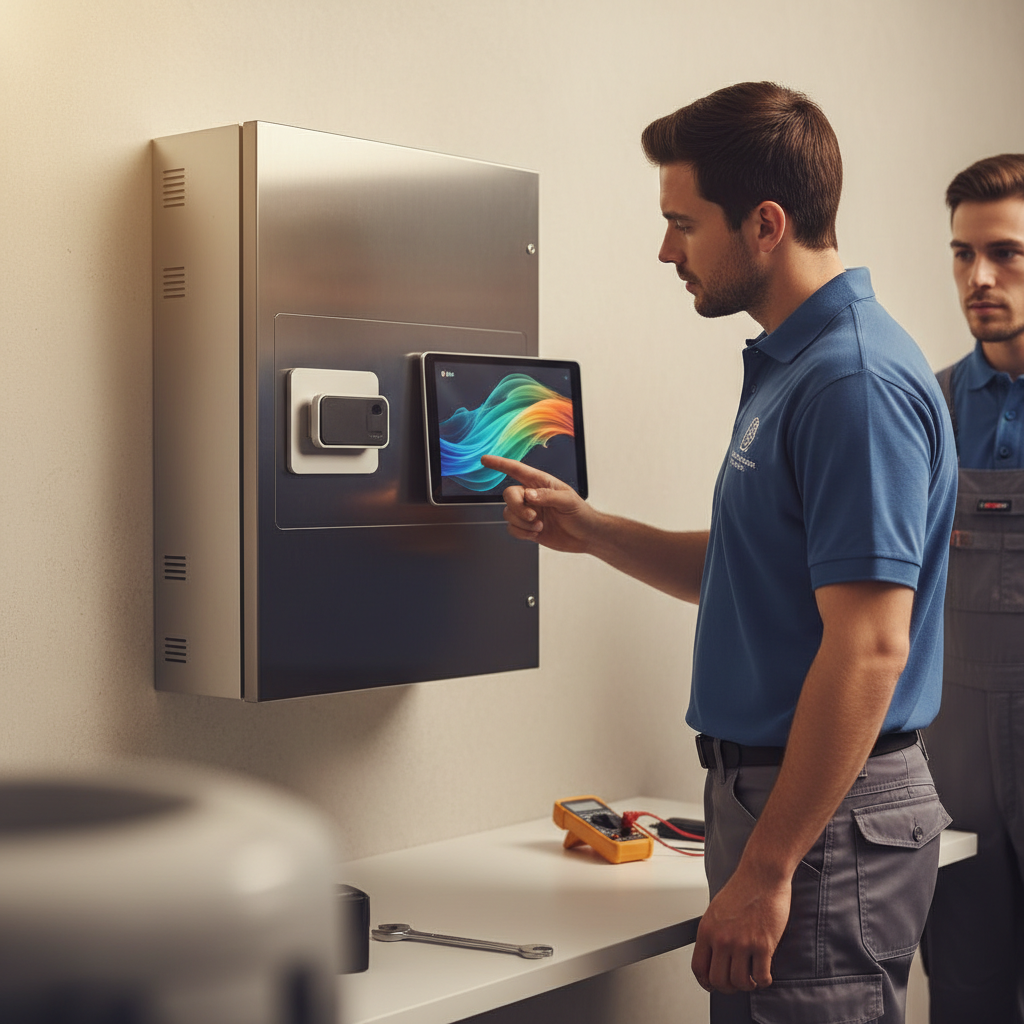
Smart panels like Span or Lumin, alongside simple load-shedding controllers, allow the home to prioritize power. For example, your water heater might pause its heating cycle for 20 minutes while your EV charger is at peak draw, ensuring you never trip the main breaker.
How to Maximize Your Current Panel
- Tandem Breakers: Use “slim” breakers to create physical space in a crowded panel for new 240V circuits.
- Circuit Sharing: Install a NeoCharge or similar device to share a single 240V outlet between a dryer and a water heater.
- Sub-Panels: If the main panel is full but has capacity, a small sub-panel can organize new electrification loads efficiently.
Need an expert eye on your breaker box? Schedule a professional panel assessment with Better Water Heaters today to see if you’re ready for an upgrade.
Financial Incentives: Stacking HEEHRA and TECH Clean California
Navigating the rebate landscape is essential for maintaining a high ROI on your home improvements. As of 2024, the financial ecosystem for Bay Area electrification rebates is more robust than ever, specifically targeting the transition from gas to electric.
| Incentive Program | Maximum Amount | Applicability |
|---|---|---|
| Federal Tax Credit (25C) | $2,000 | Annual credit for HPWH installation |
| TECH Clean California | $1,000 – $3,100 | Direct-to-contractor or consumer rebates |
| BayREN Home+ | $1,000 | Specific to Bay Area county residents |
| HEEHRA (Point-of-Sale) | Up to $840 | Income-dependent vouchers (launching 2024/25) |
By strategically timing your installation, you can leverage these TECH Clean California incentives to cover nearly 70% of the total project cost. For more details on local programs, visit the BayREN official site.
The 2027 Gas Ban: Why a ‘Pre-Mortem’ Inspection Matters
Procrastination is the most expensive mistake a Bay Area homeowner can make. With local air quality districts moving to phase out NOx-emitting gas water heaters by 2027, the demand for electrical panel capacity for heat pump installations will skyrocket, likely driving up labor costs and equipment lead times.
Moreover, if your gas water heater fails unexpectedly, you won’t have the 4-6 weeks required to pull permits and upgrade your electrical service. You will be forced into another gas unit, locking you into higher utility rates and carbon emissions for another 15 years.
Long-Term Electrification Roadmap
- Year 1: Conduct a load study and install a smart meter or load-shedding device.
- Year 2: Upgrade water heater circuit requirements while installing a heat pump unit.
- Year 3: Integrate EV charging and induction cooking on the remaining capacity.
Whether you are in San Jose or San Mateo, understanding your Bay Area home electrical upgrade needs now ensures you aren’t left in the cold later. You can explore our comprehensive heat pump guides to learn more about specific model efficiencies.
Comparing 120V vs. 240V Heat Pump Water Heaters
Choosing between voltage options is often a decision dictated by your panel. While 240V units offer faster recovery times, 120V models are revolutionary for homes with limited electrical panel capacity for heat pump additions.
Pros and Cons of 120V Units
- Pros: No panel upgrade required; uses standard 120V/15A circuit; lower installation labor cost.
- Cons: Slower recovery rate; may require a larger storage tank (e.g., 65-80 gallons) to compensate for slower heating.
Pros and Cons of 240V Units
- Pros: High recovery speed; standard sizing (50 gallons); excellent for large families.
- Cons: Requires heavy-duty water heater circuit requirements; often triggers a panel upgrade.
Expert tip: If you have a 100-amp panel and also want an EV charger, the 120V heat pump is almost always the more strategic business decision for your home infrastructure.
Conclusion: Future-Proofing Your Bay Area Investment
Evaluating your electrical panel capacity for heat pump technology is an investment in your home’s equity and operational efficiency. By leveraging load management for heat pumps and local Bay Area electrification rebates, you can navigate the transition away from gas without the sticker shock of a major utility service overhaul.
Don’t wait for your current system to leak before checking your panel. Ready to secure your rebates and future-proof your home? Contact Better Water Heaters at (408) 250-6672 for a specialized electrification consultation. We handle the permits, the panel math, and the rebate paperwork so you don’t have to.
Frequently Asked Questions
Can I install a heat pump water heater on a 100-amp panel?
Yes, it is often possible to install a heat pump water heater on a 100-amp panel by using a 120V “plug-in” model or implementing a load-sharing device. However, a professional load calculation is required to ensure your total household draw doesn’t exceed safety limits when multiple appliances run simultaneously.
How much does a Bay Area home electrical upgrade cost?
A standard panel upgrade from 100-amp to 200-amp in the Bay Area typically ranges from $3,500 to $6,500. Factors influencing the cost include the distance to the PG&E meter, whether lines are underground or overhead, and local municipal permit fees in cities like San Francisco or Palo Alto.
What are the specific water heater circuit requirements for heat pumps?
Most high-performance heat pump water heaters require a dedicated 240-volt, 30-amp circuit using 10/2 AWG copper wiring. Some newer “retrofit-ready” models are designed to operate on a standard 120-volt, 15-amp circuit, which significantly reduces installation complexity in older homes.
What happens if I don’t have enough electrical panel capacity for a heat pump?
If your panel lacks capacity, you have three main options: perform a full service upgrade to 200-amps, install a smart load-management controller that prioritizes circuits, or choose a 120V heat pump model that draws significantly less power than traditional 240V versions.