
📋 Table of Contents
The 2027 gas water heater ban is no longer a distant policy discussion; it is a fast-approaching regulatory reality for every homeowner in the San Francisco Bay Area. As the Bay Area Air Quality Management District (BAAQMD) implements landmark rules to phase out nitrogen oxide (NOx) emissions, the window for traditional gas replacements is closing. For sophisticated homeowners and property managers, understanding the 2027 gas water heater ban is critical for protecting property value and avoiding the ’emergency replacement trap.’
Key Takeaways for Bay Area Homeowners
- Regulatory Deadline: Starting in 2027, only zero-NOx water heaters (electric heat pumps) can be sold or installed in the BAAQMD jurisdiction.
- Financial Incentives: Current rebates from TECH Clean California and Federal tax credits can exceed $4,900, but these pools are expected to shrink as the deadline nears.
- The Power Bottleneck: Transitioning to electric often requires a 200-amp panel upgrade, which can involve months of PG&E coordination.
- Home Value: Early adoption of high-efficiency technology is becoming a key differentiator in the San Jose and San Francisco real estate markets.
Understanding BAAQMD Regulations and the 2027 Timeline
The core of the transition lies in BAAQMD Rules 9-4 and 9-6. These regulations specifically target the emissions from residential water heaters and furnaces, which account for a significant portion of local air pollution. By 2027, the sale and installation of natural gas water heaters will be prohibited for most single-family homes.
Strategic planning is essential because this isn’t just a change in equipment; it’s a change in infrastructure. According to the Department of Energy, heat pump water heaters are up to three times more efficient than conventional electric models. However, they require specific electrical and spatial considerations that gas units do not.
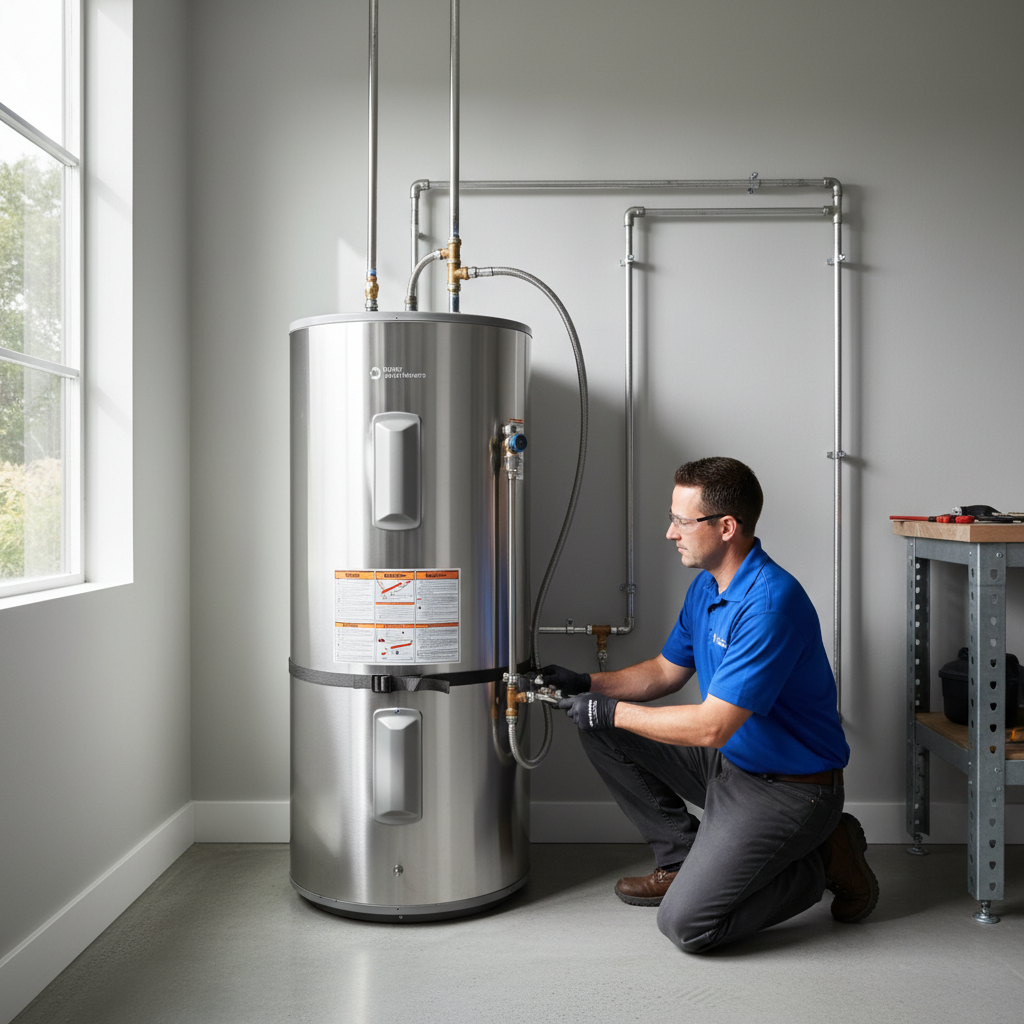
- 2027 Milestone: Small residential water heaters (under 75,000 BTU) must meet zero-NOx standards.
- 2029 Milestone: Larger residential and commercial units must comply with the phase-out.
- Compliance Area: Includes all nine Bay Area counties, from Santa Clara to Marin.
The 2027 Gas Water Heater Ban: Why 2026 is the Critical Year
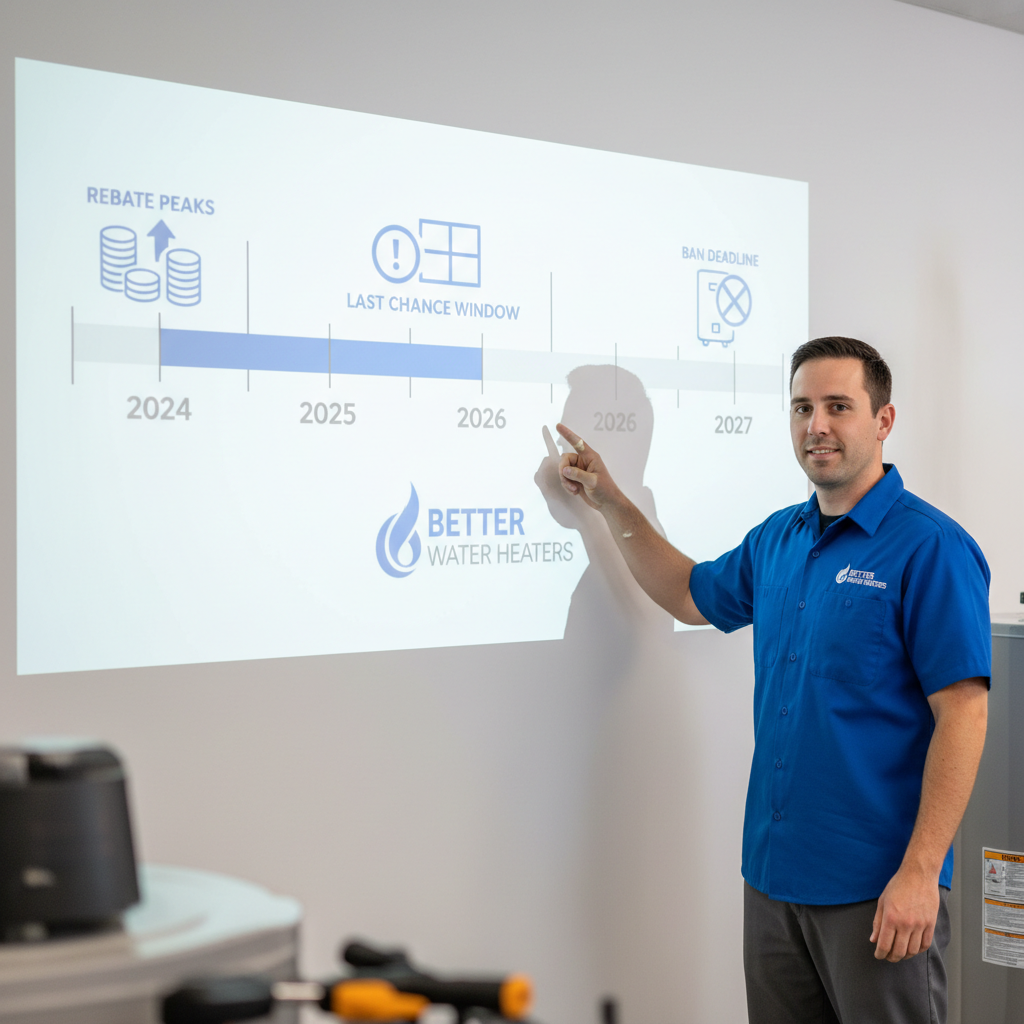
Waiting until the 2027 gas water heater ban takes full effect is a high-risk strategy. If your current gas unit fails in early 2027, you may find yourself in the ‘Emergency Replacement Trap.’ Because a heat pump often requires a dedicated 240V circuit, a simple replacement could turn into a multi-week electrical overhaul.
Consequently, we recommend that homeowners with units older than 10 years consider a proactive replacement in 2025 or 2026. This allows you to manage the ‘Permit and Power’ bottleneck on your own schedule. Furthermore, by acting early, you avoid the inevitable labor shortages and price spikes that will occur when thousands of residents rush to comply simultaneously.
The Risks of Waiting
- PG&E Delays: Panel upgrades and service increases can take 3-6 months for approval and inspection.
- Inventory Shortages: As 2027 approaches, demand for high-end Heat Pump Water Heaters (HPWH) like Rheem and Bradford White will surge.
- Rebate Depletion: Programs like TECH Clean California operate on a first-come, first-served basis.
Financial Analysis: Maximizing Rebates and ROI
The upfront electric water heater conversion cost can be intimidating, but the current incentive landscape is the most favorable it has ever been. By stacking local, state, and federal programs, Bay Area residents can offset a massive portion of the installation cost.
| Incentive Source | Estimated Value | Eligibility Notes |
|---|---|---|
| TECH Clean California | $1,000 – $3,100 | Varies by utility and equipment type |
| Federal 25C Tax Credit | $2,000 | Annual cap for energy-efficient upgrades |
| Local Utility (SVCE/PCE) | $500 – $1,500 | Specific to San Mateo/Santa Clara counties |
| Total Potential Savings | $4,900+ | Varies by household and location |
Beyond the initial installation, the long-term ROI is driven by efficiency. Modern heat pumps use 70% less energy than traditional electric tanks. For homeowners with solar panels or home battery systems like the Tesla Powerwall, these units can be programmed to run during peak solar production, effectively heating your water for free.
Navigating Bay Area Water Heater Compliance
Ensuring Bay Area water heater compliance requires more than just picking a new model. The installation must adhere to strict California Title 24 energy codes and local seismic safety requirements. In earthquake-prone areas like San Jose and Fremont, proper seismic strapping is not just a code requirement—it’s a safety necessity.
Transitioning to a heat pump also requires evaluating your home’s physical space. Hybrid heat pumps pull heat from the surrounding air, meaning they need adequate ventilation. In compact Bay Area homes, we often recommend garage installations or the use of louvered doors to ensure the unit operates at peak efficiency without cooling your living space excessively.
Infrastructure Readiness Checklist
- Electrical Panel: Do you have a 200-amp panel? If not, is there space for a 30-amp double-pole breaker?
- Location: Does the installation area have at least 1,000 cubic feet of air space, or can it be ducted?
- Condensate Drainage: Is there a path for the condensation produced by the heat pump (similar to an AC unit)?
- Permitting: Have you accounted for the $200-$500 local permit fee required by your city?
The Resale Value Factor: Why Early Adoption Matters
In the competitive Silicon Valley real estate market, sustainability is a premium feature. Buyers in communities like Palo Alto and Mountain View are increasingly looking for ‘electrified’ homes that are already in compliance with the 2027 gas water heater ban. A home with an aging gas heater is now seen as a future liability and a negotiation point for price reductions.
By upgrading now, you are not just following BAAQMD regulations; you are future-proofing your asset. We have seen appraisals in the San Francisco area reflect higher values for homes that have already completed the transition to high-efficiency, zero-emission appliances. It signals to buyers that the home has been meticulously maintained and is ready for the next decade of energy standards.
To ensure you choose the right system for your specific property, explore our detailed comparison of tankless and heat pump technologies. We provide objective data to help you decide which path fits your household’s hot water demands.
Strategic Implementation: Your Path to 2027 Readiness
Successfully navigating the 2027 gas water heater ban requires a professional partner who understands both the plumbing and the policy. At Better Water Heaters, we handle the entire lifecycle of the project—from sizing the unit for your family’s needs to filing the complex rebate paperwork that ensures you get every dollar you’re entitled to.
Whether you are a landlord managing multiple units in Oakland or a homeowner in Sunnyvale, the strategy remains the same: Assess, Audit, and Act. Start by scheduling a professional inspection of your current electrical capacity and water heater age. For more information on local incentives, visit our comprehensive guide to Bay Area rebates.
Don’t let a sudden leak in 2027 dictate your home’s infrastructure. Take control of your home’s energy future today. Contact us at Better Water Heaters for a professional consultation and a clear roadmap to compliance.
Frequently Asked Questions
Is a gas water heater really banned in 2027?
Yes, but with a nuance. The BAAQMD regulation prohibits the sale and installation of new NOx-emitting gas water heaters starting in 2027. You do not have to rip out a working gas heater, but once it fails after the deadline, you must replace it with a zero-emission electric heat pump model.
How much more does a heat pump water heater cost compared to gas?
While the equipment and electrical work can cost $3,000 to $5,000 more upfront, the available rebates often bridge this gap entirely. Between the $2,000 Federal tax credit and $1,000-$3,000 in TECH Clean California incentives, many homeowners find the net cost is comparable to or lower than a high-end gas installation.
Do heat pump water heaters work well in the Bay Area climate?
Absolutely. Heat pumps are most efficient in moderate climates like ours. Because our temperatures rarely drop below freezing for extended periods, the heat pump can easily extract ambient heat from the air year-round, maintaining high efficiency even in the winter months.
What if my electrical panel is full?
This is a common hurdle. You may need a panel upgrade to 200 amps or a ‘sub-panel.’ Alternatively, there are new ‘plug-in’ 120V heat pump water heaters hitting the market designed to work on standard outlets, though they have slower recovery times. A professional assessment is necessary to determine the best fit.