
📋 Table of Contents
The 2027 gas water heater ban is no longer a distant regulatory concept; it is a fast-approaching reality for every homeowner in the San Francisco Bay Area. As the Bay Area Air Quality Management District (BAAQMD) implements some of the nation’s strictest environmental policies, the window for strategic decision-making is narrowing for those with aging natural gas appliances.
Understanding BAAQMD Regulation 9 and the 2027 Gas Water Heater Ban
Consequently, many residents are asking what specifically triggers this transition. The core of the 2027 gas water heater ban lies in BAAQMD Regulation 9, Rule 6, which targets nitrogen oxide (NOx) emissions from residential water heaters.
- The Zero-NOx Mandate: Starting in 2027, retailers and installers are prohibited from selling or installing water heaters that emit any NOx.
- Technology Shift: Since standard gas combustion inherently produces NOx, this effectively mandates a shift to electric heat pump technology.
- Phased Approach: While the ban for large commercial boilers starts sooner, residential units (under 75,000 BTU) must comply by January 1, 2027.
- Regional Scope: This rule applies to all nine Bay Area counties, including Santa Clara, Alameda, and San Mateo.
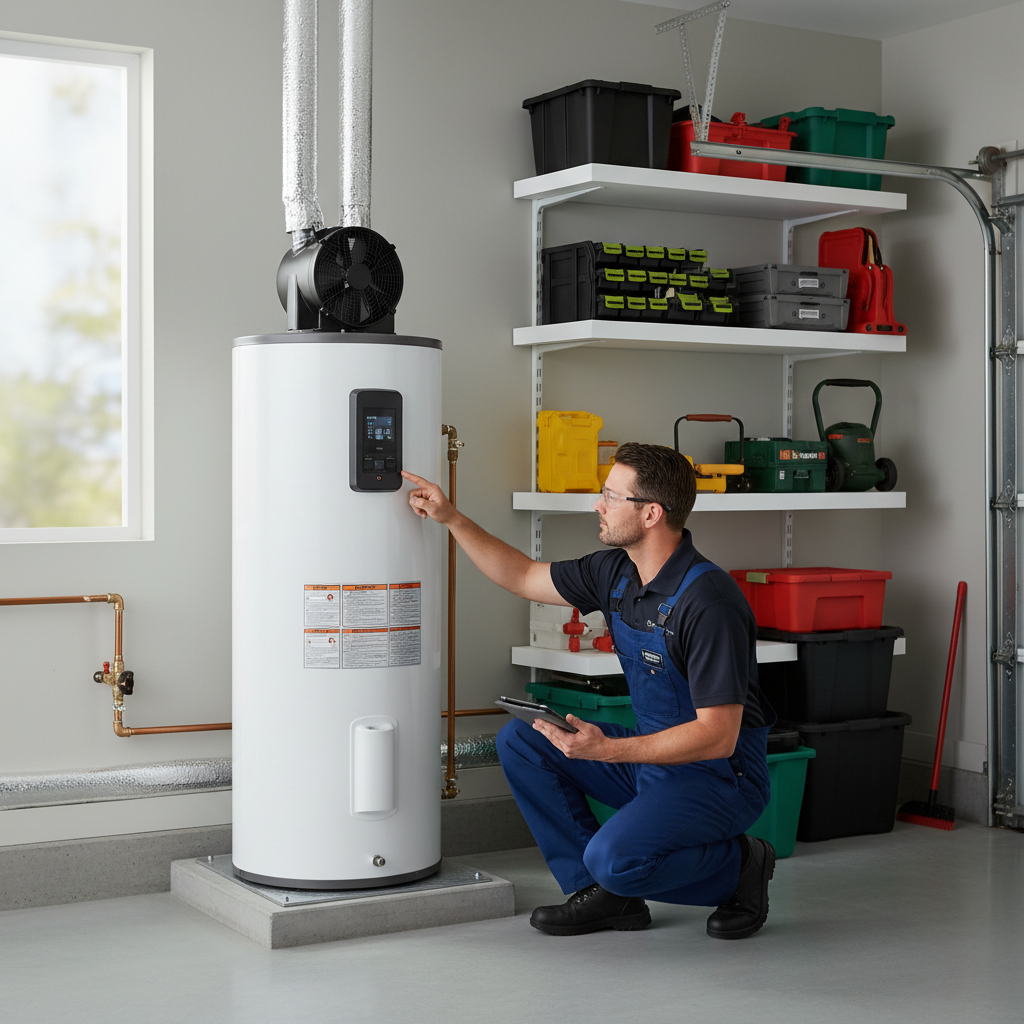
Why NOx Emission Standards Matter for Your Home
Furthermore, these NOx emission standards are designed to improve local air quality and public health. According to the Bay Area Air Quality Management District, residential gas appliances contribute significantly to regional smog and respiratory issues.
The Strategic Transition: Why 2025 is the New 2027
Smart homeowners are recognizing that waiting until the 2027 gas water heater ban deadline is a high-risk strategy. Procrastination often leads to the “Emergency Replacement Dilemma,” where a failed tank in 2027 leaves you with no choice but a rushed, expensive conversion.
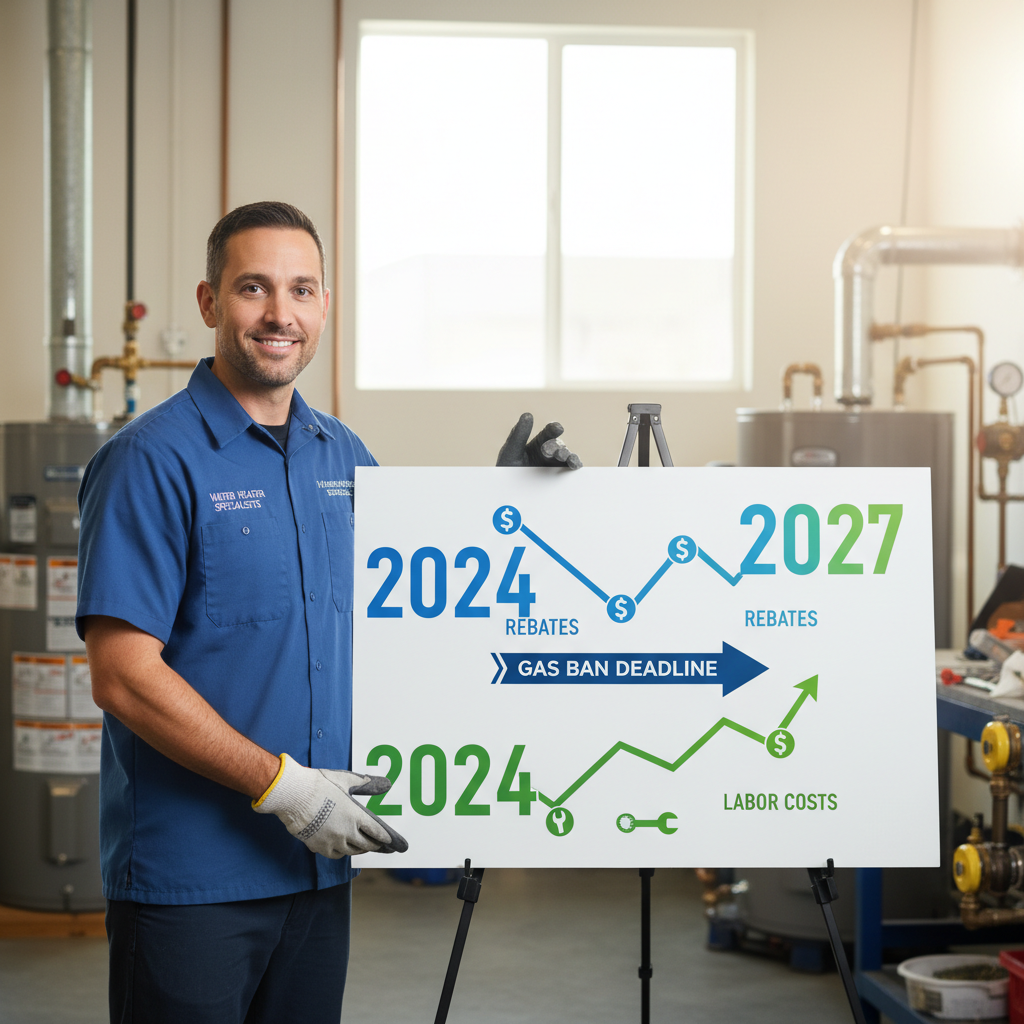
- Avoiding the Labor Spike: We anticipate a 30-40% increase in labor rates in 2026 as thousands of homeowners scramble to beat the deadline.
- Inventory Shortages: Supply chains for high-efficiency heat pumps will likely face significant strain as the mandate nears.
- Rebate Availability: Current incentives like TECH Clean California are funded but not infinite; early adopters secure the highest payouts.
The Hidden Costs of Procrastination
In addition to higher equipment costs, delaying your transition can lead to unbudgeted electrical expenses. Most heat pump water heaters require a 240V circuit, which may necessitate an electrical panel upgrade if your current system is at capacity.
Heat Pump vs. Gas: The ROI of Electrification
While the 2027 gas water heater ban may feel like a forced hand, the long-term financial outlook is surprisingly positive. When you factor in modern efficiency, the electric water heater conversion cost is often offset within 5-7 years.
| Feature | Standard Gas Tank | Heat Pump Water Heater (HPWH) |
|---|---|---|
| Energy Efficiency | 60-70% (EF) | 300-400% (UEF) |
| Annual Operating Cost | $400 – $600 | $150 – $250 |
| Available Rebates | None | Up to $4,900+ |
| Lifespan | 8-12 Years | 13-15 Years |
Maximizing Heat Pump Water Heater Rebates in 2024
Navigating the landscape of heat pump water heater rebates 2024 requires a local specialist who understands the interplay between federal, state, and utility-level incentives. Currently, Bay Area residents can stack multiple programs to drastically reduce out-of-pocket costs.
- TECH Clean California: Provides direct-to-installer incentives that are passed down to homeowners, often totaling $2,000 or more.
- BayREN: Offers local rebates for energy efficiency upgrades in all nine Bay Area counties.
- Federal Tax Credit (25C): Under the Inflation Reduction Act, homeowners can claim 30% of the project cost, up to $2,000 annually.
- Local CCAs: Providers like Silicon Valley Clean Energy (SVCE) often provide additional bridge incentives for panel upgrades.
For a detailed breakdown of how to qualify, visit our Bay Area Rebate Guide.
Technical Challenges: Bay Area Home Considerations
Because many Bay Area homes feature unique architectural constraints, the 2027 gas water heater ban presents specific technical hurdles. We specialize in solving these “impossible” installations where space and power are limited.
- Small Utility Closets: Heat pumps require airflow; we use ducting kits to ensure units operate efficiently in tight San Francisco or Oakland closets.
- Noise Mitigation: Modern units are quiet, but strategic placement is key for homes with bedrooms adjacent to the garage.
- Condensate Management: Unlike gas units, heat pumps produce water (condensate) that must be properly drained according to California plumbing code.
The ‘Pre-2027 Loophole’ Explained
Interestingly, some homeowners are opting to install ultra-high-efficiency gas units now to reset their 15-year clock before the 2027 gas water heater ban takes effect. While this avoids immediate electrical upgrades, it misses out on the massive electrification rebates currently available through The Department of Energy.
Decision Matrix: Should You Replace Now?
To help you decide if you should act before the 2027 gas water heater ban, consider the following criteria. If you meet more than two, a 2025 transition is likely your most cost-effective path.
- Unit Age: Is your current gas water heater 8 years or older?
- Visible Wear: Do you see rust around the base or experience fluctuating temperatures?
- Solar Integration: Do you have (or plan to get) solar panels? (Electrification maximizes your solar ROI).
- Panel Capacity: Are you already planning an electrical upgrade for an EV charger?
Conclusion: Partnering with a Bay Area Specialist
Ultimately, the 2027 gas water heater ban is a catalyst for home modernization. By transitioning now, you secure the best equipment, the highest rebates, and the peace of mind that comes with a future-proof home. At Better Water Heaters, we handle everything from permits and electrical to rebate filing.
Ready to beat the rush? Contact our specialists today for a custom electrification assessment.
Frequently Asked Questions
Is natural gas being banned in the Bay Area entirely?
No, the 2027 gas water heater ban specifically targets the sale and installation of new gas water heaters that emit NOx. It does not mean your existing gas heater will be confiscated, but when it fails after 2027, it must be replaced with a zero-emission alternative like a heat pump.
How much does it cost to convert from gas to a heat pump water heater?
The total electric water heater conversion cost typically ranges from $4,000 to $8,000 before rebates. However, with current Bay Area incentives totaling up to $4,900, many homeowners find the net cost to be comparable to a high-end gas replacement while significantly lowering monthly PG&E bills.
Will my electrical panel need an upgrade for a heat pump water heater?
In many older Bay Area homes, an upgrade to a 200-amp panel is required to support the 30-amp circuit needed for a heat pump. However, new “120V Plug-in” heat pump models are entering the market that can run on a standard outlet, potentially avoiding the need for a full panel upgrade.
What happens if my gas water heater breaks in 2028?
After the 2027 deadline, plumbing contractors will be legally unable to install a standard gas water heater in the Bay Area. You will be required to install a heat pump system. This is why we recommend proactive replacement to avoid being without hot water during a complex emergency conversion.