
📋 Table of Contents
The 2027 gas water heater ban is no longer a distant headline; it is a regulatory reality that will fundamentally change how residents in San Jose, Oakland, and San Francisco maintain their homes. Established by the Bay Area Air Quality Management District (BAAQMD), these new rules represent the most significant shift in residential infrastructure in decades. Understanding these changes now is the difference between a strategic, subsidized upgrade and a frantic, expensive emergency repair.
Understanding BAAQMD Regulations and the 2027 Deadline
The core of the upcoming shift lies in BAAQMD Rules 9-4 and 9-6, which specifically target Nitrogen Oxide (NOx) emissions from residential appliances. Unlike previous mandates that allowed for high-efficiency gas models, the new regulations effectively mandate a transition to zero-emission technology. Consequently, after the deadline, retailers and installers will be legally prohibited from selling or installing traditional gas-fired units.
- Rule 9-4: Focuses on the phase-out of NOx-emitting furnaces.
- Rule 9-6: Specifically mandates that all new water heaters sold in the Bay Area must be zero-NOx by 2027.
- Compliance Territory: This affects all nine Bay Area counties, including Santa Clara, Alameda, and San Mateo.
Furthermore, this isn’t just about environmental stewardship; it’s about regional air quality. According to the BAAQMD, residential wood burning and gas appliances are leading contributors to local smog. By transitioning to electric heat pump technology, the district aims to eliminate a significant portion of these pollutants.
The 2026 Bottleneck: Why Waiting is a Financial Risk
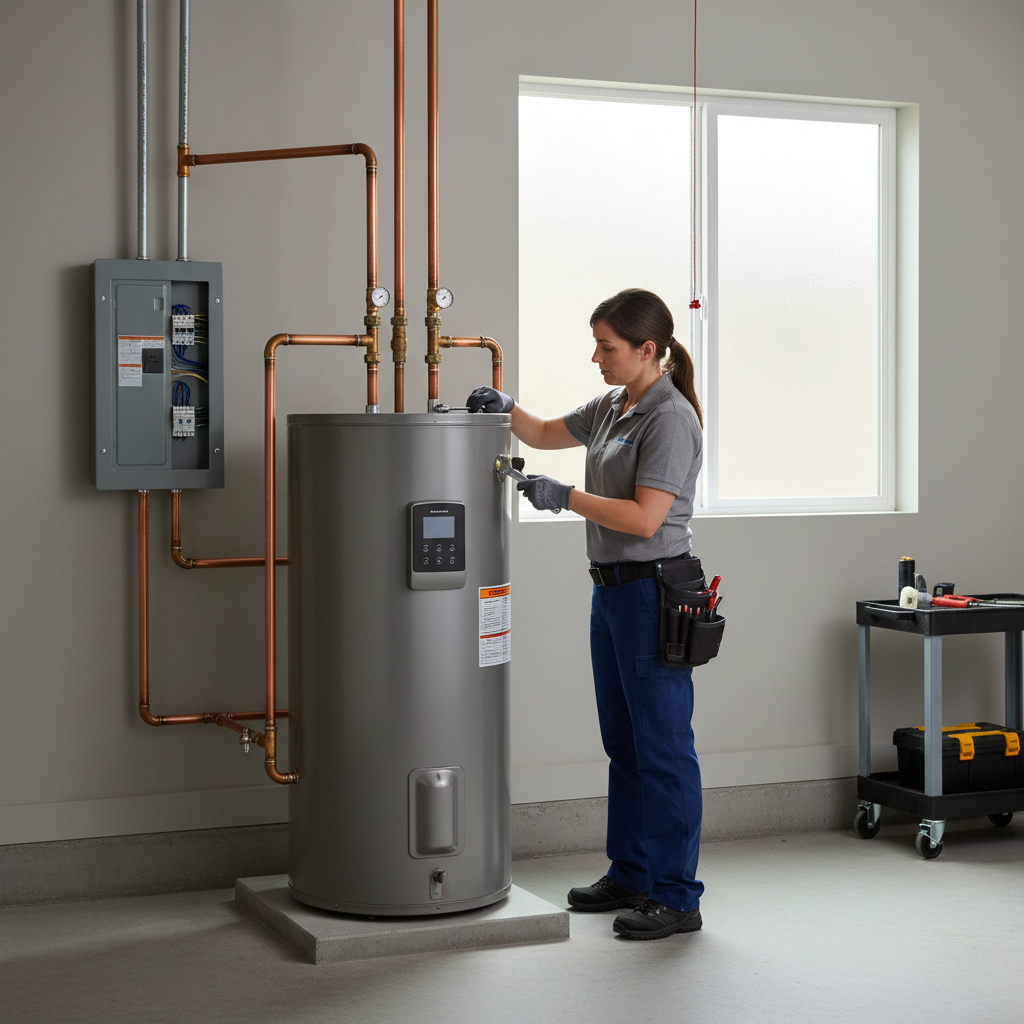
Smart homeowners are already looking at the 2027 gas water heater ban as a deadline for labor availability, not just equipment. As we approach 2027, we anticipate a massive surge in demand for Bay Area water heater replacement services. This “bottleneck” will likely lead to three major challenges for those who wait until the last minute.
- Labor Shortages: Qualified installers with electrical expertise will be booked out for months.
- Price Inflation: High demand coupled with limited supply will drive up installation costs significantly.
- Equipment Scarcity: Popular heat pump models from brands like Rheem and Bradford White may face supply chain backlogs.
Additionally, if your current gas unit fails in late 2026, you may find yourself in an “emergency replacement” dilemma. In such cases, you might be forced to pay premium rates for whatever equipment is left in stock, missing out on the opportunity to choose the most efficient system for your home’s specific footprint.
Heat Pump vs. Gas: A Strategic Comparison
When considering a transition from gas to electric, it is vital to understand the technology. Heat pump water heaters (HPWH) don’t create heat; they move it. This makes them up to 300-400% more efficient than traditional gas units. However, the installation requirements differ significantly from what most Bay Area residents are used to.
| Feature | Traditional Gas Tank | Heat Pump Water Heater (HPWH) |
|---|---|---|
| Energy Source | Natural Gas | Electricity (240v or 120v) |
| Efficiency | 60% – 70% | 300% – 400% | Rising with gas prices | Lower (especially with solar) |
| Emissions | High NOx | Zero (at point of use) |
Moreover, the 2027 gas water heater ban aligns with California’s broader Title 24 requirements. These building codes already favor heat pumps for new construction and major renovations. For existing homes, the shift involves assessing whether your garage or utility closet has the necessary cubic footage for the airflow these units require.
Navigating the Electrical Panel Upgrade Hurdle
One of the primary concerns for Bay Area homeowners is the potential cost of an electrical panel upgrade. Most traditional gas water heaters don’t require a dedicated high-voltage circuit. To address this, the industry has developed two primary paths for electrification.
- The 240V Standard: Requires a 30-amp breaker. This is the fastest-heating option but often requires a panel upgrade if your service is under 200 amps.
- The 120V “Plug-and-Play”: Designed specifically for gas-to-electric conversions, these units can often plug into a standard outlet, potentially saving you $2,000 to $4,000 in electrical work.
- Hybrid Modes: Most modern units allow you to switch between “Heat Pump Only” and “High Demand” modes to balance energy savings with recovery speed.
Consequently, assessing your panel capacity early is a critical step in your Bay Area water heater replacement strategy. Companies at the $1M+ valuation level often advise property managers to conduct these audits across their portfolios now to avoid unexpected capital expenditures in 2027.
Maximizing Rebates: Stacking Incentives for ROI
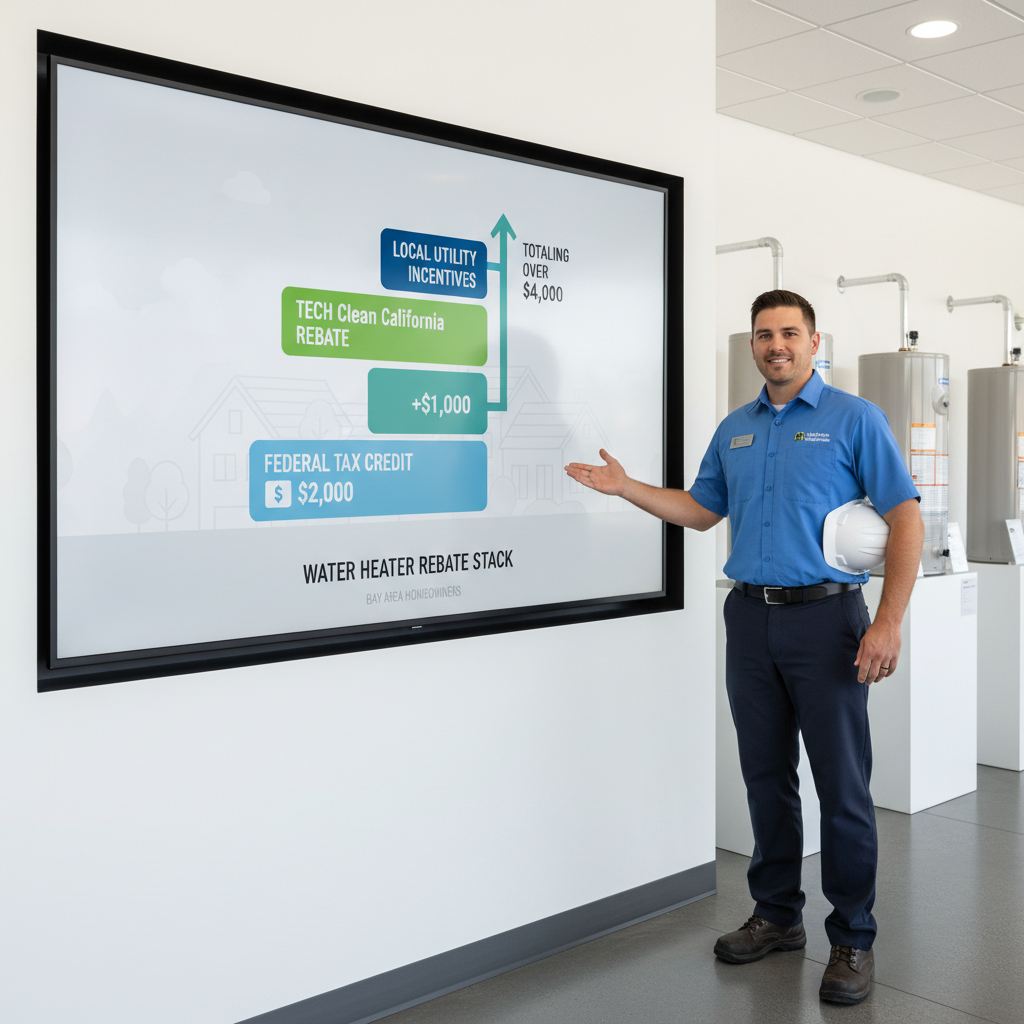
Transitioning before the 2027 gas water heater ban is not just about compliance; it’s about maximizing ROI. Currently, there are unprecedented financial incentives available for Bay Area residents. By stacking federal, state, and local programs, homeowners can often offset 50% to 100% of the upgrade cost.
- TECH Clean California: Offers substantial rebates (often $3,100+) for switching from gas to heat pump.
- Inflation Reduction Act (IRA): Provides a federal tax credit of up to $2,000 (25C tax credit).
- Local Utility Programs: Silicon Valley Clean Energy (SVCE) and Peninsula Clean Energy offer additional incentives for their customers.
- BayREN: Provides rebates for energy efficiency upgrades that include water heating.
Specifically, according to ENERGY STAR, heat pump water heaters can save a family of four approximately $500 per year on utility bills. When you combine these operational savings with $4,900+ in potential rebates, the “payback period” for the unit becomes incredibly attractive compared to sticking with an aging gas system.
Addressing Grid Reliability and Space Constraints
A common concern among tech-savvy Bay Area homeowners is grid reliability. During PG&E Public Safety Power Shutoffs (PSPS), an electric water heater will not produce new hot water. However, because heat pump units are highly insulated tanks, they can keep water hot for up to 24-48 hours if usage is minimized. For those with home battery systems like the Tesla Powerwall, these units can be integrated into your backup load.
Regarding space constraints—a major factor in San Francisco and Berkeley—modern manufacturers have introduced “slim” and “split-system” heat pumps. These units allow the compressor to be located outside (similar to an AC unit), freeing up valuable indoor square footage. This flexibility is essential for complying with BAAQMD regulations in older, densely packed neighborhoods.
Conclusion: Your Strategic Transition Roadmap
The 2027 gas water heater ban represents a shift toward a cleaner, more efficient Bay Area. By acting now, you avoid the labor shortages of 2026, secure the highest possible rebate amounts, and increase your home’s resale value. Proactive homeowners aren’t just following a mandate; they are upgrading their home’s infrastructure for the next 20 years.
Ready to evaluate your home for the 2027 transition? Contact the specialists at Better Water Heaters today for a comprehensive assessment of your electrical capacity and rebate eligibility. Let us help you navigate the BAAQMD regulations with ease.
Frequently Asked Questions
How does the 2027 gas water heater ban affect my current working unit?
The ban does not require you to rip out a functioning gas water heater. It only applies to the sale and installation of new units after the 2027 deadline. However, if your unit fails after 2027, you will be legally required to replace it with a zero-NOx (electric) model.
Are there exceptions to the BAAQMD regulations for low-income households?
Currently, the BAAQMD regulations do not include a permanent exemption based on income. Instead, the focus is on providing significant subsidies and low-interest financing through programs like TECH Clean California to ensure the transition is affordable for all residents, including seniors and middle-income families.
Can I still install a tankless gas water heater after 2027?
No. Under the current zero-NOx mandate, even high-efficiency tankless gas water heaters will be prohibited because they still emit Nitrogen Oxide during combustion. The only compliant technologies will be electric resistance or heat pump water heaters.
Will my home insurance or property value be affected by this ban?
Homeowners who transition early often see an increase in property value as the home is considered “future-proofed” against upcoming regulations. Conversely, homes with aging gas infrastructure may face lower appraisals or “repair credits” during the sale process as 2027 approaches.