
📋 Table of Contents
Navigating the upcoming 2027 gas water heater ban requires more than just a passing interest in home maintenance; it demands a strategic look at your property’s infrastructure. For homeowners in San Jose, Oakland, and San Francisco, the shift toward zero-emission appliances is no longer a distant policy goal but a looming regulatory reality that will fundamentally change how we heat water in our homes.
According to the Bay Area Air Quality Management District (BAAQMD), the transition is designed to drastically reduce nitrogen oxide (NOx) emissions, which are a primary contributor to local smog and respiratory issues. As we move closer to the implementation dates, understanding the nuances of these rules is essential for avoiding emergency replacement crises and maximizing available financial incentives.
Understanding BAAQMD Regulations: The 2027 Gas Water Heater Ban Timeline
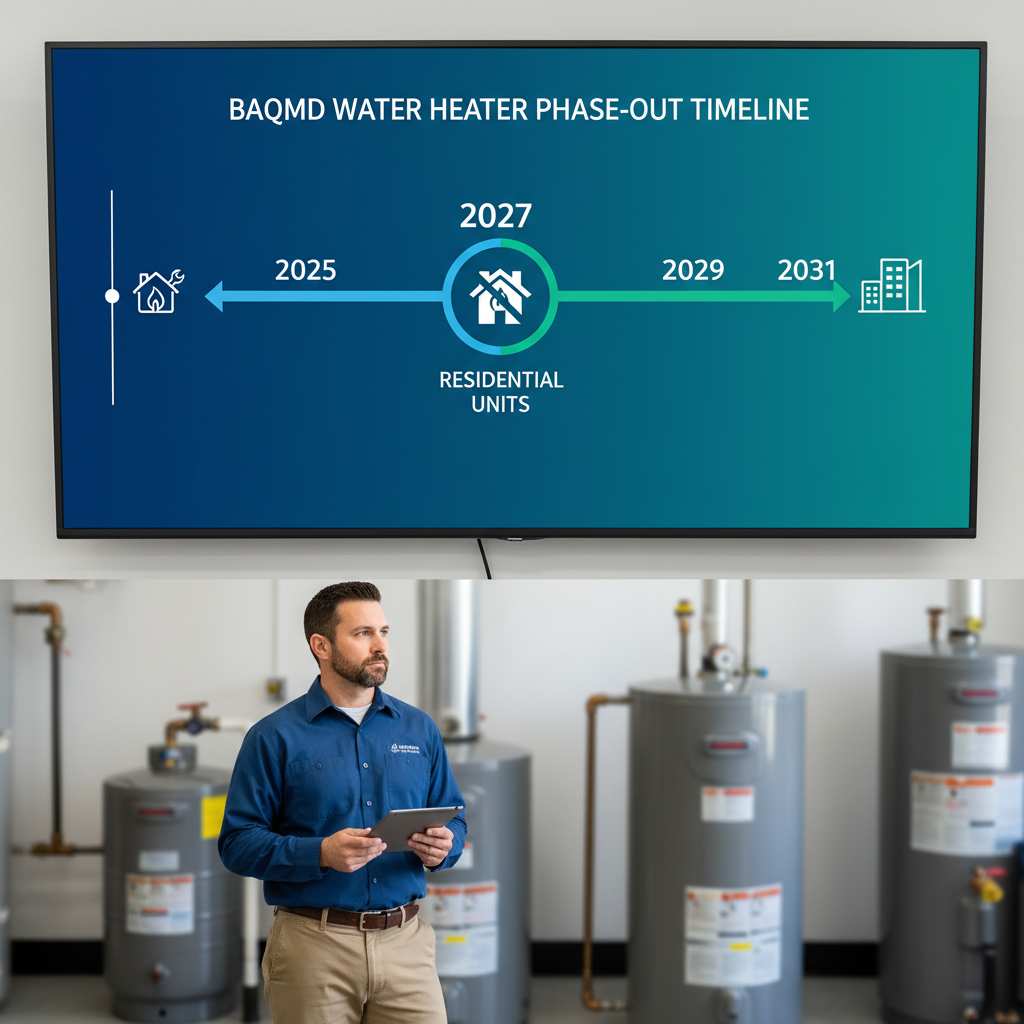
The 2027 gas water heater ban specifically targets the sale and installation of new natural gas-fired water heaters. It is important to clarify that the state is not coming to pull out your working unit on January 1st, 2027; rather, the regulation mandates that any replacement unit must meet zero-emission standards.
- 2027 Deadline: Applies to small water heaters (typically residential units under 75,000 BTU).
- 2031 Deadline: Applies to large commercial-scale water heaters and boilers.
- Compliance Area: All nine Bay Area counties under BAAQMD jurisdiction.
- The Mandate: Only zero-NOx (electric heat pump) units can be sold or installed after these dates.
Consequently, homeowners with gas heaters nearing the end of their 10-15 year lifespan face a critical decision. Waiting until a unit fails in 2027 could leave you in a cold-water emergency with no legal gas replacement option available, forcing a rushed and potentially more expensive electrical conversion.
The Infrastructure Gap: Solving the 100-Amp Panel Bottleneck
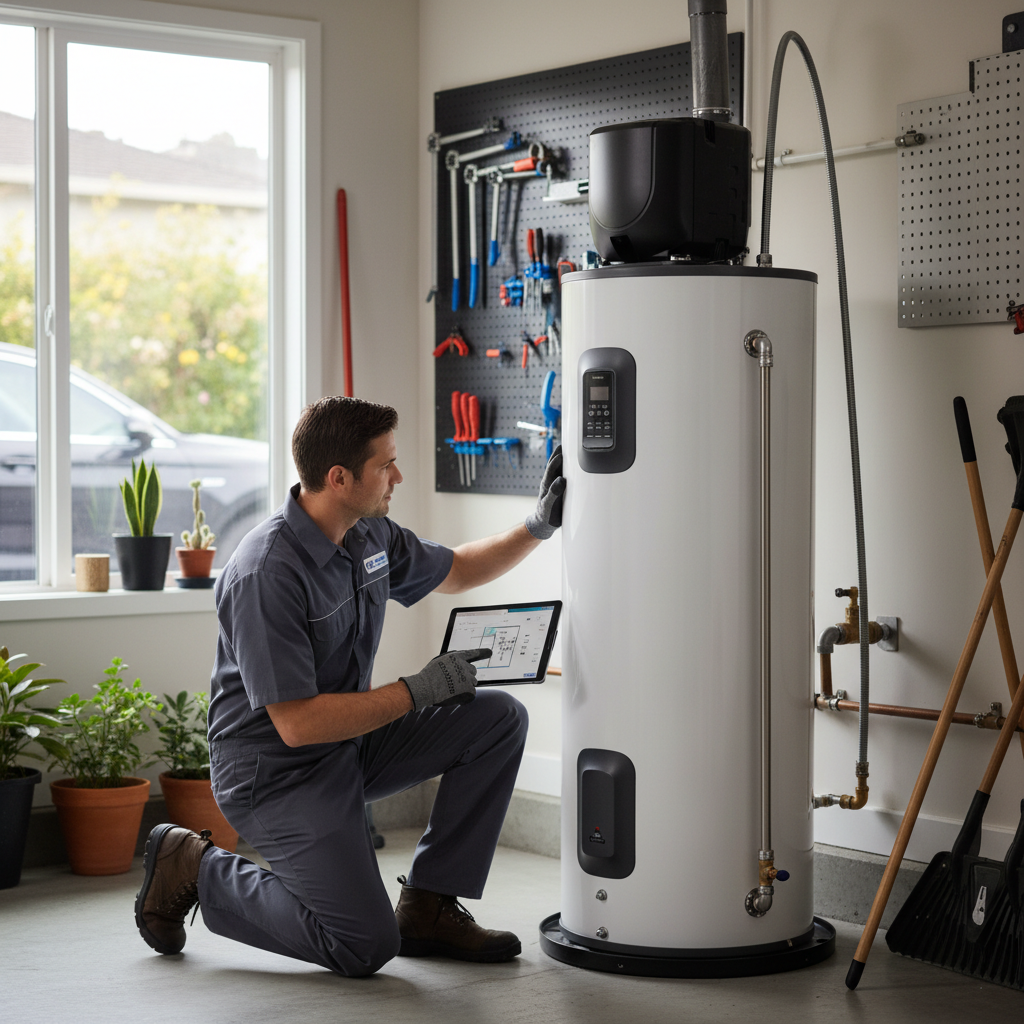
Perhaps the most significant challenge for Bay Area water heater replacement projects is the existing electrical infrastructure in older homes. Many residences in Redwood City or Berkeley still operate on 100-amp electrical panels, which may not have the spare capacity to support a 30-amp circuit for a standard heat pump water heater.
- The Load Calculation: Professional installers must determine if your panel can handle the new load alongside EVs and AC units.
- Circuit Upgrades: Running a new 240V line from the panel to the garage or utility closet is a standard requirement.
- Smart Circuit Splitters: For homes at capacity, devices like the NeoCharge can manage power between appliances to avoid a full panel upgrade.
- 120V Heat Pumps: New “plug-and-play” models are entering the market that can utilize a standard outlet, though they have slower recovery times.
Furthermore, early adoption allows you to bundle these electrical upgrades into a planned renovation rather than paying premium emergency rates. You can learn more about tankless vs. heat pump options to see which fits your current electrical capacity best.
Financial Incentives: Maximizing Bay Area Water Heater Replacement Rebates
While the upfront cost of a heat pump water heater is higher than a traditional gas tank, the current rebate landscape in Northern California is unprecedented. By layering federal, state, and local incentives, some homeowners are seeing the net cost of a zero-emission water heater installation drop below that of a standard gas replacement.
| Incentive Source | Program Name | Max Potential Value |
|---|---|---|
| Federal Tax Credit | Inflation Reduction Act (25C) | $2,000 (Annual) |
| State Rebate | TECH Clean California | $1,000 – $3,100+ |
| Local Utility | BayREN / Peninsula Clean Energy | $500 – $1,000 |
Specifically, programs like TECH Clean California are designed to bridge the price gap. However, these funds are often distributed in “tranches” and can be depleted quickly. Acting in 2025 or 2026 ensures you secure these funds before the massive surge in demand expected just before the 2027 gas water heater ban takes effect.
Total Cost of Ownership: Gas vs. Heat Pump in PG&E Territory
Beyond the initial installation, homeowners must consider the monthly impact on their utility bills. With PG&E gas prices rising steadily, the efficiency of heat pump technology—which moves heat rather than generating it—offers a compelling ROI.
- Energy Efficiency: Heat pumps are 3-4 times more efficient than gas heaters.
- Time-of-Use (TOU) Rates: Smart heat pumps can be programmed to heat water when electricity is cheapest.
- Solar Integration: For Silicon Valley homes with solar arrays, electric water heating is essentially “free” storage for excess daytime production.
- Maintenance: Modern heat pumps require minimal service, focused primarily on air filter cleaning and annual flushing.
Moreover, shifting to electric heating increases home resale value. In the tech-forward Bay Area market, a “decarbonized” home is a premium asset that appeals to environmentally conscious buyers and future-proofs the property against further BAAQMD regulations.
Strategic Readiness: The Better Water Heaters Audit
To navigate the 2027 gas water heater ban effectively, we recommend a “Pre-Emptive Strike” approach. Instead of waiting for a leak, schedule a readiness audit to evaluate your home’s current status and create a multi-year transition plan.
- Age Assessment: If your gas heater is over 8 years old, you are in the replacement window.
- Space Requirements: Heat pumps require roughly 700-1,000 cubic feet of air space or ducting to operate efficiently.
- Permit Navigation: We handle the complex Bay Area permitting process, ensuring your seismic strapping and drainage meet the latest 2024 California Plumbing Code.
- Rebate Management: Our team identifies every available dollar from TECH, BayREN, and federal credits to minimize your out-of-pocket expense.
By partnering with local heat pump specialists, you ensure that your Bay Area water heater replacement is handled by experts who understand the unique microclimates of the Peninsula and East Bay. Whether you are in a foggy coastal zone or a hot inland valley, we calibrate your system for peak performance.
Myth-Busting the Gas Phase-Out
There is significant misinformation regarding the 2027 gas water heater ban. It is vital for property managers and homeowners to distinguish between fact and fiction to make informed capital improvement decisions.
- Myth: You must remove your gas heater by 2027. Fact: You only need to switch when your current unit fails or you choose to upgrade.
- Myth: Gas heaters will be illegal to repair. Fact: Minor repairs remain legal; however, major component failures may make replacement the only viable path.
- Myth: Heat pumps don’t work in the cold. Fact: Modern units operate efficiently well below the freezing temperatures rarely seen in the Bay Area.
Ultimately, the transition to zero-emission technology is an opportunity to upgrade your home’s IQ. Smart water heaters provide leak detection alerts to your smartphone, potentially saving thousands in water damage—a feature rarely found on older gas models targeted by the BAAQMD regulations.
Frequently Asked Questions About the 2027 Ban
How much will it cost to switch from gas to a heat pump water heater?
A typical Bay Area water heater replacement including electrical work ranges from $4,500 to $8,000 before rebates. However, with current incentives like the $2,000 federal tax credit and TECH California rebates, many homeowners see their final net cost fall between $2,000 and $4,000, comparable to a high-end gas installation.
Will I run out of hot water faster with an electric heat pump?
No, provided the unit is sized correctly. While heat pumps have a slower recovery rate than gas, we typically install slightly larger tanks (e.g., a 65-gallon heat pump to replace a 50-gallon gas tank) to ensure your household never notices a difference in capacity, even during peak morning hours.
Does the 2027 gas water heater ban apply to tankless gas heaters?
Yes. The BAAQMD regulations focus on NOx emissions. Since tankless gas heaters still burn natural gas, they will also be phased out in favor of electric heat pump technology or electric tankless systems, though the latter often requires significant and costly electrical panel upgrades.
Can I still buy a gas water heater in 2026?
Yes, you can purchase and install a gas water heater through December 31, 2026. However, doing so may lock you into higher energy costs for the next decade and miss out on the current peak of electrification rebates which may decrease as the mandate deadline approaches.
Ready to future-proof your home? Contact the experts at Better Water Heaters today for a comprehensive home readiness audit and beat the 2027 rush.