
📋 Table of Contents
- Stage 1: The Volume Calculation for Combustion Air
- Stage 2: Pathway Verification (Louver vs. Ducting)
- Stage 3: Exhaust Integrity and Backdraft Testing
- The Contrarian View: Why Ventilation Audits Might Be a Waste of Money
- Common Pitfalls in Bay Area ADU Plumbing Codes
- Next Steps: Your Monday Morning Action Plan
- FAQs
According to the National Fire Protection Association (NFPA), heating equipment is a leading cause of home fires, and improper venting in enclosed spaces significantly increases the risk of carbon monoxide poisoning. If you are a Bay Area homeowner turning your garage into a sleek ADU or a quiet home office, your gas water heater is likely your biggest technical hurdle.
The 3-stage ventilation audit is a mandatory safety framework designed to ensure that when you seal up a garage to make it livable, you aren’t accidentally suffocating your appliances—or yourself. In the Bay Area, where the ‘ADU gold rush’ is in full swing, local building departments are cracking down on garage conversion ventilation requirements to meet 2024 California Building Codes. This guide breaks down exactly how to audit your space before the drywall goes up.
Stage 1: The Volume Calculation for Combustion Air
The most dangerous mistake in a garage conversion is assuming the water heater has enough ‘breathing room’ once you add interior walls and insulation.
Standard atmospheric water heaters rely on the air around them for combustion. When a garage is a drafty utility space, water heater air supply is rarely an issue. However, once you convert that space into a ‘tight’ living area, you must perform a combustion air calculation. The California Plumbing Code generally requires 50 cubic feet of space for every 1,000 BTU/hr of the appliance’s input rating.
- Calculate Total BTUs: Check the rating plate on your water heater (e.g., 40,000 BTUs).
- Measure the Room Volume: Multiply length x width x height of the mechanical closet.
- The Deficit Check: If your closet is 4’x5′ with an 8′ ceiling (160 cubic feet), it only supports 3,200 BTUs—leaving a massive 36,800 BTU deficit for a standard tank.
In our work with established homeowners in San Jose and Palo Alto, we frequently see ‘illegal’ conversions where a bedroom was built around a water heater without any dedicated air intake. This creates a vacuum effect that can pull exhaust gases back into the room. If your volume doesn’t match your BTU load, you must move to Stage 2 immediately.
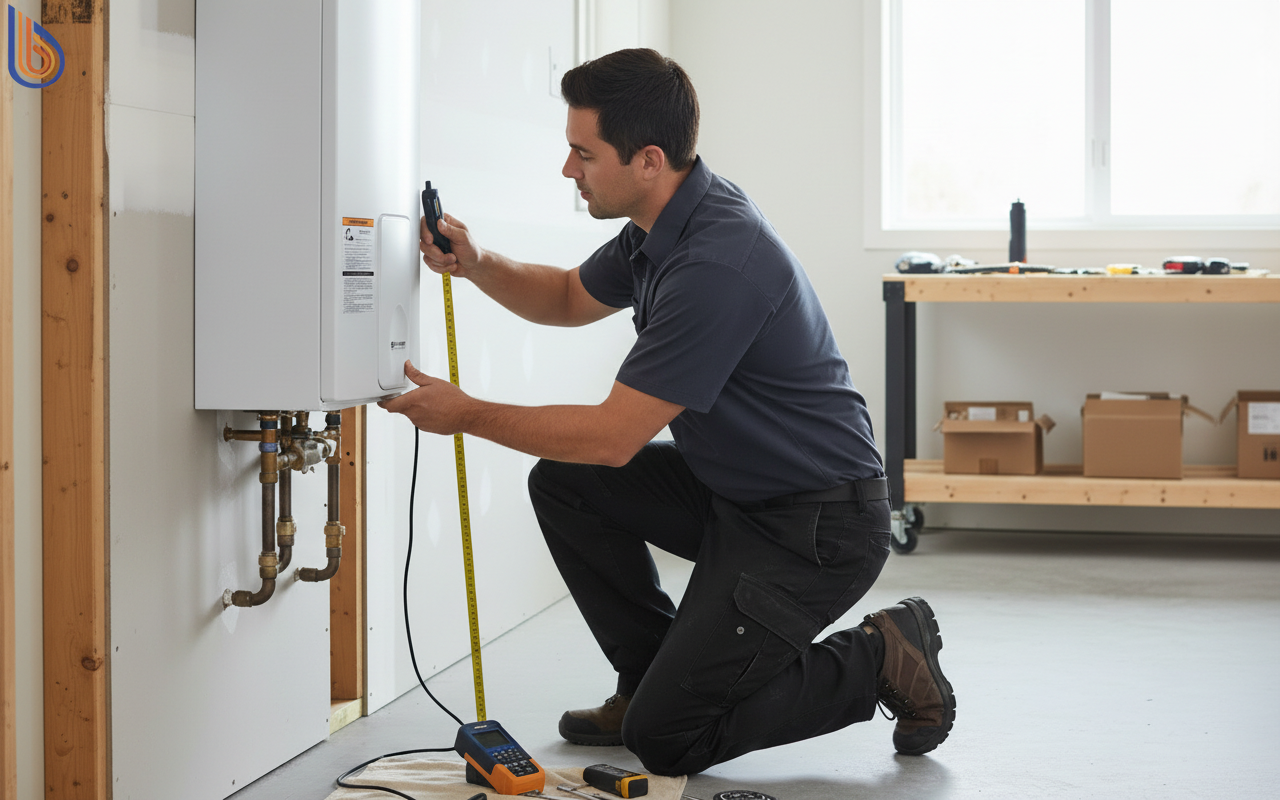
Stage 2: Pathway Verification (Louver vs. Ducting)
If your room is too small for the appliance, you have to find a way to ‘import’ air from the outside or an adjacent unconditioned space.
This stage of the 3-stage ventilation audit focuses on how that air reaches the burner. You can’t just leave the closet door open; ADU combustion safety codes require permanent openings. We typically see two solutions: high/low louvers installed in the door or dedicated fresh air ducts leading to the attic or exterior. What most people miss is that these openings must be sized specifically for the total BTU load of all gas appliances in the room, including furnaces.
- Louver Sizing: You need one square inch of ‘free area’ per 1,000 BTU/hr if taking air from inside the house.
- Exterior Ducting: If pulling air from outside, the requirement drops to one square inch per 4,000 BTU/hr.
- Screen Mesh Restrictions: Remember that insect screens reduce the ‘free area’ of a vent by up to 50%, requiring larger physical holes.
The real kicker? Many homeowners hate the look of louvers in a modern ADU. This is where we often recommend a direct vent conversion or switching to a power vent water heater. These systems use a sealed pipe to pull air directly from outside, allowing you to finish the drywall without ugly grilles.
Need a professional eye on your ADU plans? Schedule a site inspection with our Bay Area experts to ensure your layout is code-compliant before you pull permits.
Stage 3: Exhaust Integrity and Backdraft Testing
Even with perfect air intake, your exhaust system must be able to push toxic gases out of the building under ‘worst-case’ conditions.
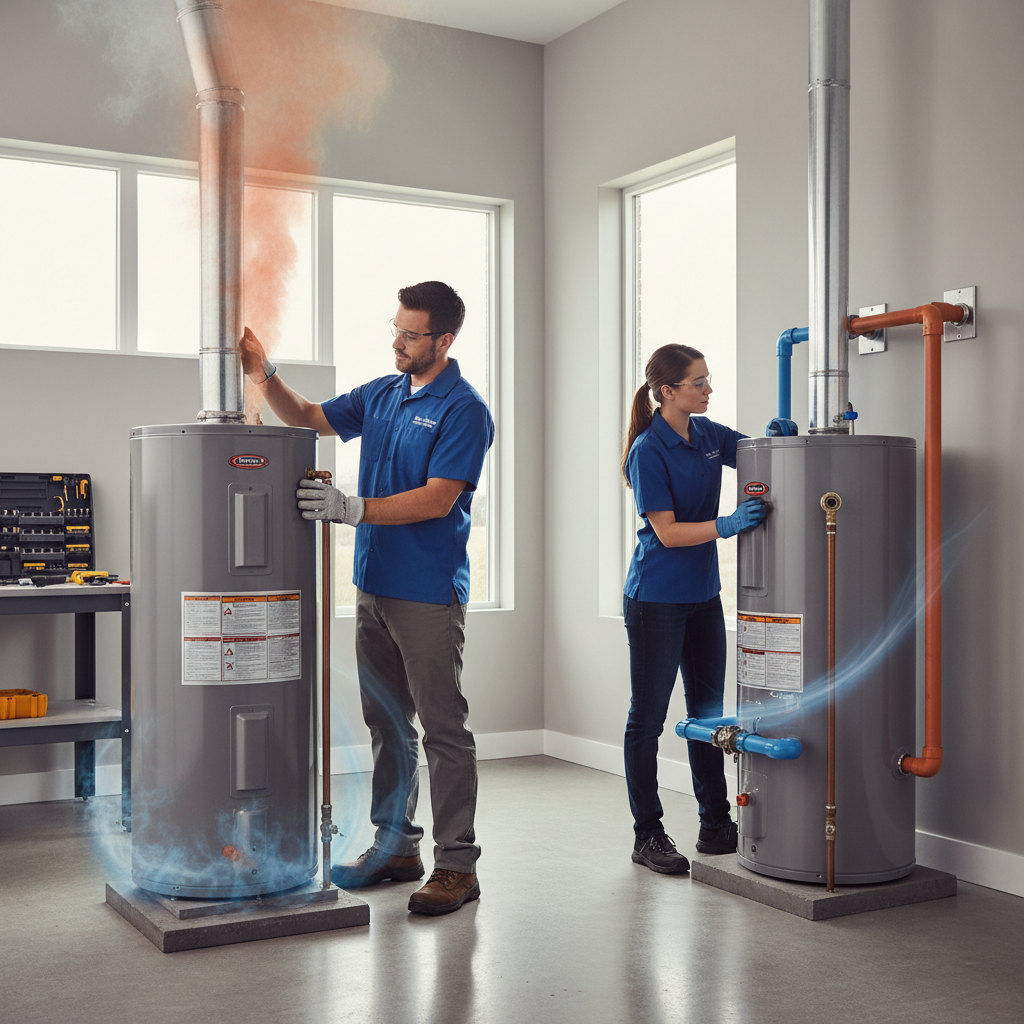
During a 3-stage ventilation audit, we perform a draft test. We turn on all exhaust fans in the converted space (bathroom fans, kitchen hoods) to see if they create enough negative pressure to pull carbon monoxide back down the water heater flue. This is a critical check for garage conversion ventilation because ADUs are small, and a high-powered range hood can easily overpower a standard water heater’s natural draft.
- Visual Inspection: Check for ‘heat spiraling’ or melting plastic on the draft hood—a clear sign of backdrafting.
- Slope and Support: Flue pipes must have a minimum upward slope of 1/4 inch per foot.
- Seismic Strapping: In the Bay Area, we must ensure your exhaust integrity isn’t compromised by improper earthquake strapping.
The Contrarian View: Why Ventilation Audits Might Be a Waste of Money
Here is an honest, contrarian insight: For many Bay Area garage conversions, spending $1,500 on complex ducting and fire-rated louvers is a bad investment compared to simply going electric.
As of 2024, California’s push toward electrification means that installing a Heat Pump Water Heater (HPWH) can often bypass the need for a 3-stage ventilation audit entirely. Because HPWHs don’t burn fuel, they don’t need combustion air or exhaust flues. When you factor in the federal tax credits and local rebates (like TECH Clean California), the cost of upgrading to a heat pump is often lower than the cost of retrofitting a gas vent system into a newly finished ADU ceiling.
However, if your electrical panel is already maxed out by the ADU’s kitchen appliances, sticking with gas and a power vent water heater remains the most logical path. It’s all about the ‘total project cost,’ not just the price of the unit.
Common Pitfalls in Bay Area ADU Plumbing Codes
What works in a suburban garage doesn’t always work in a legalized living space. When we work with property managers in San Mateo or Fremont, we see three recurring issues:
| Requirement | Standard Garage | Converted ADU/Living Space |
|---|---|---|
| Combustion Air | Often ambient/leaky | Must be calculated and dedicated |
| CO Alarms | Recommended | Mandatory within 10ft of bedrooms |
| Venting Material | Single-wall (B-vent) | Must be protected if behind drywall |
The NFPA 54 compliance standards are very clear: you cannot have an atmospheric gas water heater in a room used as a bedroom unless it is in a sealed closet with 100% outside combustion air. If your garage conversion includes a sleeping area, this audit isn’t just a suggestion—it’s a life-saving necessity.
Ready to upgrade to a future-proof system? Explore our tankless and heat pump options that are perfect for tight Bay Area spaces.
Next Steps: Your Monday Morning Action Plan
If you’re in the middle of a conversion, don’t wait for the building inspector to fail your project. This week, take a tape measure to your mechanical closet and find the BTU rating on your water heater. If the math doesn’t add up to 50 cubic feet per 1,000 BTUs, call a specialist to discuss a direct vent conversion or an electric upgrade.
At Better Water Heaters, we’ve spent 20+ years navigating the specific quirks of Bay Area building codes. We don’t just swap tanks; we ensure your home remains a safe place to live and work. For more technical insights on maintaining your home’s infrastructure, you can check out our internal AI content engine, which helps us stay on top of the latest regulatory changes across California.
Frequently Asked Questions
Can I keep my existing water heater during a garage conversion?
You can, but only if you meet the ADU combustion safety requirements of the California Plumbing Code. This usually means building a sealed mechanical closet with dedicated exterior air vents or ensuring the total volume of the connected spaces meets the 50 cu. ft. per 1,000 BTU rule. Most homeowners find it easier to upgrade to a power-vent or electric model during the renovation.
What is the difference between direct vent and power vent?
A direct vent system uses a specialized double-walled pipe to pull air in and push exhaust out simultaneously, requiring no room air. A power vent uses a blower motor to push exhaust out through an inexpensive PVC pipe but still pulls combustion air from the room. For tight garage-to-living conversions, direct vent is often the superior choice for garage conversion ventilation.
Do I need a permit for a 3-stage ventilation audit?
While the audit itself is a diagnostic service, any changes made to your water heater air supply or venting system—such as cutting new holes in your exterior or replacing the unit—require a local building permit in the Bay Area. We handle the entire permit process for our clients to ensure everything is 100% legal for future home sales.
How much does it cost to fix ventilation issues in an ADU?
Costs vary based on the complexity of the home’s structure. Simple louver installations may cost a few hundred dollars, while a full direct vent conversion or relocating a unit to meet NFPA 54 compliance can range from $1,500 to $4,000. It is almost always more cost-effective to address these issues during the framing stage than after the drywall is finished.