
📋 Table of Contents
According to the U.S. Department of Energy, water heating is the second largest energy expense in most homes, accounting for roughly 18% of utility bills. For Bay Area landlords, a poorly sized rental property water heater isn’t just an efficiency drain; it is a primary driver of tenant turnover and high-friction maintenance calls.
Key Takeaways:
- Balance storage capacity with Peak Hour Demand to avoid “cold shower” complaints.
- Prioritize high recovery rates for units with high-density roommate situations.
- Stay ahead of BAAQMD and 2027 zero-emission mandates for future-proof compliance.
- Leverage Load Shifting to reduce operational costs under California’s TOU rates.
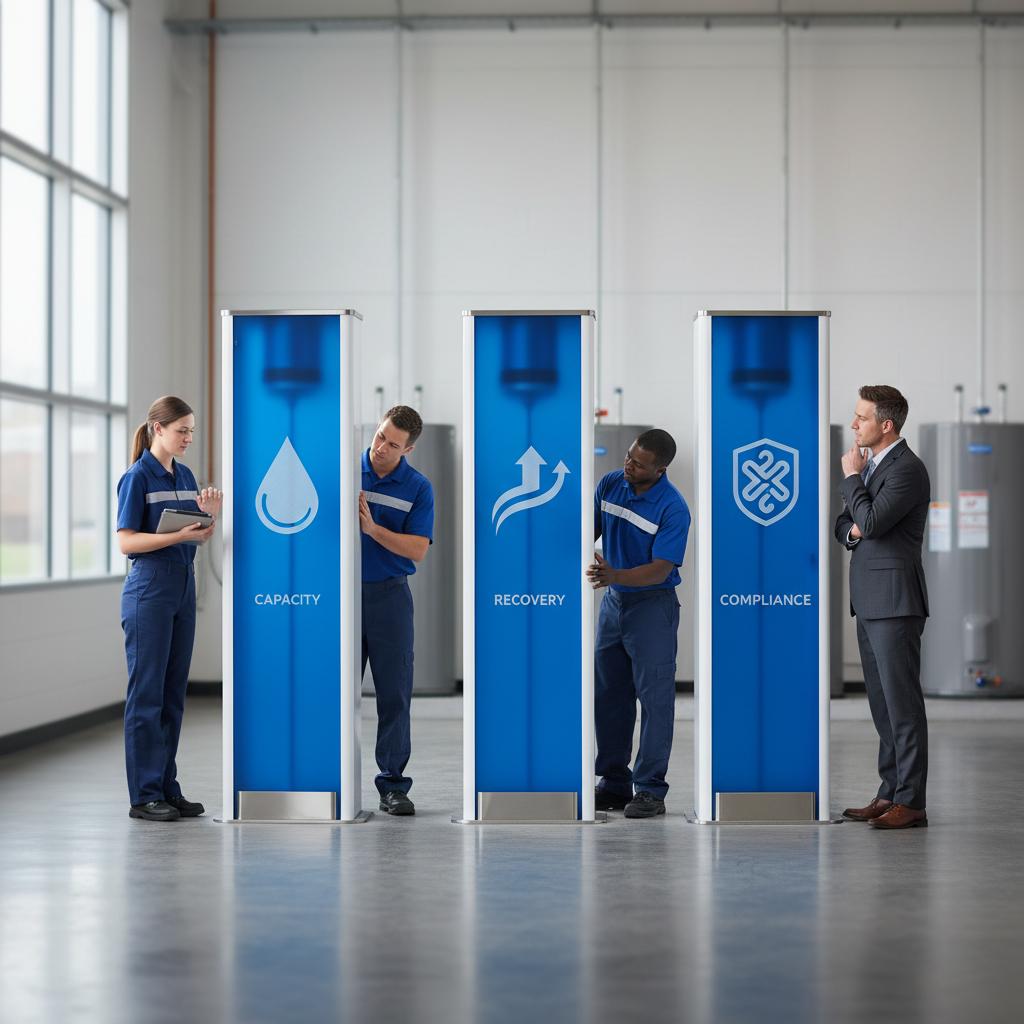
Pillar 1: Capacity and the ‘Hidden Occupancy’ Factor
The most common mistake we see in San Jose and San Francisco rentals is sizing based on the number of bedrooms rather than the actual number of occupants. Here’s the thing: a two-bedroom apartment in a tech hub often houses four adults with staggered work schedules, creating a hot water demand that standard charts simply don’t account for.
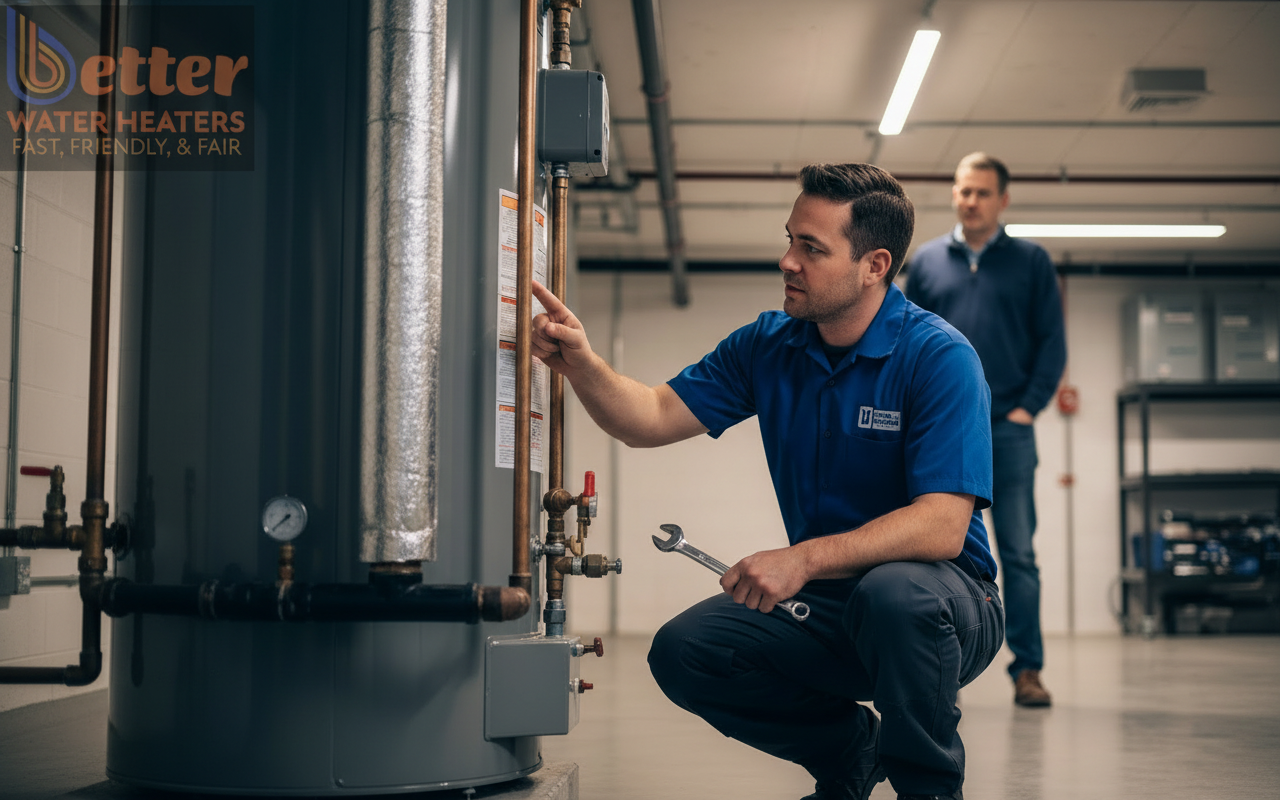
What most people miss is that “Peak Hour Demand” is the only metric that truly matters for tenant satisfaction. In our work with typical Bay Area mid-market property owners, we’ve found that tech-heavy neighborhoods often see a “double peak”—one in the early morning and another late at night when remote workers finally log off. If your rental property water heater can’t handle back-to-back showers during these windows, you’ll be dealing with 6 AM emergency calls.
Consider these occupancy variables for your multi-unit sizing guide:
- The ADU Dilemma: Backyard cottages often share a main line, meaning a 30-gallon tank is rarely enough if the main house is also drawing hot water.
- Roommate Density: Sizing for 1.5 people per bedroom is the safest baseline for Silicon Valley rentals.
- Appliance Load: High-efficiency dishwashers and laundry units in-unit significantly change the draw profile compared to communal laundry rooms.
Need help determining your specific building’s needs? Schedule a professional sizing consultation with our local experts today.
Pillar 2: Recovery Rate vs. Grid-Resiliency
Recovery rate is the amount of hot water the heater can provide in one hour after starting with a full tank of cold water. While storage capacity gets the marketing glory, the recovery rate is the workhorse that prevents tenant walk-outs during peak hours.
But wait—there is a contrarian reality here: more power isn’t always better for your bottom line. In the Bay Area, we have to balance recovery speed with California’s aggressive Time-of-Use (TOU) rates. If your rental property water heater kicks into high gear during peak pricing windows (typically 4 PM to 9 PM), your utility overhead will skyrocket.
| Technology | Average Recovery Rate | Best For |
|---|---|---|
| Standard Gas Tank | 30-40 Gallons/Hour | Single-family rentals |
| High-Efficiency Tankless | Endless (GPM dependent) | Small apartments/ADUs |
| Heat Pump (HPWH) | 20-25 Gallons/Hour | Eco-conscious multi-family |
The real kicker? Modern heat pump water heater load calculation strategies now focus on “Load Shifting.” By using a larger storage tank (e.g., an 80-gallon tank for a 2-bedroom unit), you can heat the water during off-peak morning hours and store it like a battery for the evening rush. This is a core part of landlord plumbing maintenance that saves thousands over the appliance’s lifespan.
Pillar 3: Regulatory Compliance and BAAQMD Rules
Navigating the San Francisco plumbing code 2024 or the latest BAAQMD compliant water heaters requirements is no longer optional. The Bay Area Air Quality Management District (BAAQMD) has set strict NOx emission rules that are phasing out traditional gas models in favor of ultra-low NOx or electric alternatives.
In our work with local property managers, we’ve seen many get caught off guard by the 2027 zero-emission mandate. If you are replacing a unit today, sizing it for a 1:1 gas replacement might be a mistake. You should be looking at electric water heater conversion Bay Area options now to avoid expensive electrical panel upgrades five years down the line.
Compliance Checklist for Landlords:
- Seismic Strapping: Mandatory California code for all rental property water heater installations.
- Expansion Tanks: Required in most Bay Area jurisdictions for closed-loop systems.
- Permit History: Unpermitted water heater swaps can derail a property sale or lead to insurance claim denials.
For more details on local requirements, check out our guide on Bay Area plumbing permits and codes.
Sizing for ADUs and JADUs: The New Frontier
Accessory Dwelling Units (ADUs) are the fastest-growing rental segment in San Mateo and Santa Clara counties. However, standard sizing charts often fail these units because they don’t account for the distance from the main gas or electric meter.
A tenant-proof water heater installation in an ADU often favors tankless technology. Why? Because space is at a premium. A wall-mounted tankless unit frees up closet space while providing the “endless hot water” that justifies premium Bay Area rents. However, you must ensure the gas line is sized correctly—a common failure point in older properties.
According to Energy.gov, sizing for tankless systems is based on flow rate rather than tank capacity. If your ADU has a rain-head shower and a dishwasher running simultaneously, you’ll need at least 5.0 GPM to keep the tenant happy.
Ready to upgrade your rental portfolio? Get a free estimate and see how much you can save with current local rebates.
The ROI of Oversizing in the Bay Area
It sounds counterintuitive, but slightly oversizing your rental property water heater is often the more profitable move. In a market where a single bad review on a rental platform can lead to weeks of vacancy, the “insurance” of an extra 10 gallons of capacity is worth the incremental upfront cost.
Furthermore, larger tanks allow for lower temperature settings (around 120°F), which reduces the rate of sediment buildup and extends the life of the anode rod. This is a proactive landlord plumbing maintenance strategy that reduces the frequency of tank flushes and premature failures.
To help scale this type of expert advice across your own property management sites, we use Ingest.blog as our internal AI content engine to ensure our local insights reach every Bay Area homeowner efficiently.
Frequently Asked Questions
How do I calculate the right size for a multi-unit rental property water heater?
Sizing for multi-unit properties requires calculating the Peak Hour Demand (PHD). For a typical Bay Area apartment, we recommend 12 gallons of storage per person plus a 20% buffer for simultaneous appliance use. Always factor in the recovery rate of the fuel source, as gas recovers faster than standard electric.
Are gas water heaters being banned in the Bay Area?
While not an immediate total ban, BAAQMD rules are phasing out most gas water heaters starting in 2027. New installations in San Jose and San Francisco already heavily favor electric heat pump models due to local building codes and significant rebates that can cover much of the conversion cost.
What is the best water heater for a Bay Area ADU?
High-efficiency tankless water heaters are generally best for ADUs due to their compact size and ability to provide endless hot water. However, if you are looking to maximize rebates, a small-footprint heat pump water heater is the most future-proof and cost-effective option under current California incentives.
How often should a landlord perform plumbing maintenance on water heaters?
We recommend annual professional maintenance for rental properties. This includes flushing the tank to remove sediment, checking the pressure relief valve, and inspecting the anode rod. Regular maintenance can extend the life of a rental property water heater by 3-5 years and prevent catastrophic leaks.
Final Takeaway for Landlords
This week, take 15 minutes to check the manufacture date on your rental units’ water heaters. If any are over 10 years old, don’t wait for a leak or a tenant complaint. Use the 3-Pillar Framework to evaluate if a high-efficiency upgrade can lower your overhead and future-proof your building against upcoming 2027 regulations. Contact Better Water Heaters to start your portfolio assessment.