
📋 Table of Contents
According to the Bay Area Air Quality Management District (BAAQMD), nitrogen oxide emissions from water heaters account for roughly 10% of the region’s total NOx pollution, leading to a landmark 2027 phase-out of traditional gas models. If you’re a homeowner in San Jose or Redwood City, the 2027 regulatory compliance deadline isn’t just a legal footnote—it is a fundamental shift in how your home’s mechanical closet must be designed and powered.
Key Takeaways for Homeowners
- The 2027 mandate effectively bans the sale of standard NOx-emitting gas water heaters in the Bay Area.
- Newer, compliant units (Heat Pumps) often have a 2-4 inch larger diameter, requiring a “future-proof footprint.”
- Electrical panel capacity is the #1 bottleneck for 2027 readiness.
- Proactive audits can unlock up to $4,900 in current rebates before demand spikes in 2026.
Quadrant 1: Spatial Clearance and the Future-Proof Footprint
The most expensive mistake we see is assuming a 2027-compliant unit will slide into the exact same footprint as your current 40-gallon atmospheric gas tank. Here’s the thing: high-efficiency Heat Pump Water Heaters (HPWH) are physically larger because they require integrated compressors and increased insulation to meet NAECA 2027 compliance standards.
In our work with established homeowners in Palo Alto and Los Gatos, we’ve found that many utility closets are literally too small for the next generation of appliances. You need to measure not just the height, but the “swing zone” for airflow and maintenance access.
- Diameter Expansion: Plan for an additional 3-5 inches of width compared to your current tank.
- Vertical Clearance: Heat pumps often stand taller due to the heat pump module sitting on top of the tank.
- Airflow Requirements: Most units require 700-1,000 cubic feet of ambient air to operate efficiently.
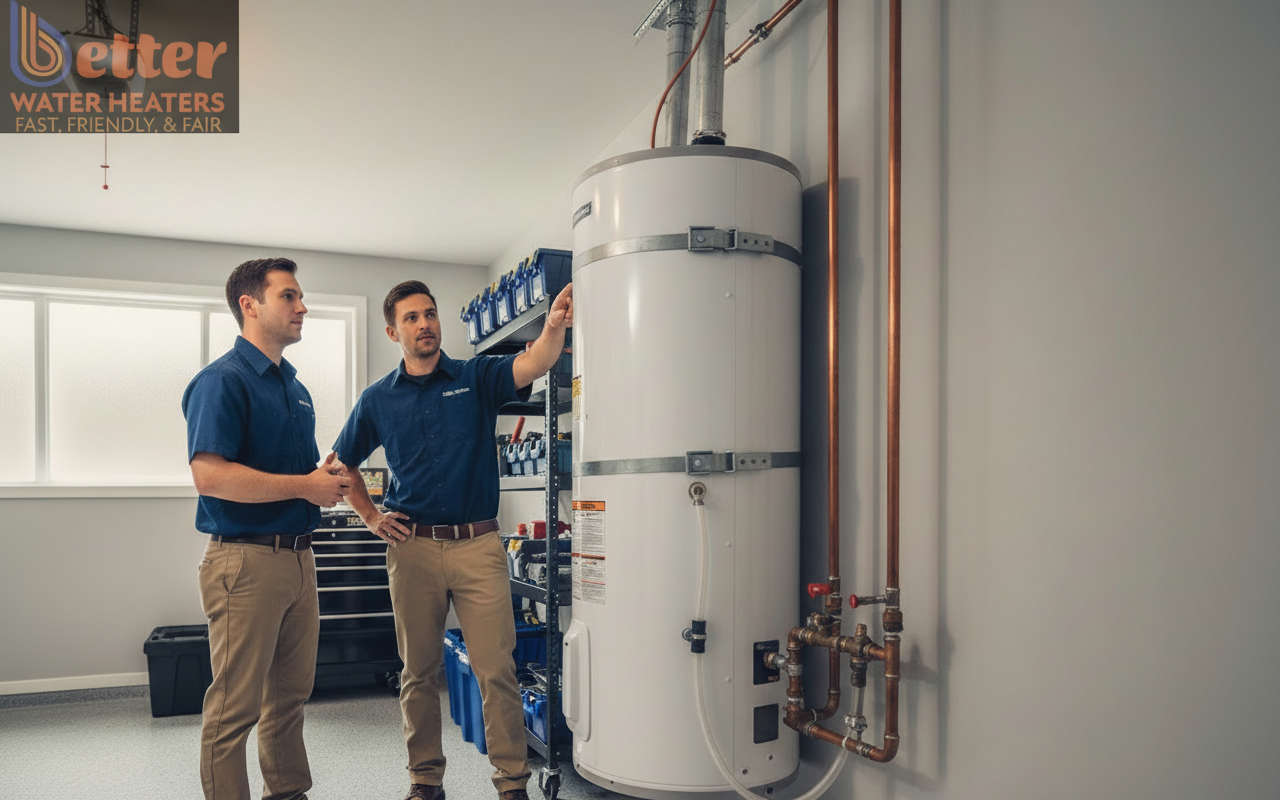
What most people miss is that if your water heater is in a cramped interior closet, you may need to install louvered doors or ducting to ensure the unit doesn’t “freeze out” the room. If you aren’t sure about your dimensions, schedule a site audit with our team to map out your future footprint.
Quadrant 2: Technical Infrastructure and Electrical Load
Transitioning to 2027 regulatory compliance usually means moving from a gas line to a 240V electrical circuit. For a typical Bay Area mid-market home built in the 1970s or 80s, the existing electrical panel may already be at its limit with EV chargers and air conditioning units.
The real kicker? Waiting until your current gas heater leaks to address your electrical panel is a recipe for three days without hot water while you wait for an emergency electrician and permits. We recommend a “Decarbonization Audit” now to evaluate your point-of-load electrical requirements.
- Circuit Readiness: Most HPWHs require a dedicated 30-amp, 240V circuit.
- Panel Capacity: Determine if your main service (often 100A or 125A in older homes) can handle the additional load.
- 120V Alternatives: Some newer “plug-and-play” models exist, but they have slower recovery rates—something established families usually find frustrating.
According to Energy.gov, heat pump models can save a household hundreds per year, but only if the infrastructure supports them. If you’re managing multiple units, this is the time to standardize your electrical upgrades across your portfolio.
Quadrant 3: Environmental Integration (Drainage & Ventilation)
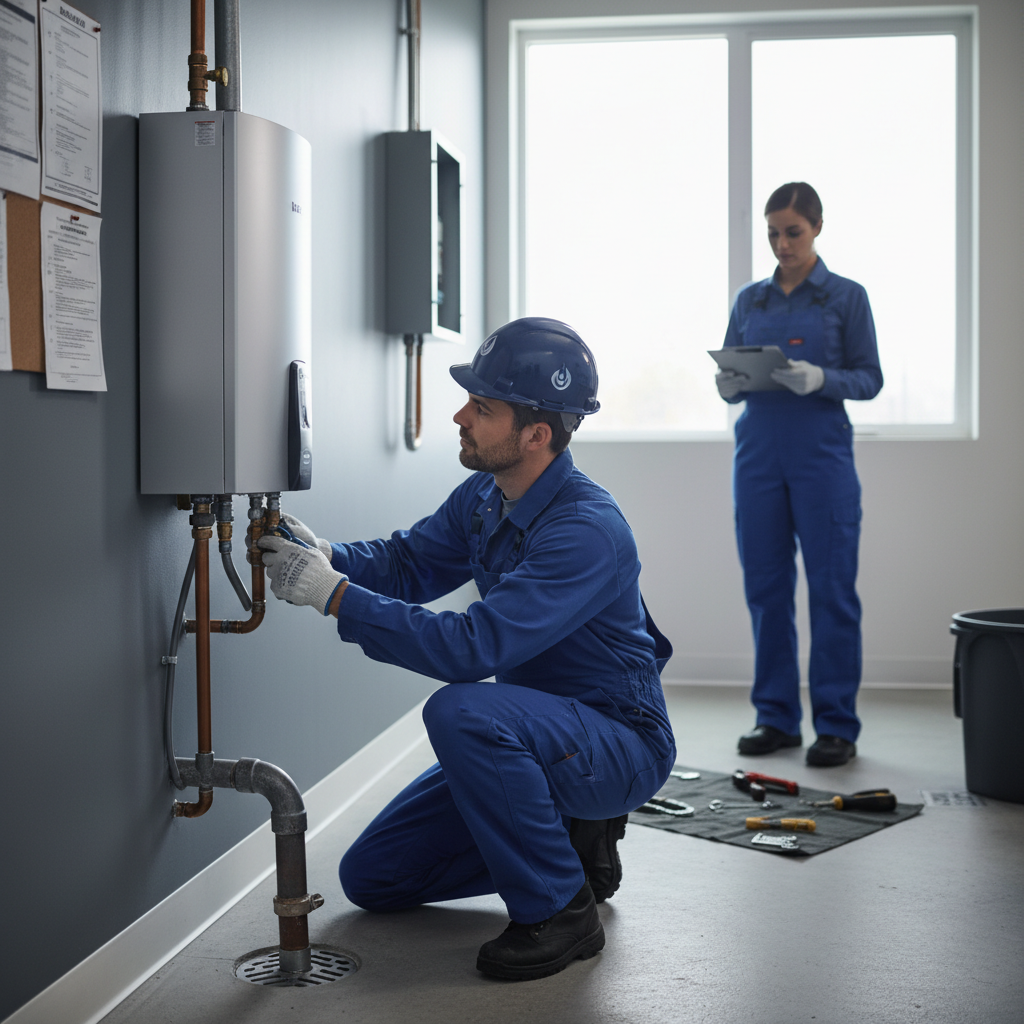
High-efficiency units are not just water heaters; they are active mechanical systems that produce condensate, much like an air conditioner. Achieving 2027 regulatory compliance means solving for water output where there previously was none.
In our work with tech-forward homeowners, we often see beautiful garage conversions that forgot to account for the “condensate management” quadrant. If there isn’t a floor drain nearby, you’ll need a condensate pump to move that moisture to the exterior or a nearby utility sink.
| Requirement | Traditional Gas | 2027 Compliant (HPWH) |
|---|---|---|
| Venting | Metal B-Vent | None (or Ducting for air) |
| Drainage | TP Valve only | TP Valve + Condensate Drain |
| Refrigerant | N/A | R-134a or Low-GWP (R-290) |
But wait—there’s also the noise factor. Heat pumps have fans. While modern units are much quieter, placing one directly against a bedroom wall without vibration dampening is a mistake you’ll regret at 2:00 AM. We use specialized isolation pads for all our Bay Area heat pump installations.
Quadrant 4: The Regulatory and Incentive Landscape
The final quadrant isn’t about pipes; it’s about paperwork. Water heater compliance in the Bay Area involves navigating local building codes, seismic bracing mandates, and the complex web of rebates that can offset the higher upfront cost of 2027-ready equipment.
The contrarian insight here? Don’t wait for the mandate to kick in. As the 2027 deadline nears, labor costs will likely rise as every homeowner in the zip code scrambles to replace failing gas units. By acting now, you can leverage programs like TECH Clean California while they are still fully funded.
- Seismic Bracing: California code requires double-strapping in the top and bottom thirds of the tank.
- Thermal Expansion: Most 2027-ready installs now require a thermal expansion tank to protect your plumbing from pressure spikes.
- Permit Accuracy: Many Bay Area cities now require photos of the electrical circuit and drainage path for final sign-off.
We handle the heavy lifting of rebate maximization for our clients, ensuring you don’t leave thousands of dollars on the table. Whether you are a first-time homebuyer or a property manager, understanding these Bay Area appliance standards is essential for protecting your property value.
The 2027 Readiness Checklist
To give your home a “compliance score,” run through these four questions this weekend:
- Do I have 5-8 inches of clearance around my current water heater?
- Is there a 240V outlet or an empty slot in my electrical panel?
- Is there a floor drain or a way to route a 1/2-inch drain line to the outside?
- Is my current unit over 10 years old? (If yes, you are in the “High Risk” zone for emergency failure).
Need a professional second opinion? Our specialists can provide a full site assessment to ensure your home meets all 2027 regulatory compliance hurdles before they become an emergency. Contact Better Water Heaters today for a transparent, no-nonsense consultation.
Frequently Asked Questions
Will I be forced to replace my working gas water heater in 2027?
No, the 2027 regulations apply to the sale and installation of new units. You can continue to use your existing gas water heater until it fails. However, once it breaks after the 2027 deadline, you will likely be required to replace it with a zero-NOx compliant model, such as a heat pump.
Are heat pump water heaters as reliable as gas units?
Modern heat pump water heaters from brands like Rheem and Bradford White are exceptionally reliable and often come with longer warranties (10+ years) than traditional tanks. The key to longevity is proper site preparation, specifically ensuring adequate airflow and regular condensate drain cleaning to prevent clogs.
How much do the 2027-compliant upgrades cost in the Bay Area?
While a heat pump installation can cost $1,500 to $3,000 more than a traditional gas swap, Bay Area residents can currently access up to $4,900 in combined federal tax credits and local rebates. This often makes the net cost lower than a standard gas replacement while significantly reducing monthly energy bills.
What if my electrical panel is full?
You have three main options: a panel upgrade (sub-panel or main service), using a “circuit sharing” device that pauses the water heater when another appliance (like a dryer) is running, or installing a 120V “plug-in” heat pump model. We can help you determine the most cost-effective path during a site visit.