Water heater article archive
2027 Gas Water Heater Ban: Strategic Guide for Bay Area Homeowners
Historical article, not newly reviewed advice. Verify current requirements, incentives and model guidance with the relevant authority or manufacturer before relying on them. Equipment and service needs require an assessment.
📋 Table of Contents
The 2027 gas water heater ban represents one of the most significant shifts in California property management and homeownership history. Orchestrated by the Bay Area Air Quality Management District (BAAQMD), this regulation mandates a transition to zero-NOx (nitrogen oxide) emissions for all new water heater installations. For sophisticated homeowners in San Jose, Oakland, and San Francisco, understanding these rules today is the difference between a strategic upgrade and a costly emergency.
Understanding BAAQMD Regulations and the 2027 Timeline
Consequently, the BAAQMD Rules 9-4 and 9-6 are not merely suggestions; they are firm compliance deadlines for the phase-out of natural gas appliances. Starting in 2027, retailers and installers will be prohibited from selling or installing traditional gas-fired water heaters in the nine-county Bay Area. This shift aims to drastically reduce local air pollution and move toward the state's aggressive decarbonization goals.
- 2027 Deadline: Small-scale residential water heaters (under 75,000 BTU) must be zero-NOx.
- 2029 Deadline: Commercial water heaters and larger residential units must comply.
- Compliance Area: Includes Alameda, Contra Costa, Marin, Napa, San Francisco, San Mateo, Santa Clara, southwestern Solano, and southern Sonoma counties.
Furthermore, these BAAQMD NOx regulations are designed to eliminate the 15,000 tons of nitrogen oxides produced annually by Bay Area buildings. While your current unit is "grandfathered" in, the moment it fails after the deadline, you will be legally required to install a zero-emission alternative, typically a heat pump water heater (HPWH).
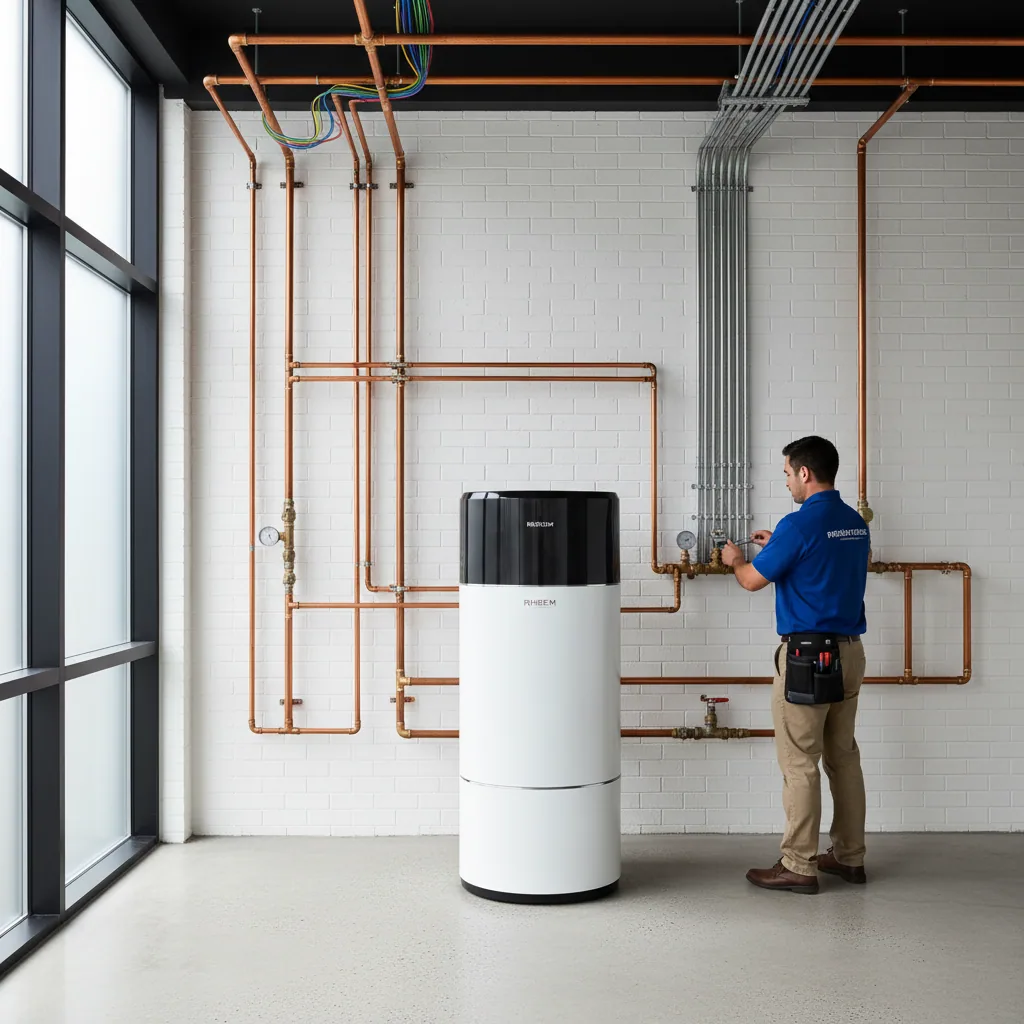
The Strategic Advantage of an Early Bay Area Water Heater Transition
Strategically speaking, waiting until 2027 to address an aging appliance is a high-risk gamble. As the deadline approaches, the demand for qualified installers and electrical contractors will skyrocket, likely leading to significant labor shortages and inflated permitting costs. By initiating your Bay Area water heater transition in 2024 or 2025, you can secure current pricing and avoid the inevitable "compliance rush."
- Rebate Availability: Current incentives like TECH Clean California offer up to $4,900 in combined credits, but these funds are finite and may be depleted by 2027.
- Electrical Grid Readiness: Many older homes in the Peninsula and South Bay require 200-amp panel upgrades to support all-electric appliances.
- Property Value: Modernizing your home’s infrastructure ahead of the mandate signals to future buyers that the property is future-proofed against upcoming Title 24 energy compliance California standards.
Moreover, the cost of procrastination includes the risk of an "emergency failure." If your gas heater leaks on a Friday night in 2028, you won't have the luxury of waiting three weeks for an electrical panel upgrade; you'll be forced into a high-speed, high-cost conversion just to get hot water back.
Comparing the Costs: Gas vs. Heat Pump Conversion
To provide a clear financial picture, we must examine the electric water heater conversion cost versus a final gas replacement. While a standard gas unit is cheaper upfront, the long-term ROI of a heat pump—especially when factoring in federal tax credits—often favors the electric route for high-income households looking to optimize their OpEx.
| Feature | Traditional Gas Heater | Heat Pump Water Heater (HPWH) |
|---|---|---|
| Upfront Installation | $2,500 - $4,500 | $5,500 - $9,000 (Before Rebates) |
| Max Available Rebates | $0 | Up to $4,900+ |
| Efficiency Rating | 0.60 - 0.70 UEF | 3.0 - 4.0 UEF |
| BAAQMD 2027 Ready | No | Yes |
In addition to these figures, homeowners should consult the U.S. Department of Energy guidelines on heat pump efficiency. The high UEF (Uniform Energy Factor) of heat pumps means they use roughly 70% less electricity than standard electric tanks, significantly offsetting the high PG&E rates common in our region.
Navigating the 'Un-retrofittable' Home: Space and Power Constraints
One common concern for residents in San Francisco or Oakland involves the physical footprint of new technology. Heat pump water heaters require airflow to function, which can be challenging in tight utility closets or under-stair installations. However, sophisticated engineering solutions now exist for even the most cramped Bay Area environments.
- Ducting Solutions: Cool air exhaust can be ducted out of small rooms to maintain efficiency.
- 120V "Plug-in" Models: New technology allows for heat pump installation on standard circuits, potentially avoiding a full panel upgrade.
- Hybrid Modes: Most units allow you to toggle between high-efficiency heat pump mode and standard electric mode for high-demand periods.

Specifically, our team at Better Water Heaters specializes in complex retrofits. We assess your home's volumetric space and electrical capacity to ensure that your 2027 gas water heater ban strategy is technically sound and code-compliant.
Maximizing Heat Pump Water Heater Rebates in 2024
Financial optimization is a priority for our clients. Currently, the landscape for heat pump water heater rebates 2024 is exceptionally favorable due to a layering of local, state, and federal incentives. Navigating these requires a partner who understands the specific filing requirements of agencies like Peninsula Clean Energy or Silicon Valley Clean Energy.
- Federal 25C Tax Credit: Provides up to $2,000 annually for heat pump installations under the Inflation Reduction Act.
- TECH Clean California: Offers direct-to-contractor incentives that are passed on to the homeowner, often totaling $1,000 - $3,100.
- Local Utility Rebates: Providers like PG&E and local CCAs (Community Choice Aggregators) offer additional localized bonuses.
Consequently, the "net cost" of a premium heat pump system can often drop below the price of a standard gas replacement. This makes the transition a logical choice for homeowners who value both fiscal responsibility and environmental stewardship.
Why Proactive Maintenance Matters During the Transition
If you choose to keep your gas heater until the 2027 deadline, maintenance becomes your most critical tool. Extending the life of your current unit allows you to time your transition perfectly, rather than being forced into a decision by a catastrophic failure. We recommend an annual flush and anode rod inspection to maximize your current ROI.
- Sediment Removal: Prevents tank corrosion and maintains heating efficiency.
- Anode Rod Replacement: The "sacrificial" rod that prevents your tank from rusting out.
- Pressure Relief Valve Testing: Ensures safety and prevents high-pressure leaks.
Ultimately, whether you are planning a repair or a full replacement, our goal is to ensure you aren't caught off guard by the 2027 gas water heater ban. Expertise in local codes and rebate maximization is what sets a premium service apart from a standard contractor.
Frequently Asked Questions
Is it still legal to repair my gas water heater after 2027?
Yes, the BAAQMD regulations apply specifically to the sale and installation of new units. You are permitted to repair your existing gas water heater as long as parts are available. However, once the tank itself fails or requires replacement, you must transition to a zero-NOx compliant system.
Will my PG&E bill increase if I switch to an electric heat pump?
While electricity is more expensive per unit than natural gas in the Bay Area, heat pumps are 300-400% more efficient than gas heaters. Most homeowners find that their total energy consumption drops so significantly that the monthly cost remains comparable, especially if paired with solar panels.
Do I need a permit for a heat pump water heater installation?
Absolutely. All water heater replacements in the Bay Area require a local building permit. This ensures the unit meets seismic strapping codes and electrical safety standards. At Better Water Heaters, we handle the entire permitting process for our clients to ensure full compliance.
What happens if I try to install a gas heater after the 2027 deadline?
Licensed contractors will be legally prohibited from pulling permits for non-compliant gas units. Unpermitted installations can lead to significant fines, issues during home inspections when selling your property, and potential denials of insurance claims in the event of a fire or flood.
Ready to future-proof your home? Contact the experts at Better Water Heaters today for a comprehensive home energy assessment and rebate consultation.