Water heater article archive
2027 Gas Water Heater Ban: Strategic Guide for Bay Area Homes | Better Water Heaters
Historical article, not newly reviewed advice. Verify current requirements, incentives and model guidance with the relevant authority or manufacturer before relying on them. Equipment and service needs require an assessment.
📋 Table of Contents
- Understanding BAAQMD Rule 9-6 and the 2027 Gas Water Heater Ban
- The Emergency Failure Trap: Why Waiting is a High-Stakes Gamble
- Comparing the Costs: Natural Gas vs. Heat Pump Technology
- The Hybrid Advantage: Maximizing Bay Area Rebates
- Infrastructure Readiness: Is Your 100-Amp Panel a Ticking Clock?
- FAQs
As of 2024, the countdown has officially begun for the 2027 gas water heater ban in the San Francisco Bay Area. This landmark shift in local environmental policy isn't just a future date on a calendar; it is a fundamental change in how homeowners must manage their essential home infrastructure. For sophisticated property owners, understanding the transition from natural gas to zero-emission technology is the difference between a seamless upgrade and a multi-week emergency headache.
Key Takeaways for Executives and Homeowners:
- Compliance Deadline: Starting in 2027, only zero-NOx (electric heat pump) water heaters can be sold or installed in the Bay Area.
- Financial Incentives: Current rebates from TECH Clean California and federal tax credits can offset up to $4,900 in costs.
- Infrastructure Risks: Older 100-amp electrical panels may require upgrades that take weeks to permit and install.
- Property Value: Early adoption of zero-emission tech protects your home’s resale value and compliance status.
Understanding BAAQMD Rule 9-6 and the 2027 Gas Water Heater Ban
The Bay Area Air Quality Management District (BAAQMD) recently adopted amendments to Rule 9, Regulation 6. This policy targets nitrogen oxide (NOx) emissions from residential water heaters, which contribute significantly to local smog and respiratory issues. Unlike previous regulations that simply required higher efficiency, this mandate effectively creates a 2027 gas water heater ban for small-scale residential units.
Consequently, the phase-out follows a strict timeline based on the size of the unit:
- January 1, 2027: Ban on the sale and installation of natural gas-fired water heaters under 75,000 BTU/hr (standard single-family homes).
- January 1, 2029: Ban extends to larger commercial-sized units and multi-unit boilers.
- Point of Sale Focus: The law applies to the moment of installation, meaning you cannot buy a gas unit elsewhere and have it installed locally after the deadline.
Transitioning early allows you to leverage expert advice from Better Water Heaters specialists who understand the nuances of local city permits from San Jose to Redwood City.

The Emergency Failure Trap: Why Waiting is a High-Stakes Gamble
Most homeowners follow the "if it isn't broken, don't fix it" philosophy. However, the 2027 gas water heater ban turns this logic into a liability. In a pre-2027 world, if your tank leaks, a plumber can replace it within 24 hours. In a post-2027 world, a standard gas replacement will no longer be an option.
Strategic reasons to avoid the emergency bottleneck include:
- Electrical Lead Times: Heat pump water heaters require a 240V circuit. If your panel is full, a PG&E service upgrade can take 4 to 12 weeks to complete.
- Labor Shortages: As the 2027 deadline nears, the demand for qualified electric-certified installers will skyrocket, leading to higher labor costs.
- Permit Delays: Local building departments in Alameda and Santa Clara counties are already seeing increased volume for electrification permits.
Specifically, if your water heater fails in February 2027 and you haven't prepped your electrical panel, your family could be without hot water for a month while you wait for an electrician and a city inspector. This is what we call the "Electrification Gap." To avoid this, consider a proactive heat pump consultation today.
Comparing the Costs: Natural Gas vs. Heat Pump Technology
Sophisticated investors look at the Total Cost of Ownership (TCO) rather than just the initial sticker price. While a heat pump water heater (HPWH) has a higher upfront cost than a gas tank, the long-term ROI is bolstered by extreme efficiency and massive rebates.
| Feature | Standard Gas Tank | Heat Pump (HPWH) |
|---|---|---|
| Upfront Cost (Avg) | $1,800 - $2,800 | $4,000 - $6,500 |
| Available Rebates | None | Up to $4,900+ |
| Energy Efficiency | 60-70% | 300-400% |
| Lifespan | 8-12 Years | 13-15 Years |
According to the U.S. Department of Energy, heat pump models use electricity to move heat rather than generate it, making them four times more efficient than gas units. In PG&E territory, where gas prices have spiked 30% in recent years, this efficiency provides a critical hedge against rising utility bills.
Need a personalized ROI breakdown? Contact our Bay Area experts for a free estimate and see how much you can save before the 2027 mandates kick in.
The Hybrid Advantage: Maximizing Bay Area Rebates
One of the most compelling reasons to act before the 2027 gas water heater ban is the current abundance of funding. Programs like TECH Clean California are designed to incentivize early adopters. Once the ban becomes mandatory, these "carrots" may disappear because the government no longer needs to encourage a choice that is legally required.
Current financial incentives available to Bay Area residents include:
- TECH Clean California: Up to $3,100 for switching from gas to heat pump.
- Federal Tax Credit (25C): 30% of the project cost, capped at $2,000 annually.
- BayREN Home+ Incentives: Local rebates often ranging from $1,000 to $2,000 depending on the county.
- Utility-Specific Programs: Peninsula Clean Energy and Silicon Valley Clean Energy offer additional stackable grants.
Collectively, these incentives can make a premium Rheem or Bradford White heat pump system cheaper than a standard gas unit. However, these funds are finite and often operate on a first-come, first-served basis. Waiting until 2026 means competing with every other homeowner in the Bay Area for a dwindling pool of money.
Infrastructure Readiness: Is Your 100-Amp Panel a Ticking Clock?
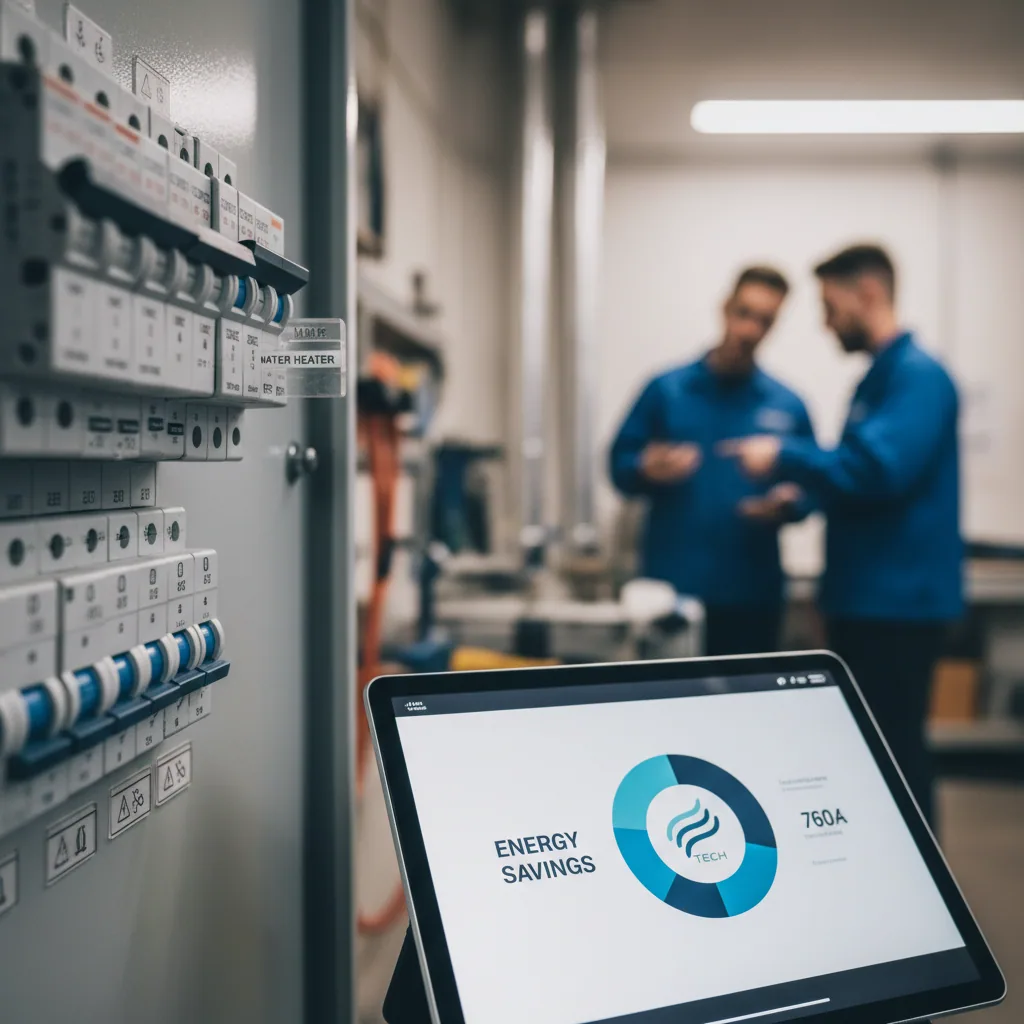
For many homes in Palo Alto, San Mateo, and Berkeley, the existing electrical infrastructure is the biggest hurdle to the 2027 gas water heater ban. Modern heat pumps typically require a 30-amp, 240-volt dedicated circuit. If your home still operates on a 100-amp panel and you also have an EV charger or A/C, you may be at capacity.
Proactive steps to take now:
- Load Calculation: Have a professional assess your current electrical load to see if a heat pump fits.
- Smart Load Centers: Consider technologies like Lumin or Span that manage power without a full panel upgrade.
- 120V Heat Pumps: New "plug-in" heat pump models are hitting the market that use a standard outlet, though they have slower recovery times.
By addressing these infrastructure needs now, you ensure your home is "future-proofed." This not only provides peace of mind but significantly increases your property's appeal to tech-savvy Bay Area buyers who prioritize sustainable, move-in-ready homes. For more details, explore our guide on electrical requirements for water heaters.
How the Bay Area Natural Gas Phase-Out Impacts Property Value
Real estate markets in the Silicon Valley and North Bay are increasingly sensitive to energy ratings and electrification. As the 2027 gas water heater ban approaches, homes that still rely on gas will be viewed as having "deferred maintenance" by savvy buyers. They will calculate the cost of a future electric conversion into their offer price.
Value-add benefits of early adoption include:
- Improved Indoor Air Quality: Removing gas combustion reduces indoor CO2 and NOx levels, a major selling point for families.
- Seismic Safety: Reducing gas lines in the home lowers the risk of fire following a major Bay Area earthquake.
- LEED and Green Certification: All-electric homes often qualify for higher-tier energy certifications.
Furthermore, the BAAQMD official site emphasizes that these regulations are part of a broader push for carbon neutrality. Being ahead of the curve positions you as a leader in the community rather than someone scrambling to comply with the law at the last minute.
Don't wait for your current unit to fail. Schedule a professional site assessment today to map out your transition plan and lock in current rebate rates.
FAQs About the 2027 Gas Water Heater Ban
Do I have to replace my working gas water heater in 2027?
No. The BAAQMD regulation is a "point of sale" mandate. You can keep using your existing gas water heater until it fails or you choose to replace it. However, after January 1, 2027, you will not be able to purchase or install a new gas replacement in the Bay Area.
Will heat pump water heaters work during a power outage?
Like any electric appliance, a heat pump water heater requires power to operate. However, because they are highly insulated tanks, they can keep water hot for up to 24-48 hours without power. Many homeowners pair them with battery backups like the Tesla Powerwall for 100% resilience.
Are there exceptions for homes that cannot easily convert to electric?
Currently, the BAAQMD Rule 9-6 does not provide broad exemptions for physical constraints. This is why the district has provided a long lead time—to allow homeowners to upgrade panels or explore the emerging 120-volt heat pump market which requires no major electrical work.
How much can I actually save with TECH Clean California rebates?
As of late 2024, qualifying Bay Area homeowners can receive up to $3,100 directly from TECH Clean California. When combined with the $2,000 federal tax credit and local utility rebates, the total savings can exceed $5,000, often covering the entire price difference between gas and electric models.
Ready to navigate the 2027 gas water heater ban with confidence? Better Water Heaters has 20+ years of experience helping Bay Area families make smart, sustainable choices. Call us today to ensure your home is ready for the future.