Water heater article archive
2027 Gas Water Heater Ban: Strategic Guide for Bay Area Homeowners | Better Water Heaters
Historical article, not newly reviewed advice. Verify current requirements, incentives and model guidance with the relevant authority or manufacturer before relying on them. Equipment and service needs require an assessment.
📋 Table of Contents
For sophisticated Bay Area homeowners, the 2027 gas water heater ban represents one of the most significant shifts in property management and home infrastructure in decades. This is not merely a suggestion for environmental stewardship; it is a firm regulatory deadline established by the Bay Area Air Quality Management District (BAAQMD) that will fundamentally change how you maintain your home’s value and comfort.
Understanding the nuances of these Bay Area water heater laws is critical for high-growth households and property managers who prioritize long-term asset protection. As we approach the compliance window, the transition from natural gas to zero-emission technology requires more than just a simple appliance swap—it requires a strategic infrastructure plan.
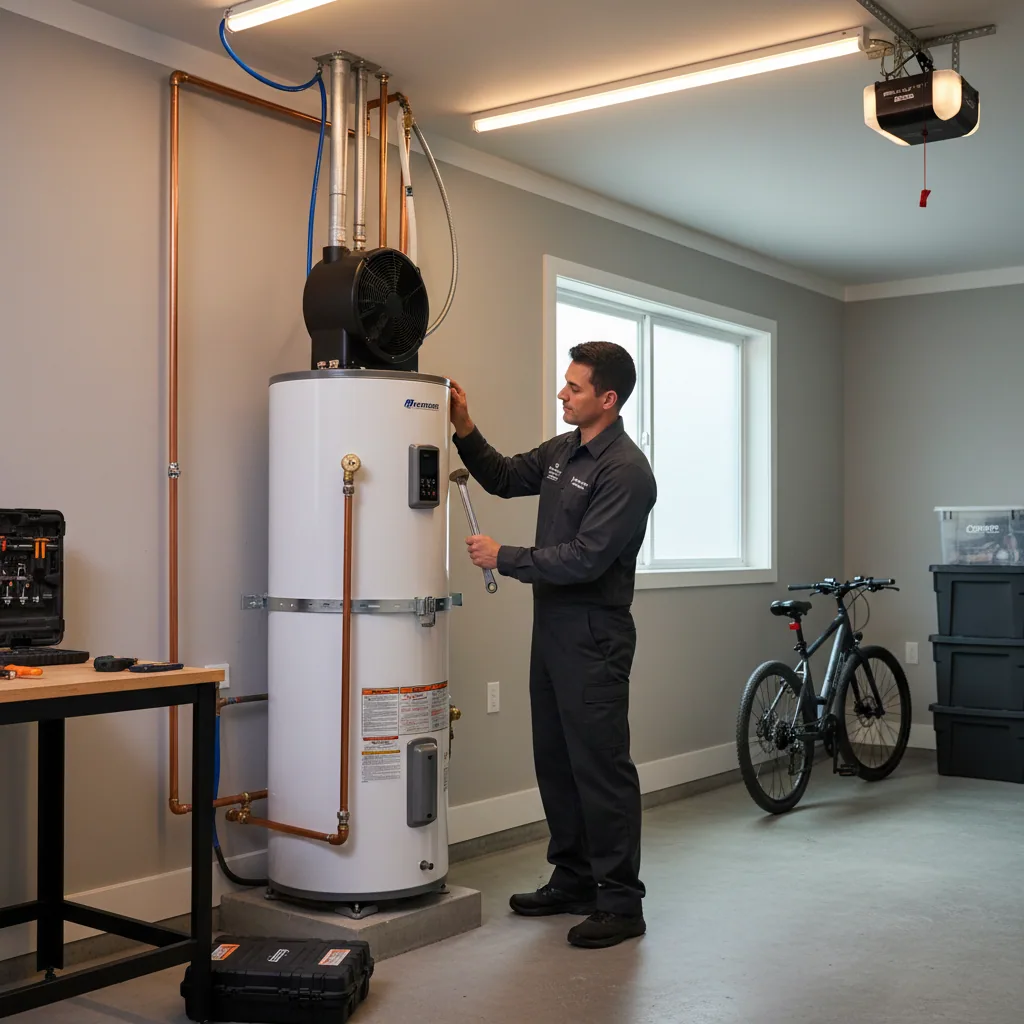
The BAAQMD Regulations: Decoding Rule 9-4 and Rule 9-6
The core of the 2027 gas water heater ban lies in BAAQMD’s updated Regulation 9, Rule 4. This mandate specifically targets Nitrogen Oxide (NOx) emissions from residential water heaters, effectively prohibiting the sale and installation of natural gas units by 2027.
Strategically, homeowners must recognize that this regulation focuses on the point of sale. While you are not required to rip out a functioning gas heater on January 1st, 2027, you will be legally unable to replace it with another gas model once it fails. This creates a high-risk scenario for emergency replacements.
- Single-Family Homes: Compliance for small water heaters (under 75,000 BTU) begins in 2027.
- Multi-Family Units: Larger commercial-grade systems have a staggered deadline through 2029.
- NOx Emission Limits: The new standard is "zero-NOx," which currently only electric heat pump technology can achieve.
- The Repair Loophole: While existing units can be repaired, the scarcity of parts for phased-out models often makes repair economically unviable compared to replacement.
Why the 2027 Gas Water Heater Ban Demands Action in 2024
Waiting until the deadline to address the 2027 gas water heater ban is a recipe for logistical friction and inflated costs. Sophisticated homeowners are already initiating transitions to avoid the inevitable "installation bottleneck" that will occur as thousands of residents scramble for limited contractor availability.
Furthermore, the current landscape of California heat pump incentives is at its peak. As demand surges closer to 2027, many local utility programs may face budget exhaustion, leaving late adopters to foot the entire bill for infrastructure upgrades.
- Electrical Infrastructure: Transitioning to electric often requires a 200-amp panel upgrade, which can cost between $3,500 and $5,500.
- Permitting Timelines: Bay Area building departments are already seeing increased backlogs; expect permit wait times to double by 2026.
- Inventory Stability: Current supply chains are stable, but the 2027 rush will likely lead to equipment shortages and premium pricing.
- Maximizing ROI: Early adoption allows you to amortize the cost over several years of lower energy bills before the regulation becomes mandatory.

Financial Incentives: Navigating the $4,900+ Rebate Landscape
The financial barrier to meeting Bay Area water heater laws is significantly mitigated by current state and federal programs. For high-income earners in San Jose or Palo Alto, these credits offer a rare opportunity to upgrade home infrastructure with government assistance.
By leveraging the Inflation Reduction Act (25C Tax Credits) alongside local programs like TECH Clean California, homeowners can offset a massive portion of the installation cost.
| Incentive Source | Amount Available | Eligibility Criteria |
|---|---|---|
| Federal Tax Credit (25C) | Up to $2,000 | Annual cap for heat pump installations |
| TECH Clean California | $1,000 - $3,100 | Varies by utility (PG&E, SVCE, PCE) |
| Local Utility Rebates | Up to $1,000 | Specific to Bay Area CCAs |
Consequently, the total potential savings can exceed $5,000 when factoring in electrical panel upgrades. Our team at Better Water Heaters acts as your rebate consultant, handling the complex paperwork to ensure you receive every dollar available.
The Hidden Infrastructure Challenge: Electrical Panel Readiness
Perhaps the most overlooked aspect of the 2027 gas water heater ban is the "Heat Pump Readiness" of your home's electrical system. Most mid-century modern homes in the Bay Area were built with 100-amp or 125-amp service, which is insufficient for the simultaneous load of an electric water heater, EV charger, and HVAC system.
Transitioning early allows you to bundle these upgrades strategically. If you wait until your gas heater leaks in the middle of winter in 2027, you won't have the luxury of waiting three weeks for a main panel upgrade and PG&E service disconnect.
- Load Calculations: Professional installers must perform a Title 24 load calculation to ensure safety.
- Circuit Dedicated: Heat pumps require a dedicated 240V circuit, necessitating new conduit runs through your crawlspace or attic.
- Smart Panels: Consider upgrading to a Span or Leviton smart panel to manage loads without a full utility service upgrade.
Debunking Myths: Performance of Hybrid Heat Pumps in the Bay Area
Many homeowners expressed concern that moving away from gas would mean sacrificing performance. However, modern hybrid heat pump water heaters are specifically designed for the temperate Bay Area climate, which provides the ideal ambient air temperature for maximum efficiency.
Unlike older electric models, hybrid systems pull heat from the surrounding air, making them up to 400% efficient. This translates to a significant reduction in monthly utility spend compared to the rising costs of natural gas in California.
- Noise Levels: Modern units like the Rheem ProTerra operate at roughly 45 decibels—comparable to a quiet dishwasher.
- Cooling Effect: While they discharge cool air, in a garage or basement setting, this provides a welcome dehumidifying effect.
- Recovery Rate: In "High Demand" mode, these units can outperform traditional gas tanks for large families.
Compliance Roadmap: Your Path to 2027 Readiness
To navigate the 2027 gas water heater ban effectively, we recommend a tiered approach based on the age of your current equipment. If your water heater is over 8 years old, you are currently in the "high-risk" zone for a failure that could leave you without hot water during a period of intense regulatory transition.
By acting as your transition consultant, we help you evaluate your home's current capacity and map out a timeline that maximizes tax benefits while minimizing household disruption. This proactive stance is what separates savvy Bay Area homeowners from those who will face emergency costs in 2027.
FAQs About the 2027 Gas Water Heater Ban
What happens if my gas water heater breaks after 2027?
Under the 2027 gas water heater ban and BAAQMD Rule 9-4, retailers and contractors will be prohibited from selling or installing new gas water heaters. You will be required to replace the unit with a zero-emission electric heat pump model. Repairs to existing gas units are permitted, but parts may become scarce and expensive.
Will I be fined if I still have a gas water heater in 2027?
No, there are no fines for simply owning a gas water heater. The regulation applies to the sale and installation of new appliances. You can continue to use your existing gas unit until it reaches the end of its functional life, at which point the transition to electric becomes mandatory.
How much more does a heat pump cost compared to gas?
While the upfront equipment cost for a heat pump is $1,000 to $2,000 higher than gas, the Bay Area water heater laws are supported by massive incentives. Between the $2,000 federal tax credit and local TECH rebates of up to $3,100, the net cost is often lower than a traditional gas installation.
Does my electrical panel need an upgrade for a heat pump?
In many older Bay Area homes, an upgrade to a 200-amp panel is necessary to support the 240V circuit required by a heat pump. This is a critical reason to plan early, as panel upgrades require additional permits and coordination with PG&E that can take several weeks to complete.
Ready to future-proof your home? Contact the specialists at Better Water Heaters today for a comprehensive home readiness assessment and rebate consultation.