
📋 Table of Contents
In San Francisco’s dense row home market, upgrading to a 240V appliance often triggers a mandatory $3,500 to $5,000 electrical panel upgrade that kills the project’s ROI instantly. According to Energy.gov, a 120V heat pump water heater can reduce water heating energy use by up to 70%, making it the most viable path for homeowners facing space and power constraints.
The No-Panel-Upgrade Math: 120V Heat Pump Water Heater Economics
The real kicker for most Bay Area residents isn’t the cost of the unit itself, but the hidden ‘infrastructure tax’ required to power a traditional electric model.
- Electrical Savings: A standard 240V installation requires a dedicated double-pole breaker and heavy-gauge wiring, which often forces a main panel upgrade if your home is still on a 100-amp service.
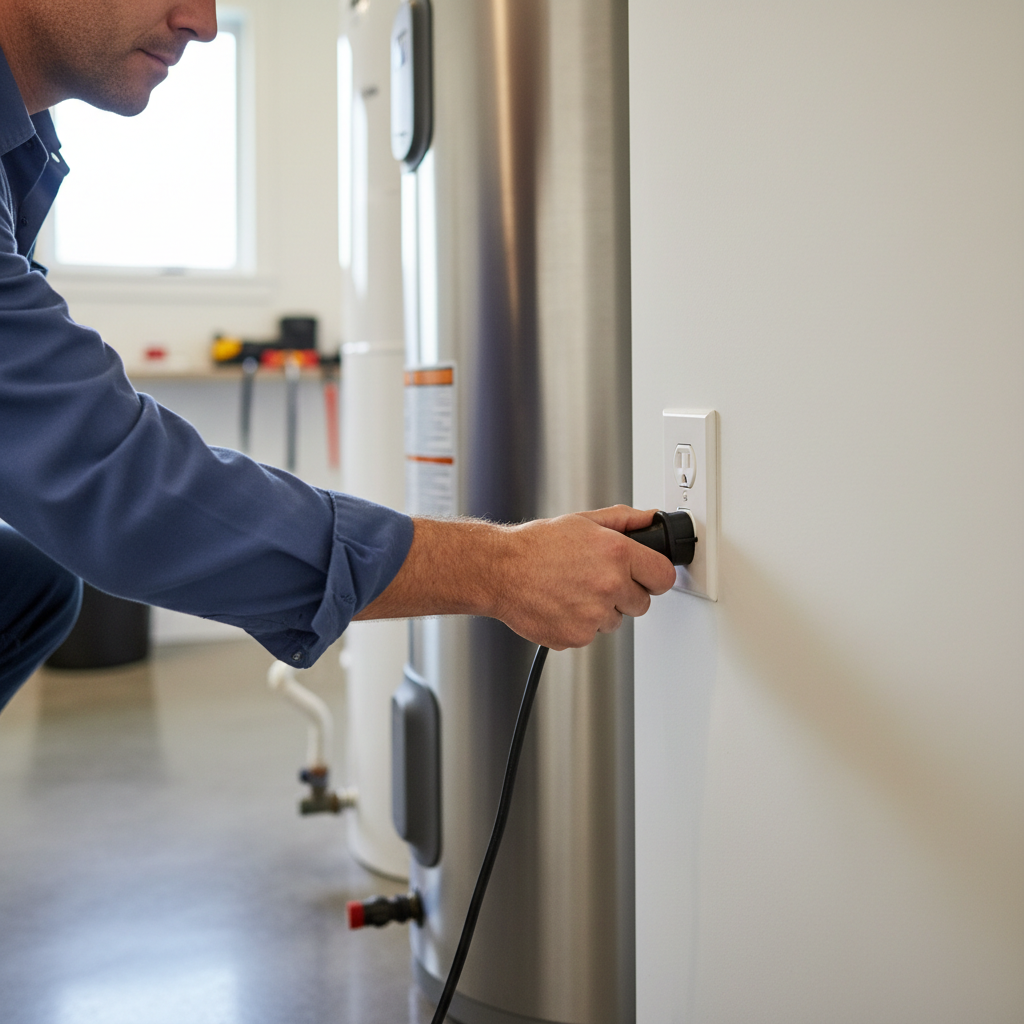
- Plug-and-Play Reality: The 120V plug-in heat pump is designed to run on a standard 15-amp circuit, often utilizing the same outlet already present for your gas unit’s electronic ignition.
- Speed of Installation: In emergency leaking scenarios, we can often swap a gas unit for a 120V model in a single day, whereas a 240V conversion involves coordinating with an electrician and potentially waiting on city permits for panel work.
For a typical Bay Area mid-market client living in a 1920s Sunset District row home, choosing the 120V path often saves enough on labor to fully offset the slightly higher purchase price of the integrated unit.
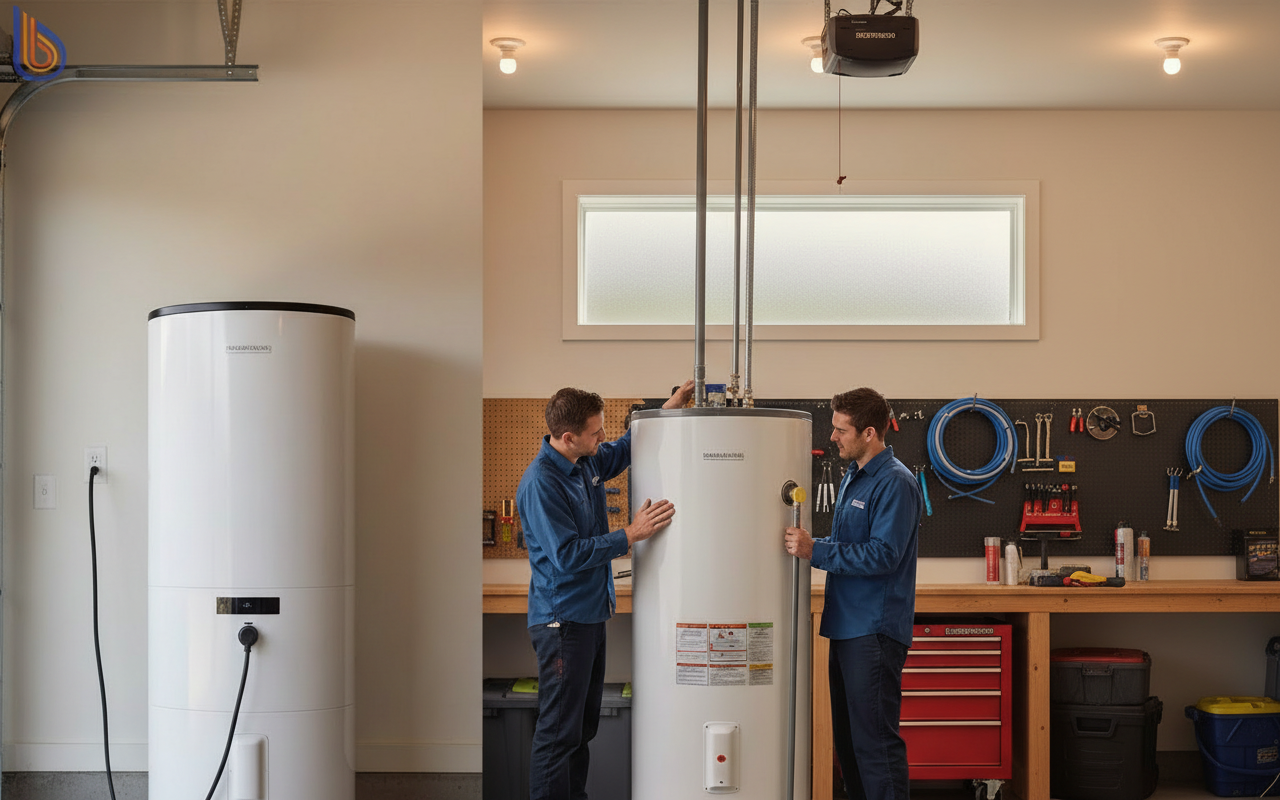
Water Heater Performance Comparison: The Recovery Gap
If you have a household of five people all showering before 8:00 AM, the 120V model requires a more strategic approach than its 240V counterpart.
- First Hour Rating (FHR): 240V models use backup electric resistance elements to heat water quickly; 120V models rely almost entirely on the heat pump, leading to a lower FHR.
- Storage Volume: To compensate for slower recovery, we often recommend sizing up (e.g., a 66-gallon or 80-gallon tank) when installing a plug-in model.
- The Mixing Valve Secret: By installing a thermostatic mixing valve, you can store water at 140°F (killing bacteria and increasing effective capacity) while delivering safe 120°F water to the taps.
But wait—don’t let the ‘slow recovery’ narrative scare you off. Most 120V units, like the Rheem ProTerra or AO Smith Voltex, are more than capable of handling a standard 3-bedroom home’s demand if sized correctly from the start. Learn more about sizing strategies here.
Row Home Realities: Noise and Cold Air Exhaust
What most people miss is that a heat pump is essentially an air conditioner running in reverse, which means it blows cold air into your utility closet or garage.
- Shared Wall Considerations: In tight SF row homes, the compressor noise (roughly 45-55 decibels) can vibrate through shared walls if not properly isolated.
- Ambient Temperature: Since these units pull heat from the surrounding air, they perform best in garages or basements that stay above 40°F.
- Ducting Options: Many 120V models allow for ducting, which lets us vent the cold exhaust air outside, preventing your laundry room from becoming a walk-in freezer in the winter.
Need help navigating these technical requirements? Schedule a free consultation with our Bay Area specialists today.
Gas-to-Electric Conversion Incentives in the Bay Area
The financial landscape for a 120V heat pump water heater is currently the most favorable it has ever been due to aggressive local decarbonization goals.
| Incentive Source | Typical Amount | Applicability |
|---|---|---|
| Federal IRA Tax Credit | Up to $2,000 | Annual tax liability offset |
| TECH Clean California | $1,000 – $3,100 | Direct contractor-applied rebate |
| Bay Area Air Quality District | Varies | Regional zero-NOx compliance |
Here’s the thing: these rebates often require the installer to be enrolled in specific programs. At Better Water Heaters, we handle the paperwork for you to ensure you maximize these local utility incentives.
The Contrarian View: When 120V is Actually Better Than 240V
Most contractors will tell you ‘more power is always better,’ but in our work with established homeowners, we’ve found that the 120V unit’s lack of backup heating elements is actually its greatest longevity feature. Without the high-wattage elements that are prone to scaling and burnout in San Jose’s hard water, the 120V compressor-only cycle often experiences less thermal stress over a 15-year lifespan. It’s a case where ‘slower’ heating actually results in a more durable system. We use our internal AI content engine to track these reliability trends across thousands of local installations.
Final Verdict: Which Unit Wins for Your SF Home?
Choosing between these two technologies comes down to your electrical panel’s current capacity and your peak hot water demand. If you have a 100-amp panel and want to avoid a massive construction project, the 120V model is a no-brainer. If you have a high-occupancy home and already have 200-amp service, the 240V model offers the recovery speed you likely need.
This week, take a look at your electrical panel. If it’s full, a 120V plug-in unit is your fastest, most cost-effective ticket to a more efficient home. Ready to make the switch? Get a transparent, fixed-price quote from Better Water Heaters now.
Frequently Asked Questions
Is a 120V heat pump water heater enough for a family of four?
Yes, provided you size the tank appropriately. While a 50-gallon 240V unit might suffice, we typically recommend a 66-gallon or 80-gallon 120V model for a family of four to ensure there is enough stored hot water during peak morning hours without relying on fast recovery.
Do I need a dedicated circuit for a plug-in heat pump?
Technically, most manufacturers require a 15-amp dedicated circuit. In many San Francisco homes, the existing outlet for the gas water heater’s ignition is already on its own circuit or shared with very low-load items, making the 120V heat pump water heater installation much simpler than a 240V retrofit.
How much louder is a heat pump water heater compared to gas?
A heat pump water heater produces a hum similar to a modern dishwasher or a large refrigerator. While louder than a silent gas tank, the 120V models are generally quieter than older 240V hybrids because they don’t have the high-velocity fans required for high-wattage heat dissipation.
Will a 120V heat pump work during a power outage?
Like all modern water heaters (including gas units with electronic ignitions), a heat pump requires electricity to operate. However, because 120V models have such low power draws, they are much easier to run off a small portable power station or a home battery backup like a Tesla Powerwall compared to 240V models.